Don’t forget Haiti

We went to Haiti when I was twelve years old. My stepfather, Dan, believed his kids should know the world, that traveling was the most important form education. If it had been up to him we wouldn’t have gone to school. Rather we would have traversed the globe. We went to Haiti because he loved it.  He had been both divorced and then remarried (to my mother) there. Their honeymoon was a hike from Kenscoff to Marigot through the mountains.  It was unclear if the divorce and the marriage were recognized in the States, but they were recognized by Dan and in turn by us, his ten children, so the rest didn’t really matter.

My mother and Dan on their honeymoon

We went for the month of August and stayed in Port-au-Prince at the Oloffson Hotel.  The older kids read The Comedians, all of us learned about Graham Greene.

After a few days, we went to Jacmel, piling into a painted truck with wobbly wheels.  It carried us over a mountain pass on a road that the French were constructing but that wasn’t quite finished.  We were warned it was too dangerous and that we shouldn’t attempt it.  Dan disagreed.  Huge ruts, potholes the size of ponds, hairpin turns, sheer drops, no guard rails — no matter.  Somehow we’d manage.  Dan believed in the impossible always being possible.  In the middle of the night we had to give up and retreat, back to Port-au-Prince.  The next day we boarded a tiny plane and flew to Jacmel, landing on a grass runway.  We stayed in a French colonial house with filigree balconies overlooking the sea.   It was owned by Selden Rodman, an art dealer famous for bringing Haitian art to the white world.  The ground floor of the house was an art gallery.

Many of us on the Jacmel Veranda

Haitian art was everywhere.  And Dan seemed to buy up a good amount of it with money he didn’t have, borrowed from friends and his wealthy first wife: colorful paintings, steel drums flattened and carved into trees and birds and flowers, wood panels describing the Madonna breast-feeding baby Jesus, a pair of lovers.  Dan’s idea, you see, was to open a Haitian art  gallery himself, in New Hope, Pennsylvania not far from our home.

I remember a dinner in Port-au-Prince with local artists high up in hills above the city in a beautiful home.  Names cast about: Gorgue and Gerard Paul and Andre Pierre and Jerome Polycarpe and Audes Saul and Hyppolite and S.E. Bottex — some living, some dead: all possessing a mystery in their art that Rodman described as the crystallization of joy.  I remember the crates holding the art that we transported home.

I remember visiting art markets, all of us allowed to choose our own painting.

Sarah chose an extra one, of Eve plucking the apple from the tree while Adam watched.  She paid for it herself.  The artist was  famous, named Cherisme.  Even at 16 she had an impeccable eye.

Sarah with her Cherisme in Jacmel

The art was stored in our home, is to this day — hanging on all the walls.  The wood carvings, the paintings of Virgin Marys and funeral processions and bright peach-colored flamingos and fish and turkeys, an enormous blue crab,  and women carrying baskets of fruit, water in buckets on their heads,  of a whole village of people praying outside a church, of festivals, of voodoo ceremonies presided over by voodoo priests, jungle scenes.  A screen with blue owls, the repetition making the familiar bird a comforting abstraction.  The gallery is now long gone, my stepfather dead.  My mother, strapped for cash a few years ago, was told to sell her collection of Haitian art.  She refused.  “I love it,” she said.  “I will not ever let it go.”

But I digress.  It was an education Dan, and my mother, wanted to give to us.  They wanted us to understand what the world was, that it was much more complicated than the small and safe circumference of our comfortable (if exotic hippie) life in Ringoes, New Jersey.  On the streets of Haiti I began to see a world that I had not known before, a world that began to open up my twelve-year-old eyes. I saw people who had walked for miles to sell their food at the market.  I saw people disfigured by disease.  I saw small children with distended bellies.  I saw an old woman die in the road.  I saw soldiers with AK47s and learned of the TonTon Macoutes and of Papa Doc and Baby Doc Duvalier.  I began to understand that governments weren’t all the same and that people worked hard and starved anyway.  I was told that because the French were defeated by the Haitians so long before, the United States directly benefited, bought a large chunk of the south (the Louisiana Purchase) for next to nothing, pennies per acre, from the French for whom it no longer served.  In short, I began to understand that nothing swims isolated and alone in the universe. I landed in the middle of a crazy, beautiful jungle — a world that felt so very far removed from my own, totally unique. But by pulling on a string one could also find a through-line linking Africa and Louisiana and somehow even me.

Dan and my mother wanted us to understand something that is a rare commodity these days — they wanted us to appreciate complexity.  They wanted us to know that we are not all the same — know that there is nuance and struggle and tremendous beauty (the falls at Bassins Bleus that you can only get to on horseback — along a palm fringed beach, up jagged switch -backs in a mountain pass), that the world thinks many different things, people live many different ways — some because they can, others because they must.  And it was their belief that if we understood this, that our minds would begin to seek complexity and even begin to suspect or distrust simple, reductive views of the world, as compelling as simplicity can be.  Travel taught me that our culture, with all it has to offer, all its power and possibility and privilege, is but one small and limited portal on the truth of life’s vast and horrifying and marvelous spectrum.

I won’t forget Haiti.

Add to FacebookAdd to DiggAdd to Del.icio.usAdd to StumbleuponAdd to RedditAdd to BlinklistAdd to TwitterAdd to TechnoratiAdd to Yahoo BuzzAdd to Newsvine


Add to FacebookAdd to DiggAdd to Del.icio.usAdd to StumbleuponAdd to RedditAdd to BlinklistAdd to TwitterAdd to TechnoratiAdd to Yahoo BuzzAdd to Newsvine


Rocco
I got five As in my school report card so
My mom bought me a hamster.
I called him Rocco
Because that is what my mom
Called me before I was born.
Rocco was attention-loving like
My great grand-mother grammy
Who sadly I never knew.
He did acrobatics on the bars of his cage
And ran so fast on his yellow wheel.
But he ate too much and became obese.
He stopped running
Got lazy.
One day he didn’t move anymore.
Sadly, he died.
My mother and I and my brother
Buried him in our back yard
Where sometimes when I am playing
I will stop and think
What a great hamster he was.

By Leandro McPhee, age 9 — my nephew
A real story

Add to FacebookAdd to DiggAdd to Del.icio.usAdd to StumbleuponAdd to RedditAdd to BlinklistAdd to TwitterAdd to TechnoratiAdd to Yahoo BuzzAdd to Newsvine


Find A Penny

28Jan10

As part of Rob Walker’s Significant Object project, click on the links to find out more and to see how bidding on ebay for this charming piggy (with story—by me—attached) can benefit 826national a program which tutors youth in creative and expository writing. 

My grandmother gave me the piggy bank when I was four, for Christmas, wrapped in a box with bows.  She said, “A penny saved is a penny earned.”  She said, “Find a penny pick it up, all day long you’ll have good luck.”  She wore a beehive of blue hair, had piercing green eyes, dressed in expensive-seeming clothes.  “A lady of quality,” she said.  She sold Avon door to door and from the living room of her two-bedroom ranch on Lover’s Lane in Heather, Illinois.  Her house smelled like honeysuckle.   More on ebay

Add to FacebookAdd to DiggAdd to Del.icio.usAdd to StumbleuponAdd to RedditAdd to BlinklistAdd to TwitterAdd to TechnoratiAdd to Yahoo BuzzAdd to Newsvine


My amazing sister, Joan Sullivan, says goodbye to Bronx Academy of Letters, the public school she started in the Bronx.  She’s now Deputy Mayor of Education for the City of Los Angeles.   Watch and see her talents.  There is hope for the future of education.

Add to FacebookAdd to DiggAdd to Del.icio.usAdd to StumbleuponAdd to RedditAdd to BlinklistAdd to TwitterAdd to TechnoratiAdd to Yahoo BuzzAdd to Newsvine


The Book Tour

25Jan10

THE BOOK TOUR.  We’ve all heard about them: the author reading for an audience of three, two, one, none.  You fly across the country to San Francisco, feeling important.  You are chauffeured to the bookstore, attended by a literary escort.  Signs all over the store announce your event at 7 P.M.  A voice comes over the intercom: You’ll find India Palmer in the children’s section.  She’ll be reading from her new book, Generation of Fire, and signing copies.  Five minutes till show time. There, squeezed into the children’s section, between rows of Mazy and Olivia and Lilo and Stitch and Goodnight Moon, are a couple of dozen chairs in front of which stands a microphone and a table with your books neatly stacked, several standing prominently on display.

In the back row sits one old lady. It took six years to write Generation of Fire! Oh well, you think gamely, the show must go on.  You notice the old lady is unwrapping something from a paper bag.  She takes out a small tin and rests it in her gnarled, arthritic hand, and with her other hand she pries off the lid.  Her hair is long and white and unbrushed.  The can she has opened, you realize, though she is a good many rows removed from you, is tuna fish.  The oily smell wafts toward you.  She proceeds to eat it with a plastic fork pulled from the folds of her dress.

Onward!  You read for her.  With all the emotion you can muster.  There is someone else in the audience: a young girl, who arrives late.  When you’re finished, she raises her hand earnestly.  “Yes?” you ask.  Her eyes are bright and her skin is aglow with teenage youth.  She has an athletic build and an innocence that makes you ache for her.  “I have an assignment I need to do for my English class,” she says.  “I’m supposed to interview an author.  Can I interview you?”

From Chapter Nine of  Dear Money

Click here to read more.

Pre-order today

Add to FacebookAdd to DiggAdd to Del.icio.usAdd to StumbleuponAdd to RedditAdd to BlinklistAdd to TwitterAdd to TechnoratiAdd to Yahoo BuzzAdd to Newsvine


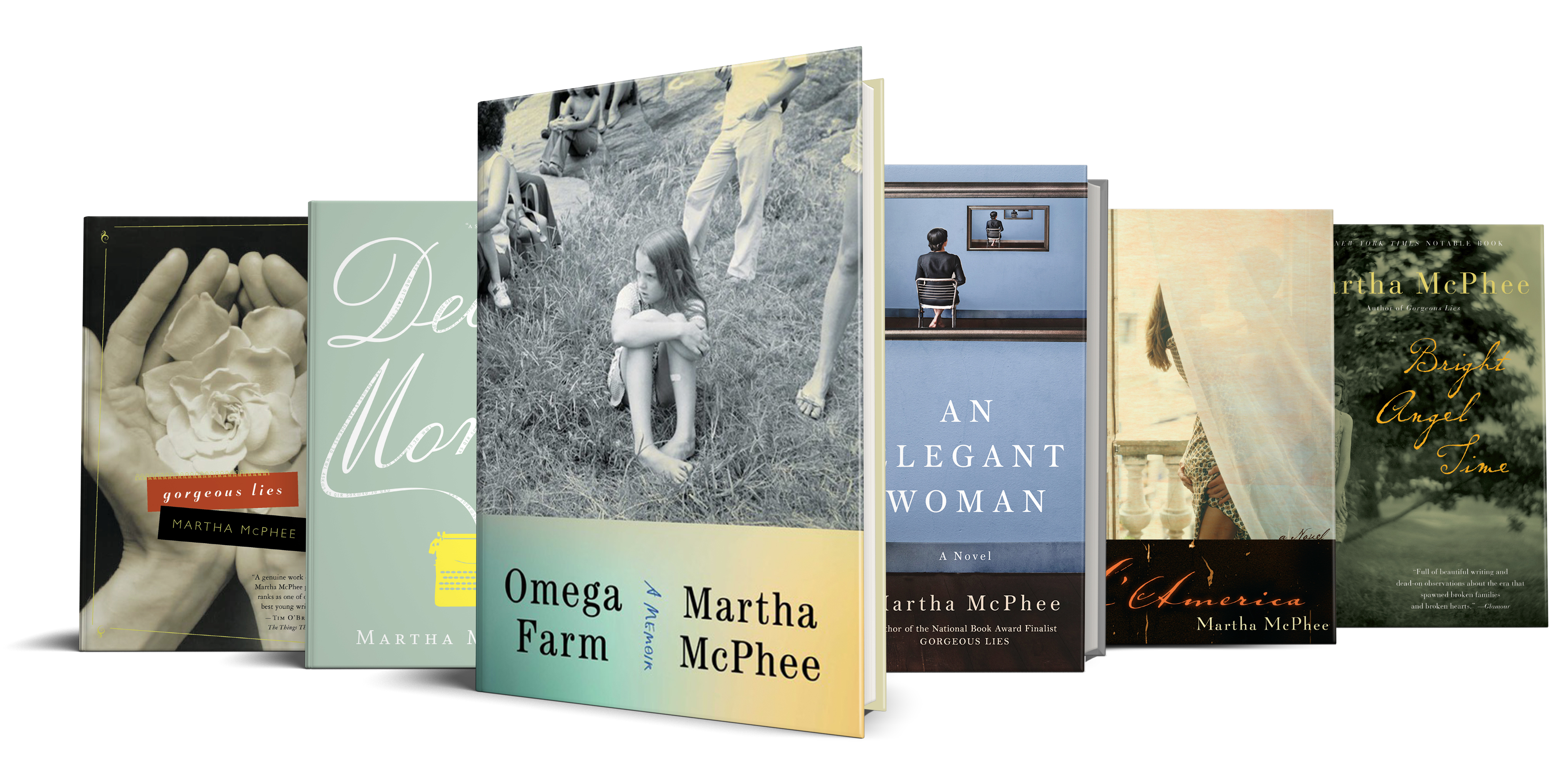
Bright Angel Time, my first novel had so many terrible working titles, but I wrote the book so long ago I can’t remember what they were.  I do remember that my editor wanted to change the title from Bright Angel Time to Falling Backwards. I refused because a Michael Douglas film was recently out called Falling Down and I didn’t like the association.  And, also, I loved my title.  I found it while hiking in the Grand Canyon with my husband a few months before finishing the book.  He had taken me there for inspiration. We were camped beneath the stars near the Bright Angel Trail and I can remember still the cool, desert air, being tucked in my bed roll, dreaming quite literally that I was the daughter of Clint Eastwood—the Eastwood of the spaghetti westerns that I love so much.  I remember waking up disappointed that the dream wasn’t true.  (Forgive me, Dad.)  Hiking out of the Grand Canyon, I knew even then, long before giving birth, that it would be the hardest thing I would ever ask my body to do—harder than childbirth.  (I thought of that when my first child was born.   And, by the way, I was right.)  As I hiked out, like a flash it came to me: Bright Angel Time would be the title of my novel.  Bright Angel is the name of a shale in the canyon that represents a period of time some 500 million years old from the Cambrian period in the Paleozoic.  Bright Angel shale, as a layer of the canyon’s strata, lies between Muav limestone and Tapeats sandstone.  Metaphors about time started bombarding me.  And I loved all the names.

Gorgeous Lies, my second novel.  I had many bad working titles.  To name two: Quo Vadis (I cringe to write that) and Farther India (which comes from an old map of Hindoostan.)  My editor thought that Farther India sounded either like Father India or a travel guide.  I agreed.  I despaired as I had no other ideas.  My mother suggested that I read some of my husband’s poems, promised me I’d find a title there.

From the last stanza of “Memo: From The Course of Empire By Bernard DeVoto”

How do I love thee, and why? O, congeries
of gorgeous lies, I’ve lost my way,
and rivers flow into other rivers, and they
flow into rivers that flow into the sea

From Empire Burlesque by Mark Svenvold

L’America, my third novel.  I was also asked by my publisher to consider something else but couldn’t think of anything I liked as well.  I was in love with an Italian man once and he used to say ”l’America” quite a lot, with a sense of humor and impossibility—as though only in America.  A beautiful admiration and absurdity.

And finally, Dear Money, my fourth novel.  At first, and for most of the writing of the book, it was called I Can’t Keep Up: The Truth About The Jones. I jettisoned The Truth About The Jones, and then toward the end jettisoned I Can’t Keep Up-–because, I discovered, the main character keeps up and boy does she.  She transforms herself from struggling novelist to MBS trader. I thought very briefly about using Our Times, a shortened version of  sign of our times or our foolish times.  But it seemed t0o much like Hard Times or In Our Time. Then I read the brilliant biography of Maxwell Perkins: Editor of Genius by Scott Berg and found in there a letter to Perkins from Fitzgerald. Here the last paragraph of that letter:

“I think Tom Boyd’s book is excellent—the preface is faintly pretentious but the stories themselves are great. By the way I think my new collection will be called Dear Money. It ought to be awfully good and there will be no junk in it.

Yours in a Tremble,
Scott”

Fitzgerald jettisoned Dear Money for his collection of stories, calling it instead All The Sad Young Men. In my family, filled with writers, when we hear something we like we jut our hand into the air and say, “That’s mine.”  It means no one else can use it.  That’s mine, I said to myself.  That’s it.  That’s the title of my fourth novel.  As a book that is quite interested in the subject of money, who better to offer me its title than Fitzgerald?

A tip: working titles, as bad as they may be, help you in ways you might not understand through the first drafts.  Don’t be embarrassed by them, but know they are rarely, in my experience, the final title.   Use them for what they offer and then laugh about them later.

Another tip: If in your heart you love your title and your publisher asks you to change it, DON’T—unless, of course, a convincing argument is made that you believe in, in your most artistic heart.  My husband let go of the title he desired most for his first book on nonfiction.  His title was A Century’s Corpse.  A great title.  It comes from a Thomas Hardy poem.  Mark’s book was about a corpse that traveled from freak show to freak show across the 20th Century.  His title was perfect but the publisher thought people would be turned off by the word corpse so used the corpse’s name instead: Elmer McCurdy. Mark regrets giving in to this day.

Special thanks to F. Scott Fitzgerald for discarding his working title.

Where do your titles come from?  Please let me know.

Add to FacebookAdd to DiggAdd to Del.icio.usAdd to StumbleuponAdd to RedditAdd to BlinklistAdd to TwitterAdd to TechnoratiAdd to Yahoo BuzzAdd to Newsvine


of my mother.  With two of her daughters for a Jinsoon milk and honey pedicure.  New York City.

(By the way — my feet are the youngest ones.)

Add to FacebookAdd to DiggAdd to Del.icio.usAdd to StumbleuponAdd to RedditAdd to BlinklistAdd to TwitterAdd to TechnoratiAdd to Yahoo BuzzAdd to Newsvine


bake bread with my son.

Jasper

Whole-Wheat Bread

1/2 cup milk

1/2 cup brown sugar

1/2 cup butter

4 teaspoons salt

1 3/4 cups lukewarm water

2 teaspoons sugar

2 packages active dry yeast

3 cups whole-wheat flour

3 cups white flour

Heat the milk, brown sugar, butter and salt together in a saucepan.  Stir constantly and remove from heat when butter melts completely.  Cool until lukewarm.  Mix the water and sugar.  Sprinkle the yeast on top. Stir once and then let stand 7-10 minutes.

Mix in the warm milk.  Stir together the whole-wheat and white flours.  Make a well in the center of the flour and pour in the yeast mixture.  Work the flour into the yeast, a little at a time.  Beat well, turn out on a lightly floured board.  Knead until smooth and elastic–at least 5 minutes.

A little help from Mark

Place in a greased bowl, cover with a dish towel and let rise until doubled in bulk, over an hour.  Turn out on a board and knead again for 1-2 minutes. Divide in half, and shape into loaves.  Place in greased bread pans, 9×5x3 inches.  Cover and let rise again until center of dough is slightly higher than the edge of the pan, about 45 minutes.  Bake at 375 for 40-50 minutes.  The top should be brown and the bread should sound hollow when tapped lightly with the fingers.  Remove from pans immediately and cool on wire racks.

Add to FacebookAdd to DiggAdd to Del.icio.usAdd to StumbleuponAdd to RedditAdd to BlinklistAdd to TwitterAdd to TechnoratiAdd to Yahoo BuzzAdd to Newsvine


“We must work passionately and indefatigably to bridge the gulf between our scientific progress and our moral progress. One of the great problems of mankind is that we suffer from a poverty of the spirit which stands in glaring contrast to our scientific and technological abundance. The richer we have become materially, the poorer we have become morally and spiritually.”

Martin Luther King, Jr.

Add to FacebookAdd to DiggAdd to Del.icio.usAdd to StumbleuponAdd to RedditAdd to BlinklistAdd to TwitterAdd to TechnoratiAdd to Yahoo BuzzAdd to Newsvine