Category: FOR STUDENTS
All I Want From Fiction Is A Trip — Edna O’Brien
I adore elephants. This one reminds me of the sort of trip I’d like to be on.
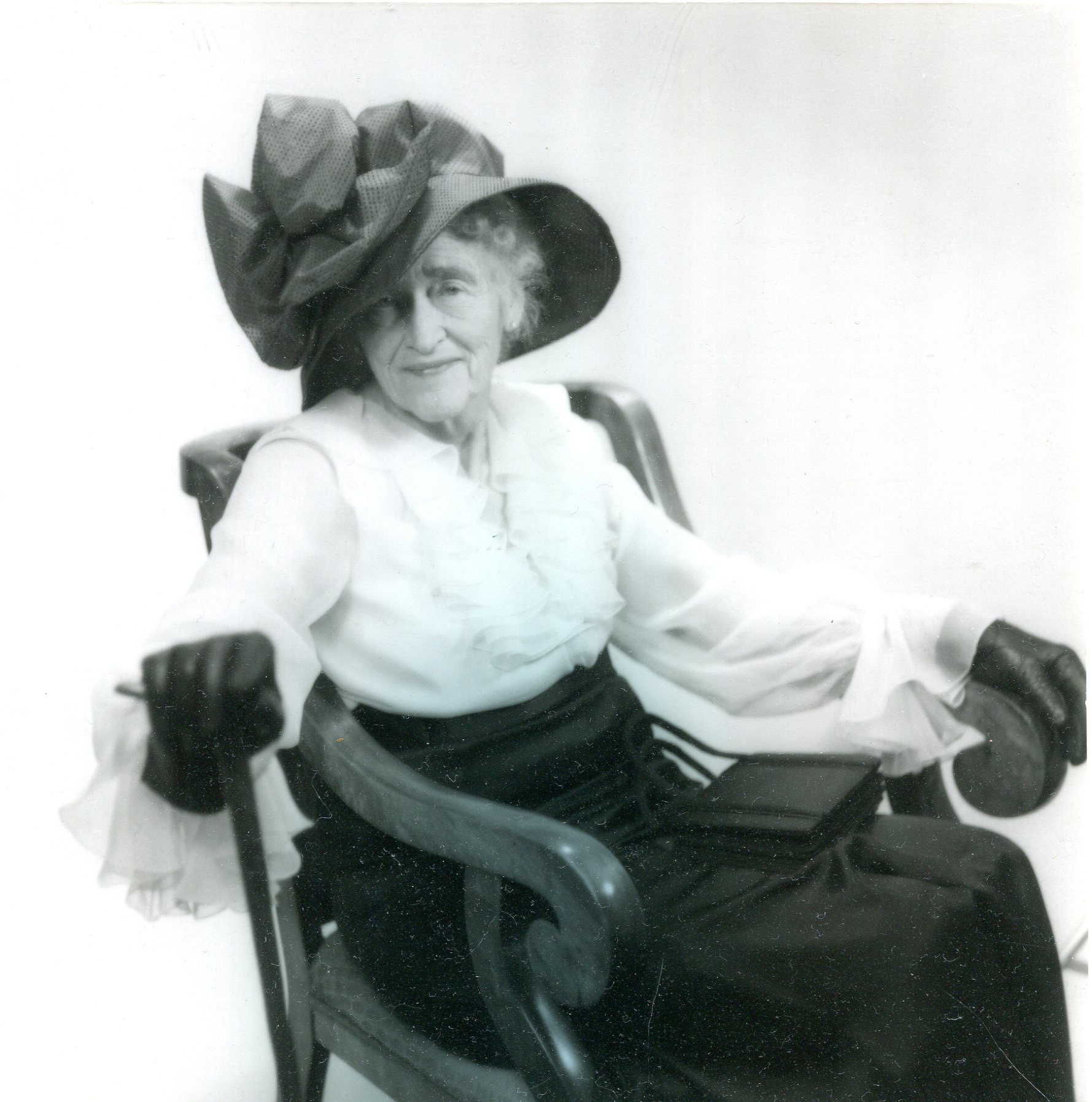
“All I want from fiction is a trip. And if I don’t get that trip, I don’t care whether it’s [from] a man or a woman, I have no time for it. I don’t want to read a work that tells me a little about the world around me today. I know about the world around me. The standard of newspapers and journalism is far higher than the standard of most published fiction. So, what’s left to write about? I think feeling and emotion and all those things which are put very high on a back shelf are essential for mankind.”
Edna O’Brien
I started writing fiction after reading Edna O’Brien’s The Country Girls Trilogy. The novels made me realize I had stories of my own to tell and that one could write from the point of view of a child for an adult audience. By studying her I learned about descriptive writing and I learned how to walk the line between the perceptions of a child narrator and those of the adult reader. After devouring O’Brien’s novels, I searched for other books from the point of view of children: Anywhere But Here by Mona Simpson; What Maisie Knew by Henry James; Stop Time by Frank Conroy; This Boy’s Life by Tobias Wolff; Housekeeping by Marilynne Robinson. All were journeys through childhoods. I wanted to take my characters on their own journey and so wrote my first novel, Bright Angel Time, using my own crazy childhood as the jumping off point for my imagination and my story, studying the techniques and styles of these authors I had come to love. The trip always begins and ends with reading.
Birds, Savages, & Children

From A Dictionary of Modern English Usage by H.W. Fowler, 1926
FRENCH WORDS. Display of superior knowledge is as great a vulgarity as display of superior wealth—greater, indeed, inasmuch as knowledge should tend more definitely than wealth towards discretion & good manners. That is the guiding principle alike in the using & in the pronouncing of French words in English writing & talk. To use French words that your reader or hearer does not know or does not fully understand, to pronounce them as if you were one of the select few to whom French is second nature when he is not of those few (& it is ten thousand to one that neither you nor he will be so), is inconsiderate & rude…. Every writer who suspects himself of the instinct should remember that acquisitiveness & indiscriminate display are pleasing to contemplate only in birds & savages & children.
Tips For Applying To MFA Programs In Fiction
A student came to see me today to ask for advice on applying to MFA programs. The season is approaching. Applications are due starting in December. Here is what I told my student:
![404298099_c60259d30a[1] 404298099_c60259d30a[1]](https://marthamcphee.com/wp-content/uploads/2009/10/404298099_c60259d30a1.jpg?w=1100)
1) Do your research. Learn which program will suit you best. Find out where the writers you admire teach. (Most writers teach.) But remember, a good writer does not necessarily make a great teacher. So, be sure the program has other attractive attributes. (A full scholarship is a good place to start.) Also, just because a writer is listed on the faculty doesn’t mean he is. Check course offerings to be sure.
2) It’s all about the writing sample. A good program will care most about the work you submit—not about the GREs or grades from college or recommendations or fancy resumes. Knock their socks off. From the first sentence to the last, this should be the best possible example of your talent. I also always tell my students, as I did the one who visited me today, that short is better. An application may ask that you submit “up to 50 pages.” DON’T!! Unless they are brilliant, and even then I’d hold back. Just think of the quantity of work they are receiving, most of it not very good. A short, sharp, glittering story or two can easily be enough to showcase your style and make them want you.
3) Recommendations: the application readers are curious just as we all are. If you have the support of someone well-known it can make the reader perk up a bit, take a second look at the writing sample. But also, a beautiful letter from your English professor or from an unknown writer you took a workshop with at some local venue can do the same. In the end, it all goes back to the writing sample.
4) In your letter of application, be sure to say why you want to go to that program. Let them know you’ve done your research. Everyone likes to be flattered, genuinely. If there is a particular writer you’re eager to study with, let the school know it with a thoughtful explanation. But, again, be genuine.
5) And just to reiterate: spend 98% of your time on the work—draw us in swiftly and carry us along on the crest of your stunning prose.
A Stranger Comes To Town,
someone leaves to seek adventure…

“There are only two or three human stories, and they go on repeating themselves as fiercely as if they had never happened.”
Willa Cather
Read, read, read
![3156805316_8975a8eba9[1] 3156805316_8975a8eba9[1]](https://marthamcphee.com/wp-content/uploads/2009/10/3156805316_8975a8eba91.jpg?w=1100)
“Read, read, read,” Faulkner said. “Read everything – trash, classics, good and bad, and see how they do it. Just like a carpenter who works as an apprentice and studies the master. Read! You’ll absorb it. Then write. If it is good, you’ll find out. If it’s not, throw it out the window.”
A Big Question for aspiring writers: to get an MFA in Creative Writing or not? A few thoughts:

My students always want to know if it is worth it to spend all that money to get an MFA. Here are some thoughts which I share with them: When I was at Columbia University’s MFA Program in Fiction, the novelist Russell Banks spoke with our class and said that the MFA could be likened to an old-fashioned apprenticeship, one in which for two years the beginning writer is allowed to work at and develop her craft alongside others doing the same thing–like young sculptors in Bernini’s studio in 17th century Rome. It’s also a chance, Banks said, to buy yourself some time.
I have always loved this way of thinking about the MFA. You’re there to develop and grow your own talents, unimpeded by work and life, to explore your craft. This puts the onus on the writer, where it should be, not the program. Of course, the program you choose is important, but it will not make the writer. A writer writes and this is how the writer gets better. The MFA affords you that time while also surrounding you with other aspiring writers in the same position, colleagues you can share your work and concerns with.
Additionally, you study with writers who are devoting their lives to their work and through them you can be opened up to what inspired them and in turn be inspired yourself. And know, you do not need to go into debt to get your MFA. There are many programs around the country that have full or partial scholarships, that offer teaching fellowships. It takes some research and of course a stunning application.
The most important thing to consider is if you’re ready. Are you ready to devote yourself to your work? Is this what you really want? Don’t believe the program will turn you into a writer. That is done by you and you alone. I loved Columbia, but there are any number of fine schools. Here are just a few:
Coumbia University’s MFA in Creative Writing
The Writer’s Workshop at The University of Iowa
(My husband, Mark Svenvold, went here for poetry and loved it, was a Teaching Writing Fellow.)
New York University’s MFA Program
Johns Hopkins MFA in Fiction and Poetry
Stanford University’s Stegner Fellowship
(Very difficult to be accepted, perhaps the most competitive and is not an MFA but if you get it, you don’t need an MFA!)
The MFA Program at the University of Miami, Coral Gables
(I believe that if you’re accepted, you get a full scholarship.)
This is just the tip of the iceberg. A comprehensive list of MFA programs can be found at Poets and Writers.
Please don’t hesitate to ask me questions. I think about this subject all the time for my Hofstra students. By the way, as soon as Hofstra establishes its MFA program, of course I’d list it here.