The Sisters Discuss: “Women Authors”

Are women authors held to different standards than men?

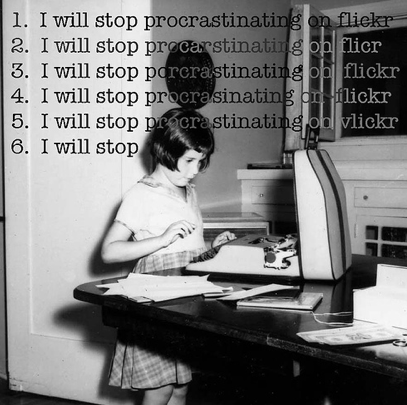
 http://1.bp.blogspot.com/_zkhErR_Xp1A/S-m20BGpLLI/AAAAAAAAARo/zSW2Dmh-PPw/s1600/images.nypl.org.jpg

In 1849, to her critics, Charlotte Bronte wrote, “To you I am neither man nor woman—I come before you as an author only. It is the sole standard by which you have a right to judge me—the sole ground on which I accept your judgment.’

THE SISTERS RESPOND:
 
Martha: I woke up this morning thinking about a post I found on twitter @AdviceToWriters.  I thought, That’s right.  I want to be thought of as an author only.  But it occurred to me that it really isn’t up to me, is it?  
 
Jenny: Well, the fact is you—and Charlotte Bronte—are women writers and that’s a very good thing as far as I’m concerned. The problem is that because of historical devaluing of all things associated with the female, including writing, some do not take women who write as seriously as men who write. This prejudice was easily identifiable in Charlotte Bronte’s time. A woman’s writing was not only automatically considered of a lesser order by the status quo, legally she was not even allowed to keep any of her own earnings from her work. For us the question is more subtle, but one look at any table of contents in any issue of, say, The New Yorker, The New York Review of Books, The Atlantic, and you will see that though women write more than men, and read much more than men, they are still grossly underrepresented in print.     
I certainly don’t want to be a man, nor do I want to be just an “author” because that automatically implies in our world “male.” I want to be a woman who writes and is given equal opportunity to publish my work and have it fairly critically appraised.
 
Martha: Are both notions too ideal?  To be considered simply “an author,” or to be considered a woman who writes and who is given equal opportunity?  How do you suggest arriving at that standard and possibility?  And what do we do in the meantime — when, as you say, the question is more subtle today.  I also know that there are many people out there — men and women alike — who would say the opportunities are equal, flat out disagree, and believe that you’re whining while also undermining women.  What do you say to them?  And as the title question asks: Are women writers held to a different standard?  If so, what is it?

Jenny: We’re all heroes and we’re all whiners. I just want to be an equal opportunity hero or whiner. Yes, the notion that we be held to some sort of “equal” standard is ideal, but we’re fiction writers who trade in the ideal dressed up as the real. As for the title question, we’re all held most rigorously by ourselves to our own standards. I’m just asking the editors at magazines, the jury at Cannes (not one woman was selected this year to compete for the Palme D’Or), the board members of Fortune 500 companies (only 3% of CEOs of F500 companies are women) to think about their preconceptions of what a standard is before excluding from their pages, their competitions, their boardrooms, the female voice. Exclusivity is easy and natural. Inclusivity takes intelligence and courage.

Martha: And I certainly don’t want to be a man, but in hearing what you’re saying I’m reminded of the Old Boys’ Club.  We should be looking out for one another in our own way.  An old girls’ network.  Of course, this has been brought up many times by many women.  But has it truly taken hold?  How?  Where?
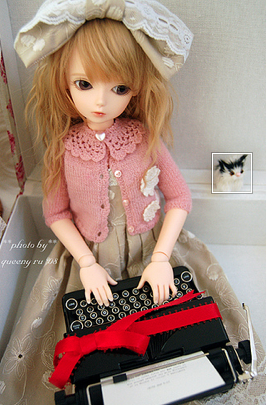
Jenny: The Bronte sisters might just have the solution. Watch This: Brontesaurus, Bronte Sisters Power Dolls 
We’d love to hear your thoughts.  Comment below. 
Up next week: Do women writers have to create characters who “behave?”
 

Add to FacebookAdd to DiggAdd to Del.icio.usAdd to StumbleuponAdd to RedditAdd to BlinklistAdd to TwitterAdd to TechnoratiAdd to Yahoo BuzzAdd to Newsvine

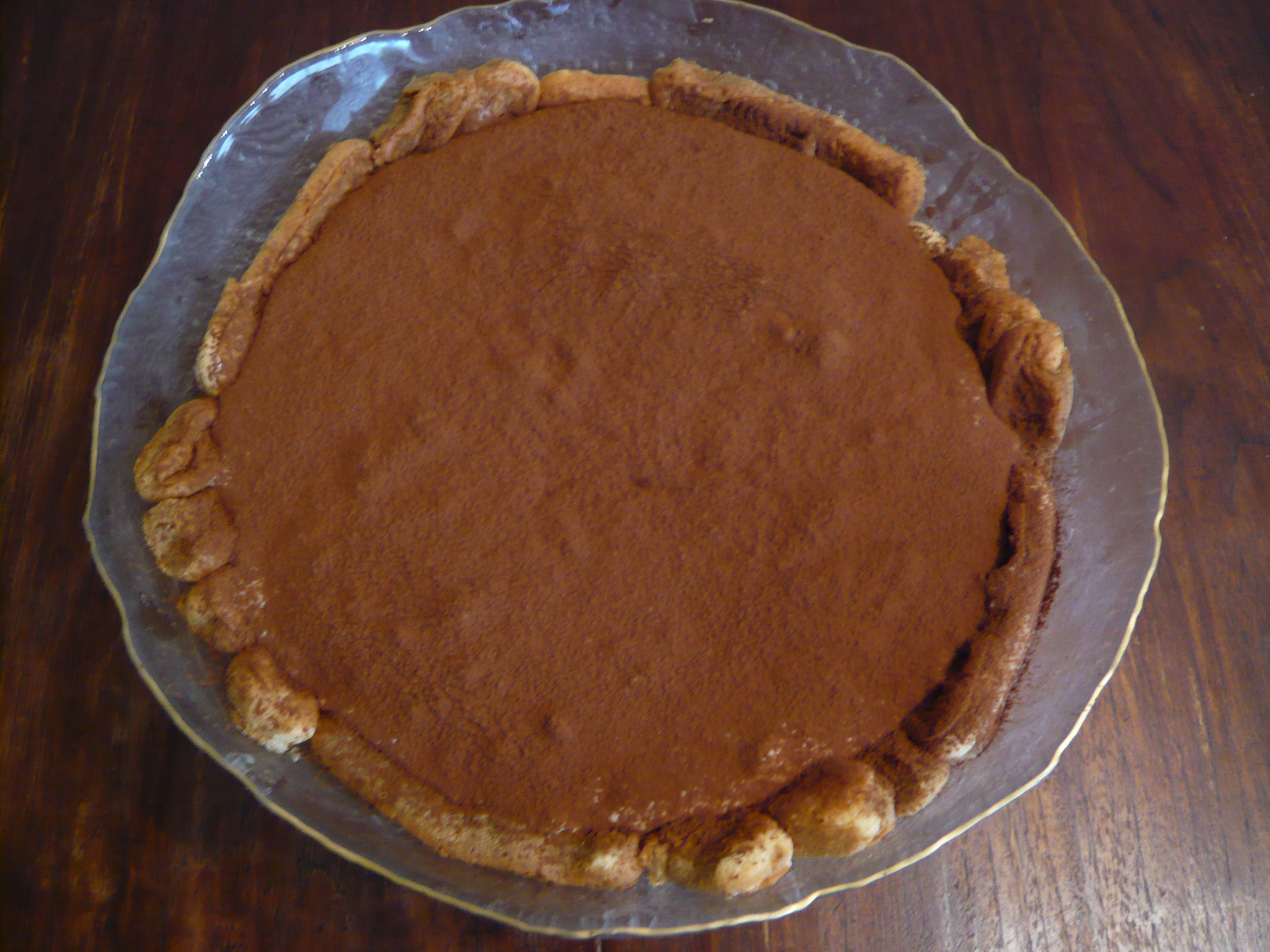
A Classic Tiramisu


Over the years I have made many variations of tiramisu, some incredibily elaborate with multiple liquors, but my favorite is the one I share here.  I use fresh eggs from my mother’s farm, but when I don’t have them I buy the best, organic brand I can find.  Cooking the yolks is part of the trick, but carefully so that you don’t have scrambled eggs.  I also use the raw whites.  If you don’t want to use raw whites — skip that and just use the whipped heavy cream.  But the whites make it so much lighter.  A confession: my son developed an allergy to egg white and in looking back I blame my passion for tiramisu.  When I was very pregnant with my son, and in the early months of breast-feeding him, I developed a craving for tiramisu and ate so much of it I am sure that’s the reason my poor little guy became allergic.  Thankfully, he outgrew the allergy.  In Italian tiramisu means cheer-me-up. 

CLASSIC TIRAMISU

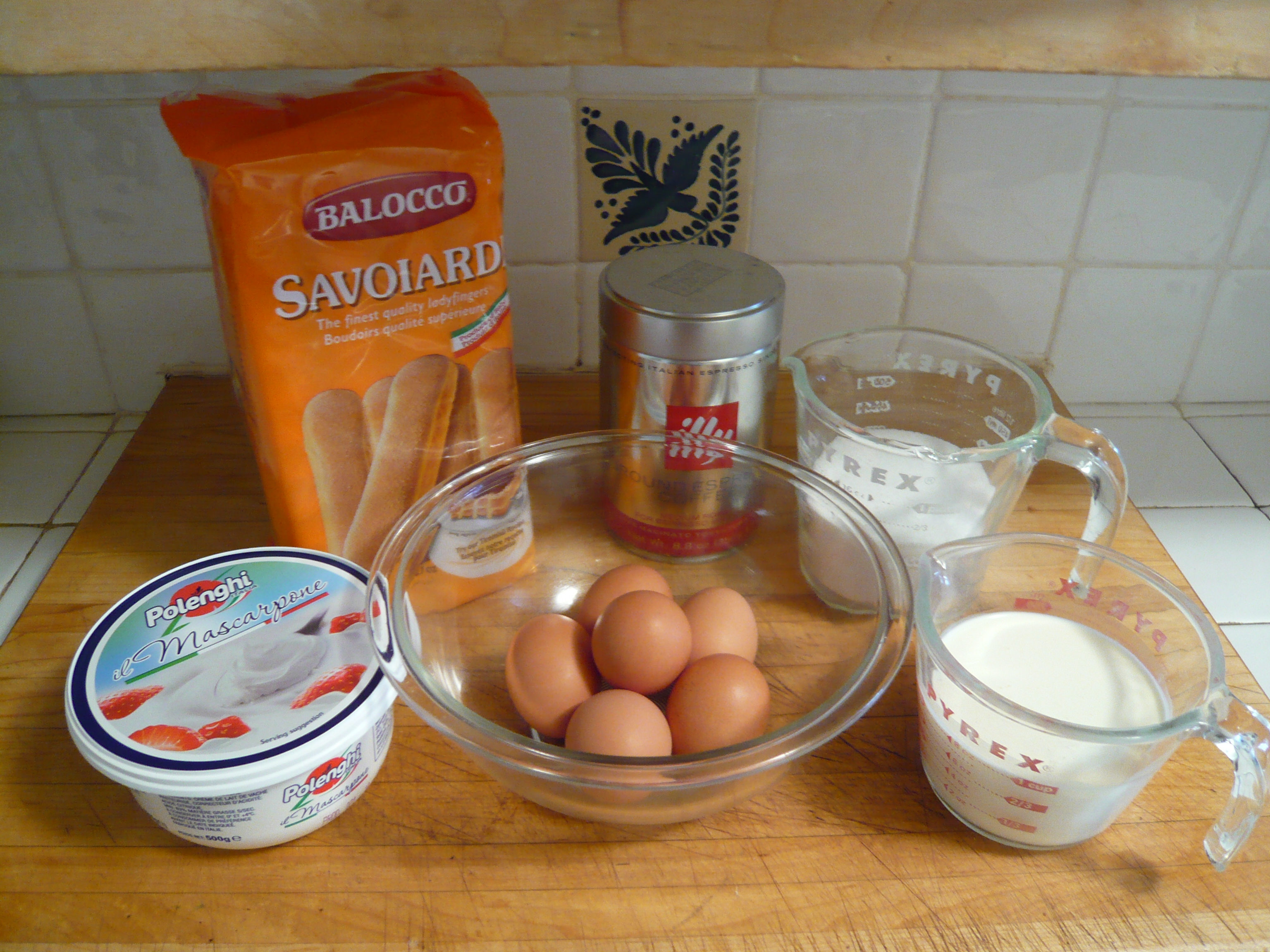
6 eggs, separated

1 1/4 cups sugar

1 pound mascarpone

1 cup heavy cream

2 (12 ounce) packages ladyfingers

lots of espresso (maybe as much as 2 cups)

unsweetened cocoa

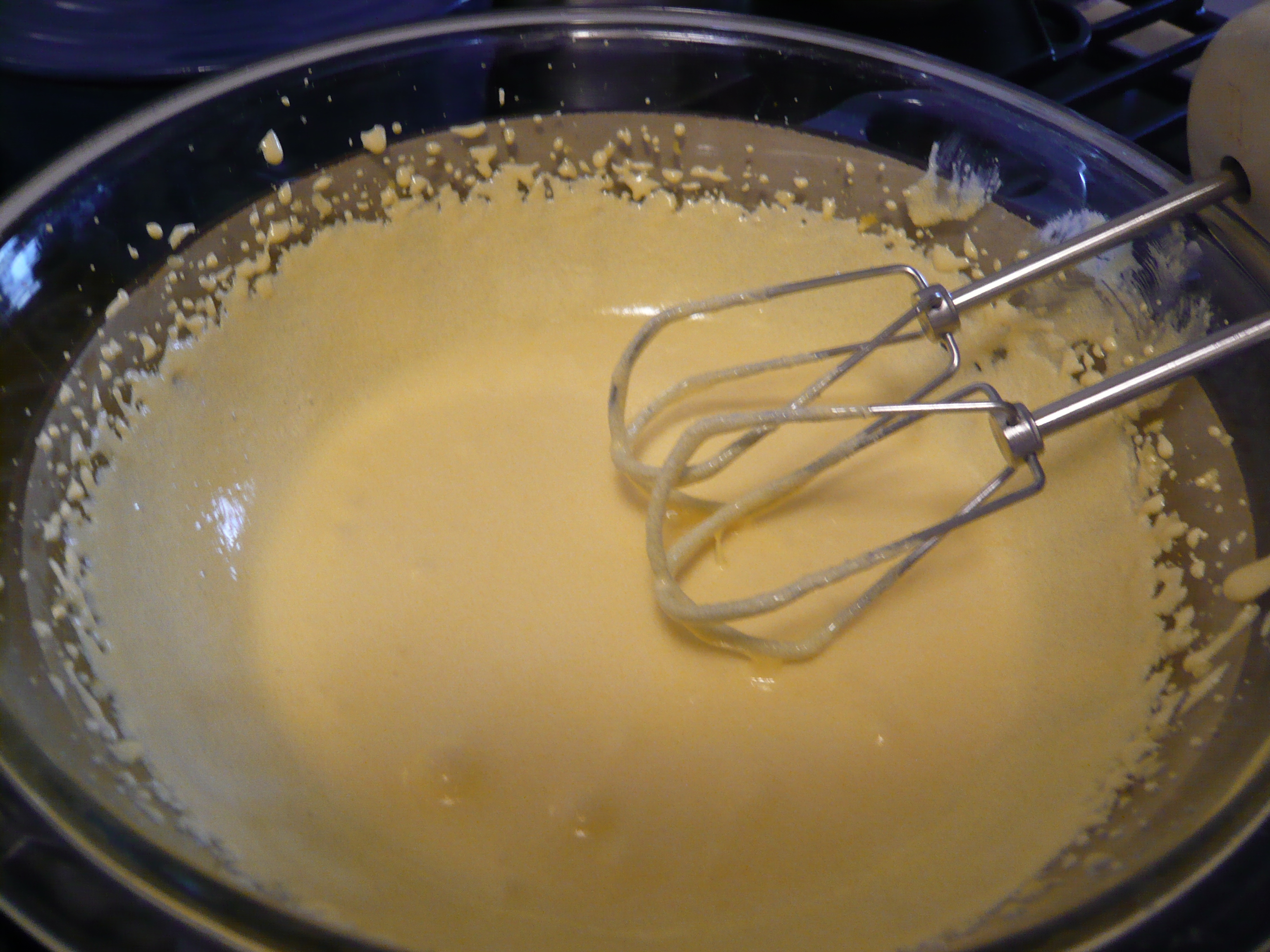
Combine yolks and sugar in top of a double boiler, over boiling water.

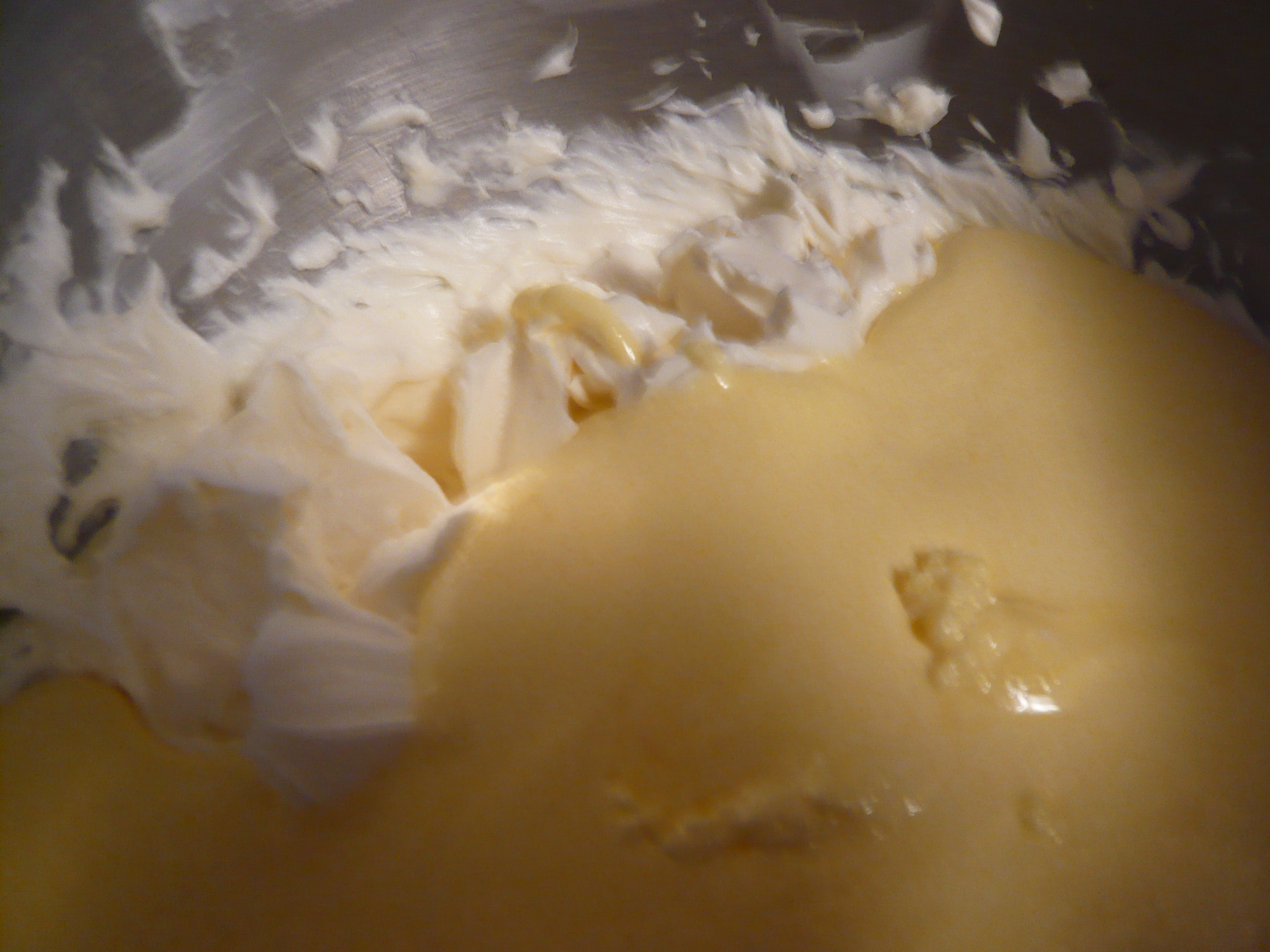
Turn off heat.  Beat with a hand-held mixer for ten minutes until thick and lemon colored.  Remove from double-boiler and add mascarpone.

Beat until combined. In separate bowls, whip heavy cream and whip whites—separately.  Gently fold together.  Set aside in the refrigerator.  Dip ladyfingers in espresso, saturating but don’t let the ladyfingers fall apart.  I use a bowl, but many people use a flat glass baking dish.  If using a bowl, arrange the ladyfingers so that they cover the interior of the bowl, up the sides. 

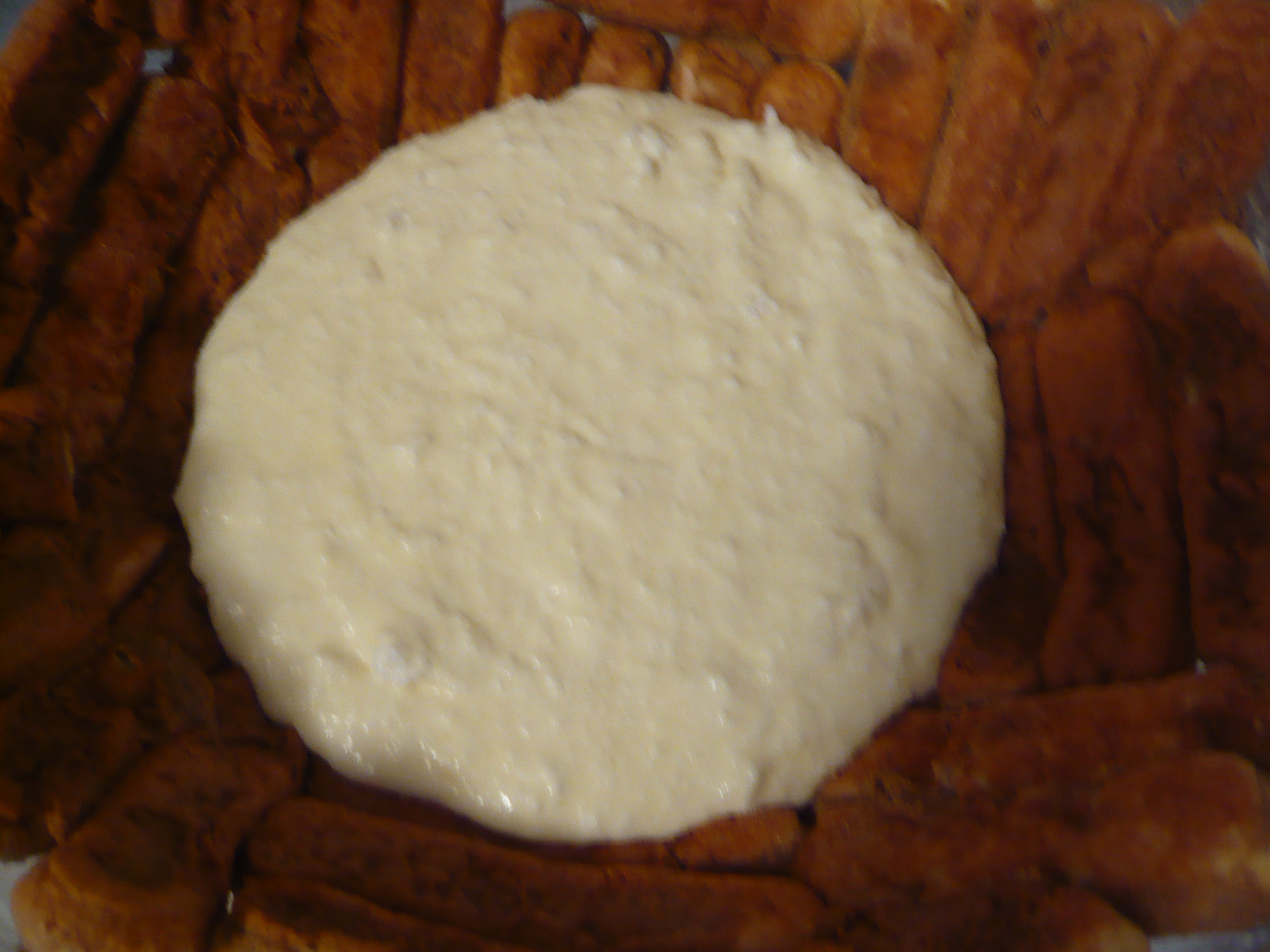
Fill the bowl half way with the cream-yolk mixture. 

Dust cacao on top of the cream, then arrange a layer of ladyfingers so that they cover the cream.  Then cover the ladyfingers with the remaining cream.  Dust with cacao.  Do this by putting the cacao powder into a sieve and shaking gently on top of the cream.  If doing this in  a glass baking dish, use an 8 by 10 size and arrange in two layers starting with ladyfingers, ending with cream. Dust with cacoa. Chill at least 6 hours.

Add to FacebookAdd to DiggAdd to Del.icio.usAdd to StumbleuponAdd to RedditAdd to BlinklistAdd to TwitterAdd to TechnoratiAdd to Yahoo BuzzAdd to Newsvine

My Daughter Gives Me Julia Child


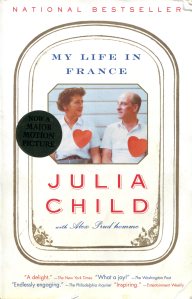
I have always loved to cook.  Since I was a young child, I found cooking to be an escape and I became good at it.  Ordinary cooking, nothing too fancy.  When I did terribly in school, when I was awkward and goofy with braces, when I got in trouble for doing something bad I could always find my confidence again by cooking.  There were ten kids in my family and by the time I was eight I was cooking for them all.  Chicken Kiev was a specialty, little balls of breast stuffed with butter and herbs.  My darling daughter knows this passion of mine and so last summer after working for my mother in her photography studio for several weeks — running errands around Princeton, greeting customers, even assisting her with shoots — my daughter, Livia, took her earnings and bought tickets to Nora Efron’s movie, Julie and Julia, for herself, my mother, and me.  She also bought for me Julie Powell’s book Julie and Julia and Julia Child’s My Life In France.  Livia, at the time, was nine years old. 

I had just finished a novel and was feeling empty, casting about.  Livia somehow knew this, that I needed some inspiration.  Alas, it took me about six months to get to, but when I finally did I was inspired indeed: clearly like the millions of people who have already read the book.  What I love about My Life In France is the portrait of genius Child unwittingly creates of herself.  Through her passion for cooking you understand vividly what it means to be a genius.  Her obsession to understand, for example, how to make the baquette as the French do but in America with American ingredients leads Child on a two year adventure.  She uses over 700 pounds of flour before she nails it.  How many of us, no matter our trade, have that committment to precision, to what we love to do?  Not many, I would guess — and perhaps that’s what separates us.  And the other bit of beauty: her desire for knowledge, her fantastic curiosity color her life with happiness.


Add to FacebookAdd to DiggAdd to Del.icio.usAdd to StumbleuponAdd to RedditAdd to BlinklistAdd to TwitterAdd to TechnoratiAdd to Yahoo BuzzAdd to Newsvine

My First Event For Dear Money, and for a good cause

April 10, 2010 | 3:30pmThe Center For Fiction and Read This | 17 E. 47th Street, NYCClick here to view full event

Panel Discussion: Writing About Money, the Novelists: Jonathan Dee, Adam Haslett and MARTHA McPHEE

Man Against Man, Man Against Nature…How about Man Against the Federal Reserve? These critically acclaimed writers have recently penned novels set in the world of financial privilege and power. Dee (The Privileges), Haslett (Union Atlantic), and McPhee (Dear Money) talk with Lindgren (executive editor of Businessweek) about what they learned about money while writing about human nature. They will be joined by the financial reporters from the 2:30 p.m. Money Panel.

Add to FacebookAdd to DiggAdd to Del.icio.usAdd to StumbleuponAdd to RedditAdd to BlinklistAdd to TwitterAdd to TechnoratiAdd to Yahoo BuzzAdd to Newsvine

Secrets To A Perfect Risotto


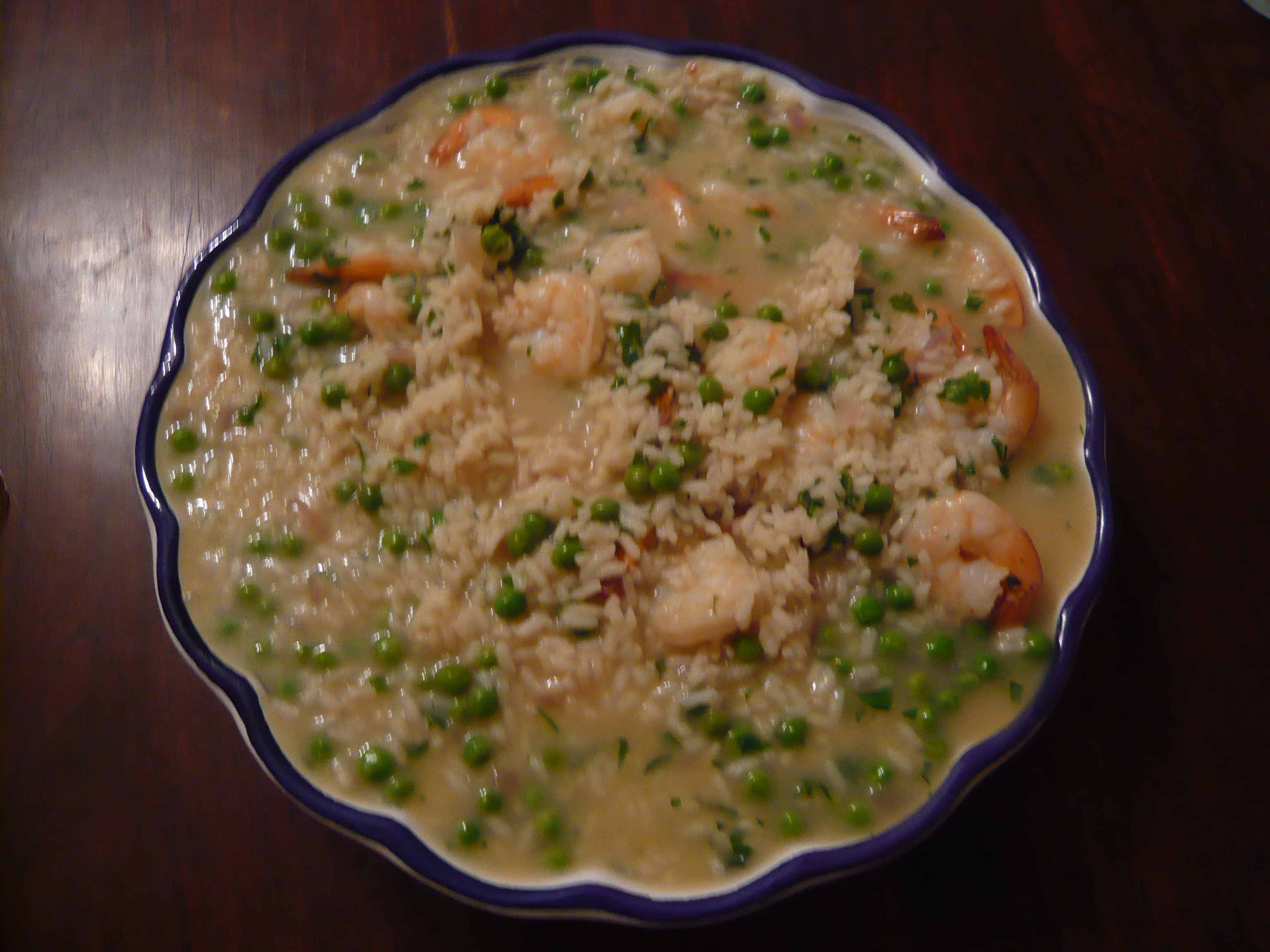
Luca’s Risotto With Shrimp And Lemon

First, the secrets:

1) A heavy pan, cast iron, perhaps a Le Creuset
2) A highish heat
3) Abundant liquid. Keep the rice well soaked with broth even to the far end. It should be almost soup-like when you turn the heat off.
4) When finished cooking, pour the very wet risotto onto a platter. It will continue absorbing the water, but more slowly as it is away from the heat and on a cooler surface.

These tips work for all risotto. I don’t generally measure, so the following recipe is more or less, but, as with all the recipes I use, this one is very forgiving. More or less is good enough.

Shrimp Risotto (serves four — doubles, triples easily, as long as you follow the secrets)

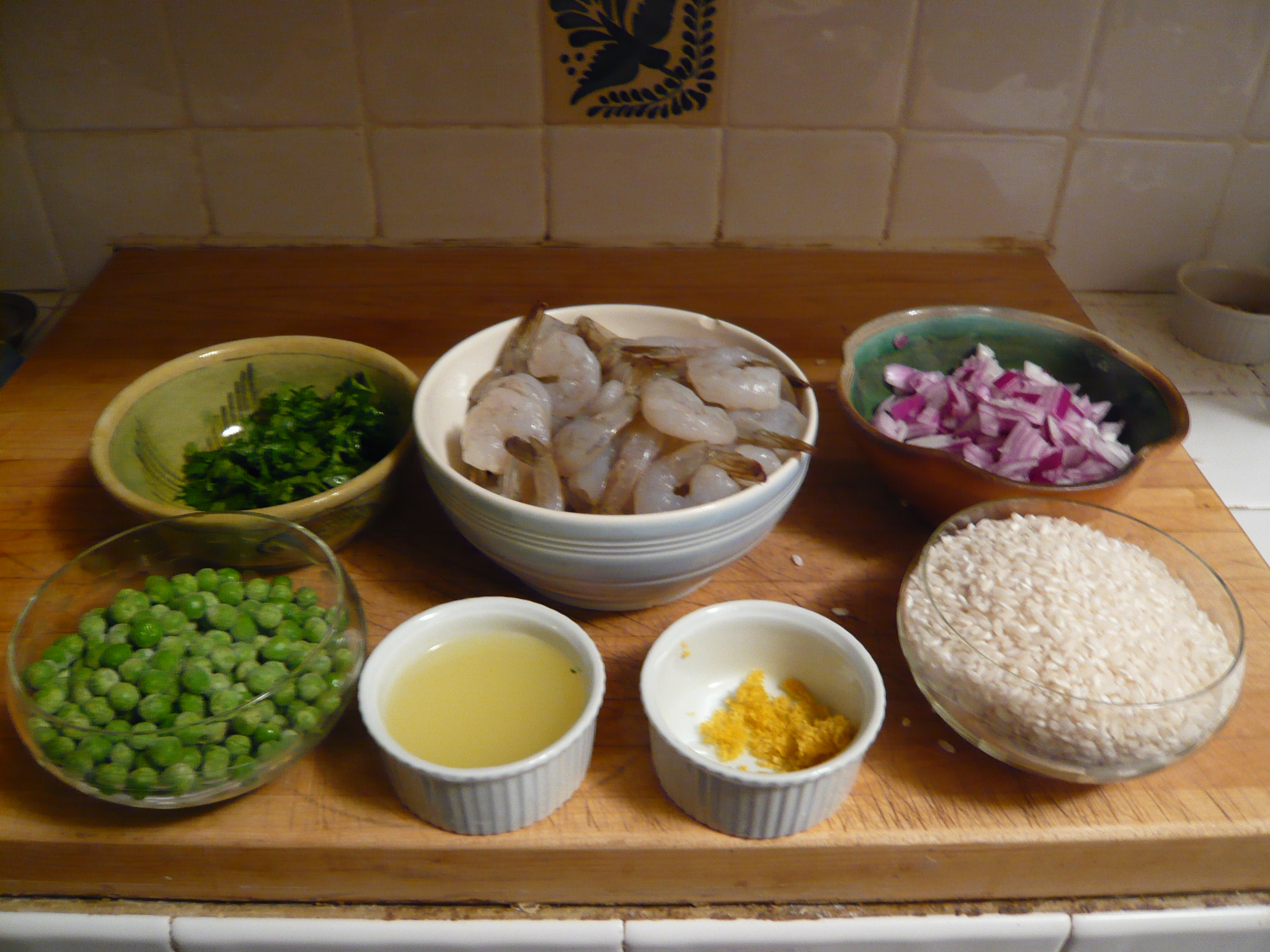
Ingredients:

1/4 cup red onion, chopped

2 tablespoons of olive oil

1 cup of risotto

1/3 cup dry white wine

2 tablespoons of grated lemon rind

1/4 cup of lemon juice

10 ounces of medium shrimp, deveined

3/4 cups frozen small peas

1/4 cup of chopped Italian parsely

5-7 cups of stock which should be heated in another pot.  If you run out of stock, use water.

Salt and pepper to taste
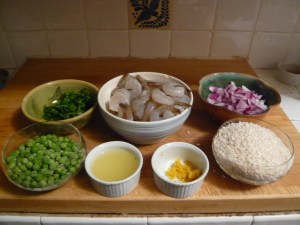
In a heavy pot heat olive oil, add onion, cook about 3-5 minutes until translucent.  Add rice, coat with oil and onion.  Add wine.  Let absorb a little.  Add an ample laddle of stock, stir constantly.  Before all the stock is absorbed add another laddle of stock.  Stir.  Repeat.  REMEMBER always keep the rice wet.  Don’t let the stock vanish.  This should take about 15-20 minutes.  When the rice is al dente, add a second to last laddle of stock.  While stirring it in add the peas and the shrimp, lemon zest and lemon juice.  Stir until the shrimp turn pink and curl.  About 2-3 minutes.  Add a final laddle of stock.  The risotto should look almost soupy.  Stir in the parsely.  Transfer to a platter and serve. 
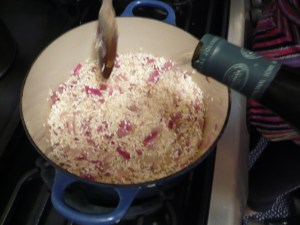
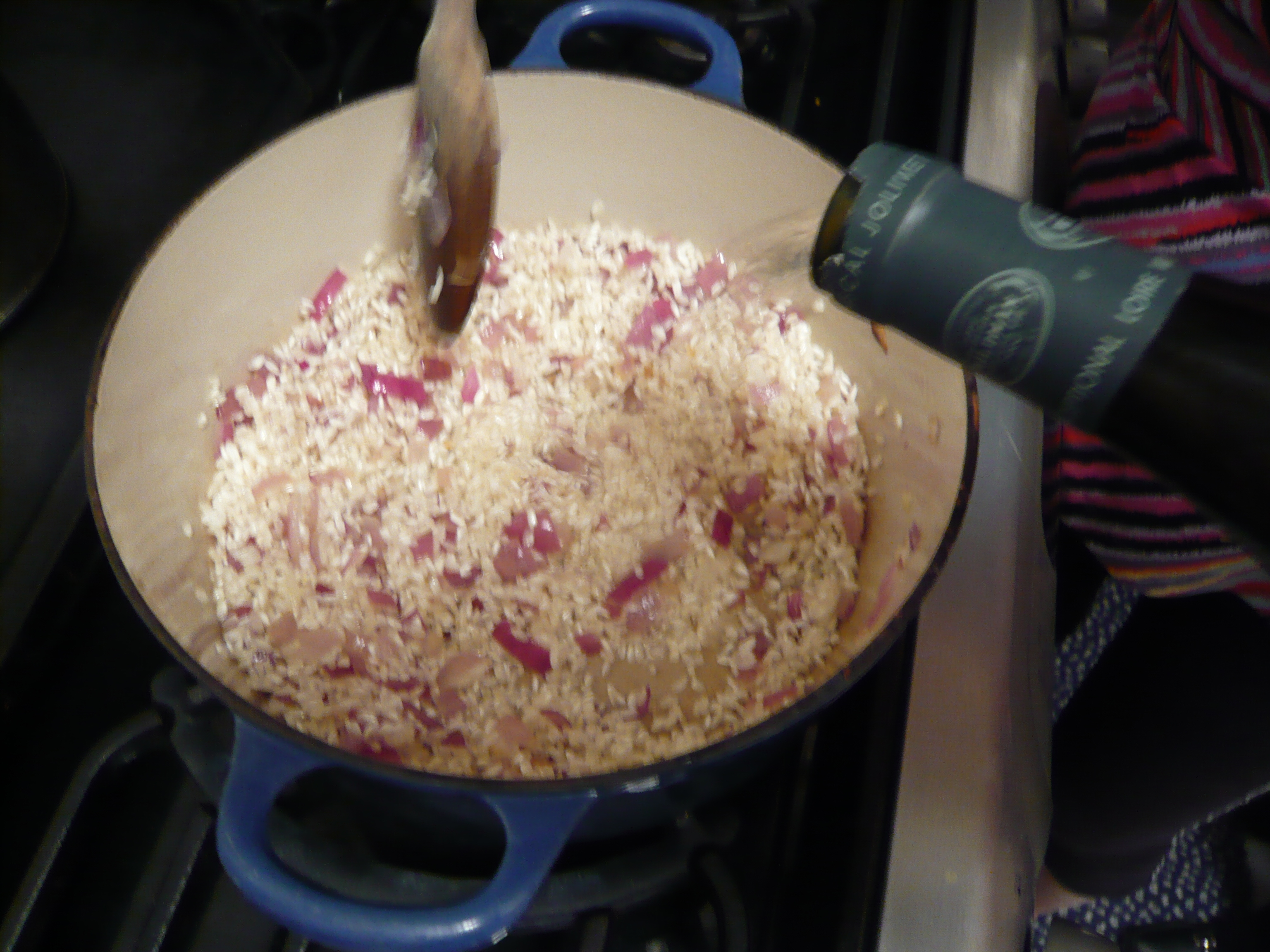
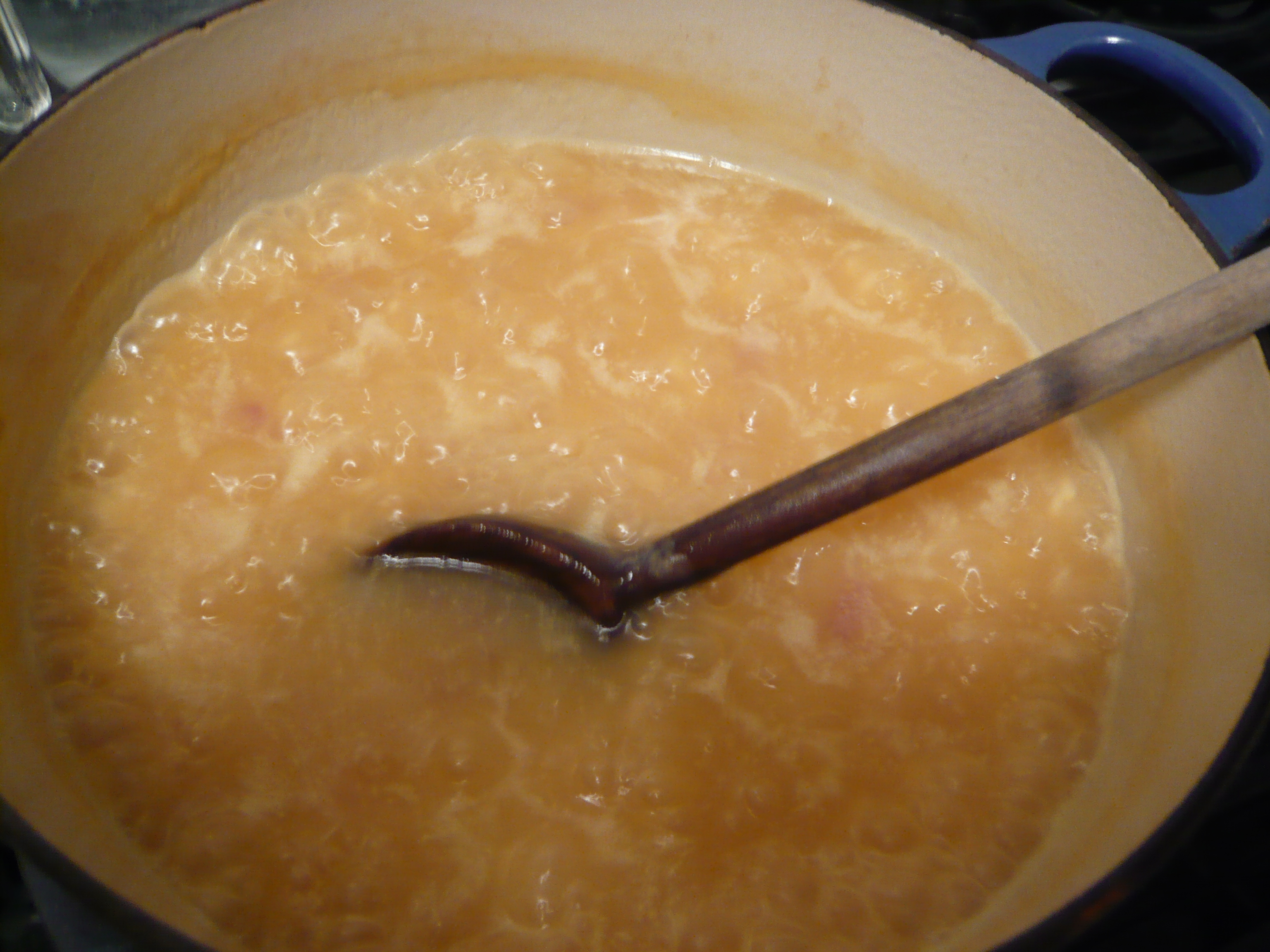
Adding the wine.
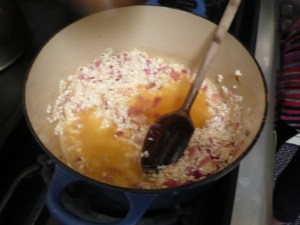
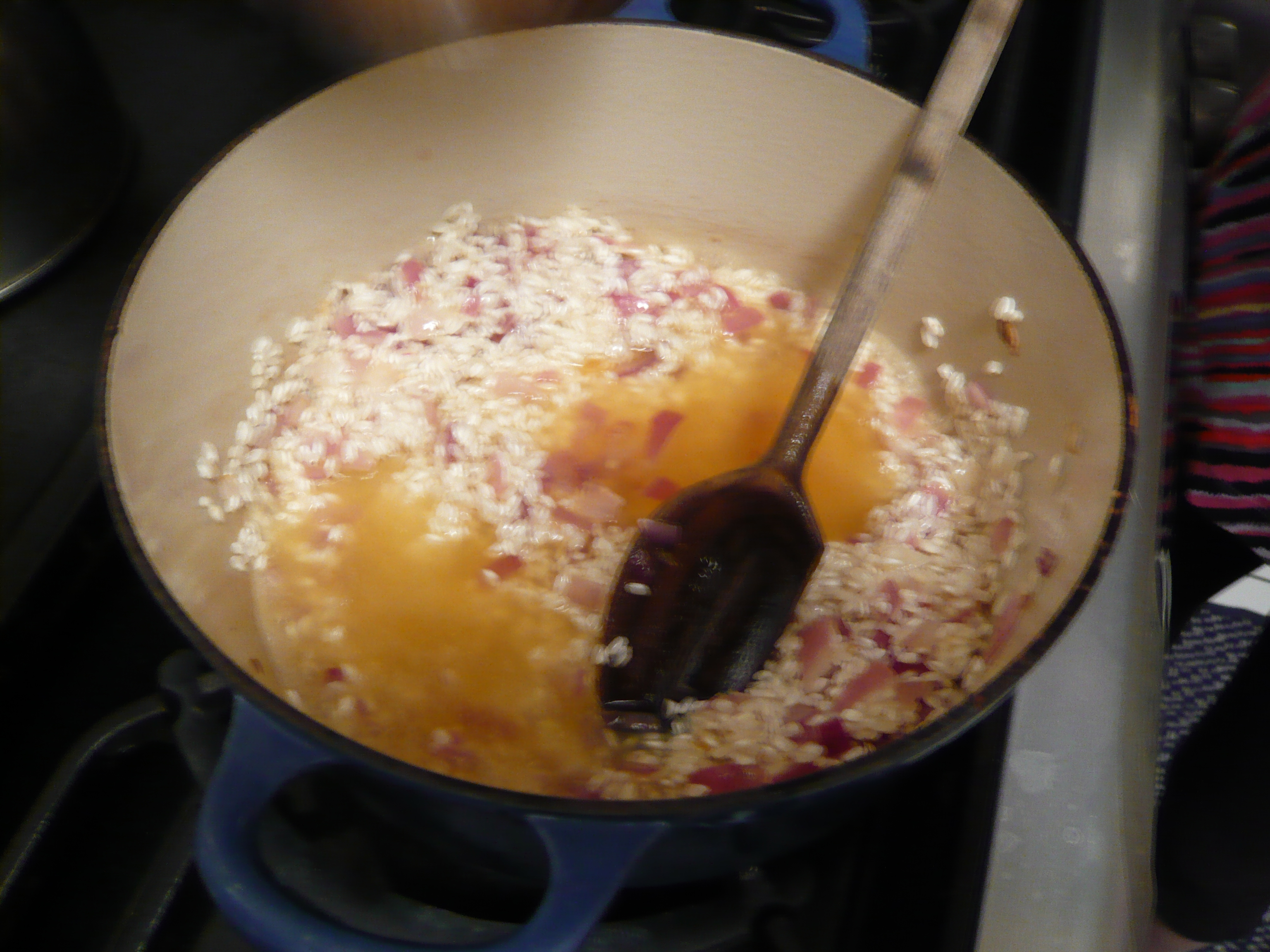
Absorbing the wine and the first bit of stock.
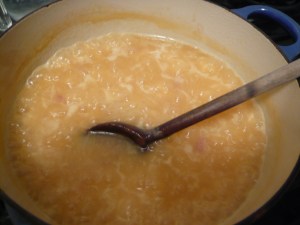
Keeping the risotto wet as you stir and cook.
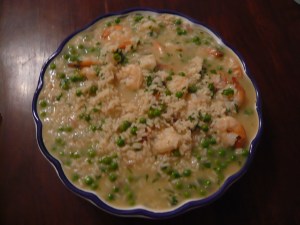
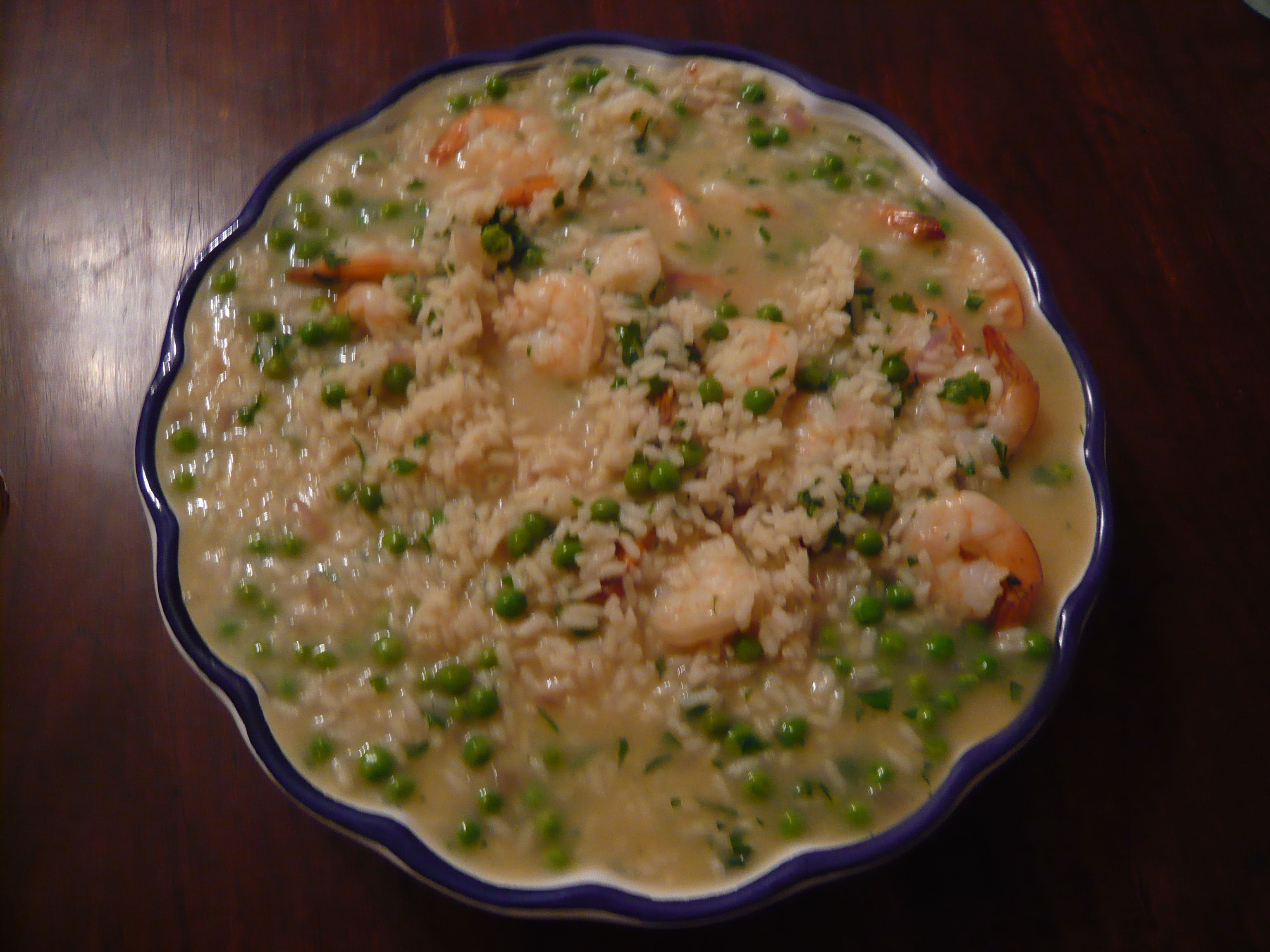
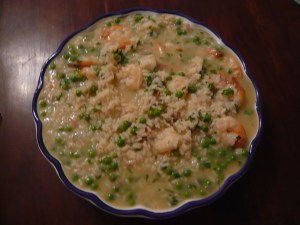
Ecco: the final product.  Serve and enjoy! 

Note: NEVER serve with cheese.  As any Italian will tell you, cheese and fish do not go together.

Add to FacebookAdd to DiggAdd to Del.icio.usAdd to StumbleuponAdd to RedditAdd to BlinklistAdd to TwitterAdd to TechnoratiAdd to Yahoo BuzzAdd to Newsvine

Find A Penny

As part of Rob Walker’s Significant Object project, click on the links to find out more and to see how bidding on ebay for this charming piggy (with story—by me—attached) can benefit 826national a program which tutors youth in creative and expository writing. 

My grandmother gave me the piggy bank when I was four, for Christmas, wrapped in a box with bows.  She said, “A penny saved is a penny earned.”  She said, “Find a penny pick it up, all day long you’ll have good luck.”  She wore a beehive of blue hair, had piercing green eyes, dressed in expensive-seeming clothes.  “A lady of quality,” she said.  She sold Avon door to door and from the living room of her two-bedroom ranch on Lover’s Lane in Heather, Illinois.  Her house smelled like honeysuckle.   More on ebay

Add to FacebookAdd to DiggAdd to Del.icio.usAdd to StumbleuponAdd to RedditAdd to BlinklistAdd to TwitterAdd to TechnoratiAdd to Yahoo BuzzAdd to Newsvine