She’s Not Afraid

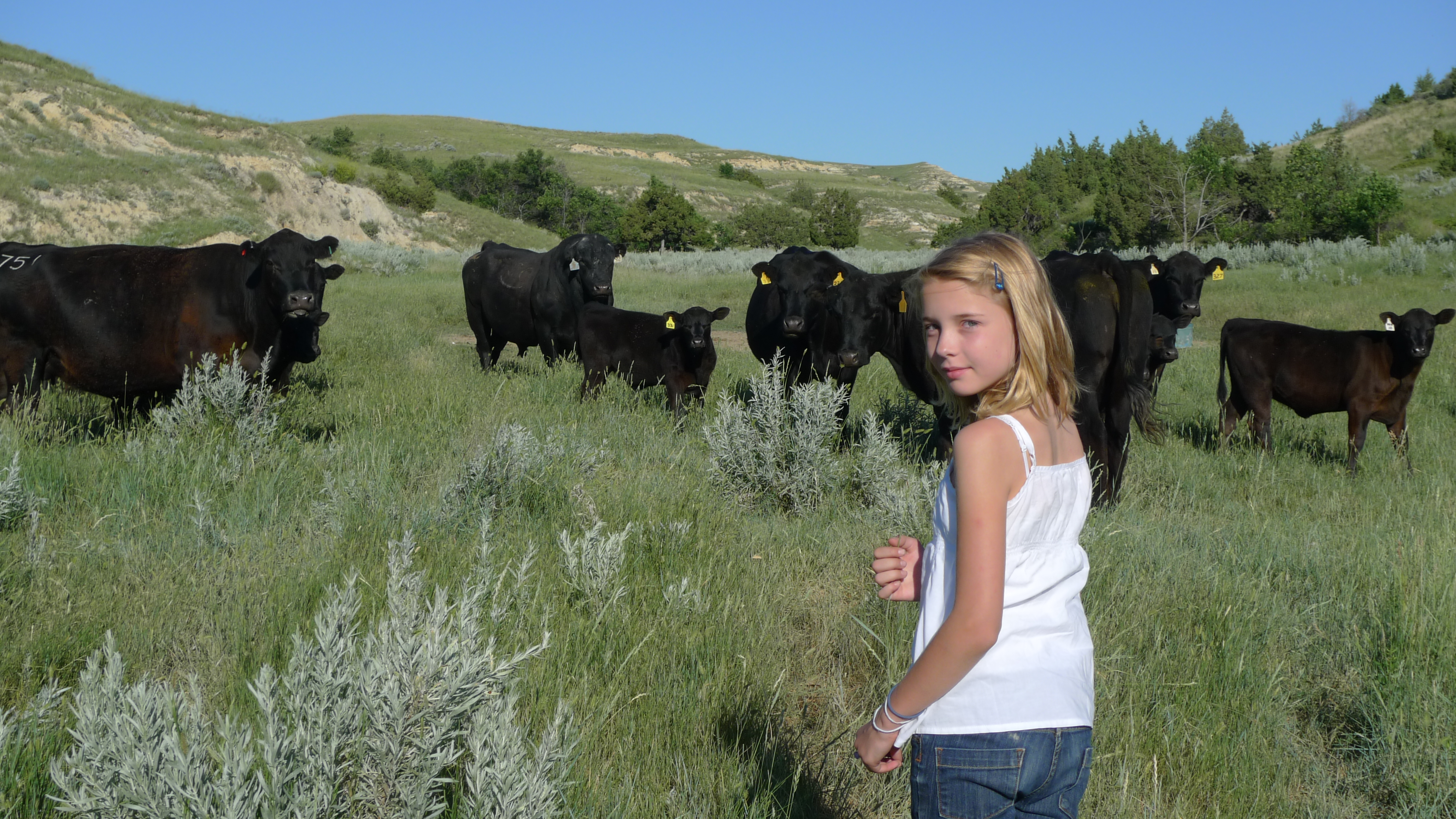
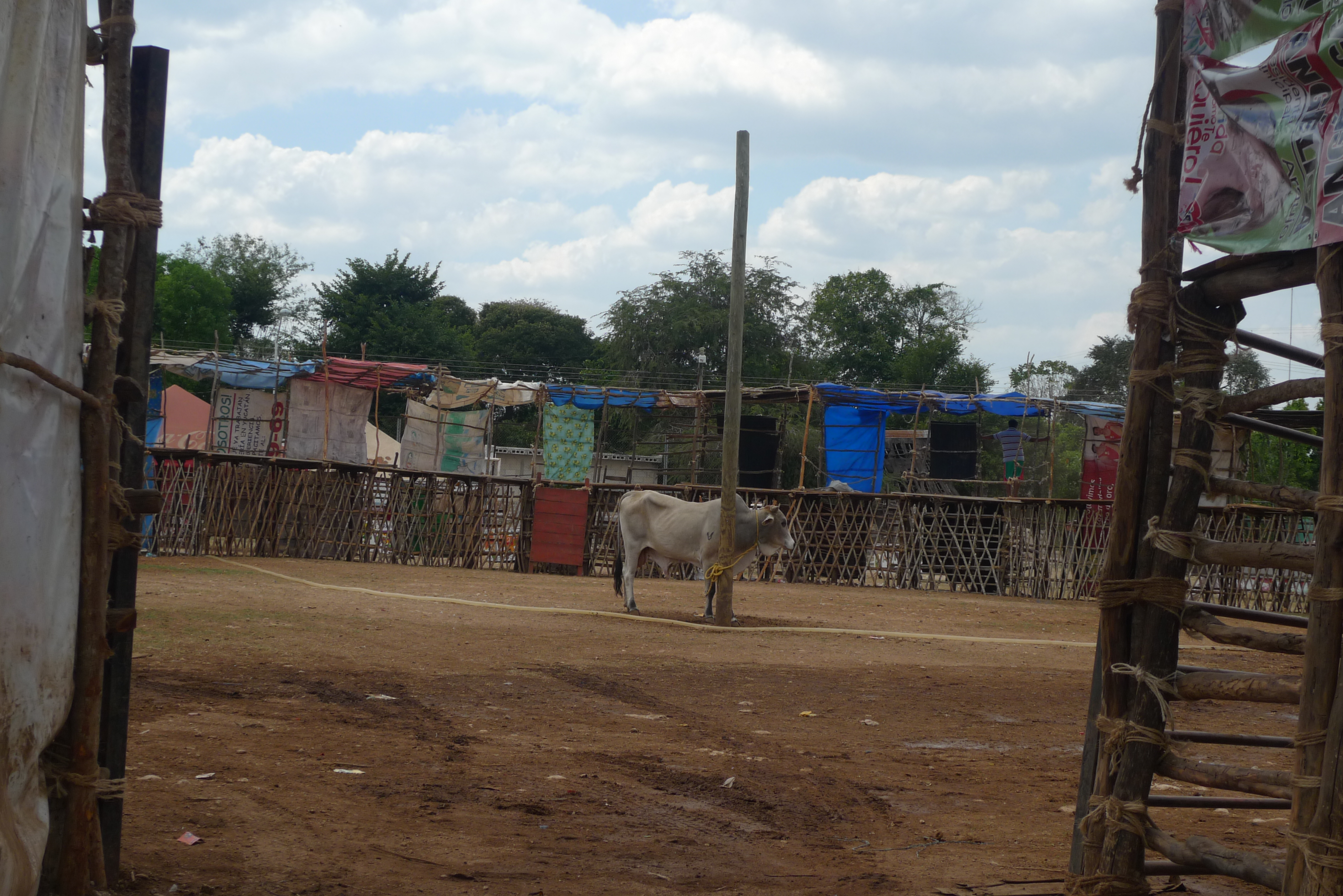
There’s a bull in this picture.  Can you see it?

One bull for about 25 cows.  The bull here is just left of center, the biggest beast in the picture.  His job happens in the summer months.  He can tell a cow is fertile by smelling her pee, literally putting his nose to her.  In November the vet comes to do pregnancy checks.  If a cow isn’t pregnant she’s sent off to McDonald’s.  Ranchers do not eat veal and a child on a ranch learns everything she needs to know about the birds and the bees by the time she’s five or six.

Livia Svenvold McPhee on the Svenvold cattle ranch in Bloomfield outside of Glendive, Montana.  Summer 2011.

BIG WEATHER

Air is water’s ghost, flowing, like water, through its seasons. In the spring, as every child in grade school knows, the northern hemisphere of the earth is tipped toward the sun, and the jet stream, that narrowest and swiftest channel of the river moving at speed aloft, drops southward, in a grand lasso, through Canada into the United States. A cold and dry air mass that has been hovering over the polar cap all winter thus barrels across the country. It would drop as far south as Texas and Louisiana, as it sometimes does, but for an epic collision with the only thing on earth that can stop it: the Maritime tropical air mass thrusting north from the Gulf of Mexico. To the ensuing windswirl, and to the water metaphor that helps describe it, a different–and decidedly mixed–metaphor adheres: as air masses advance and clash and retreat like armies, and then advance and clash again across shifting fronts and flanking lines through the months of April, May, and June.
 
The land that lies beneath these colliding air masses is home to more violent weather than any place else on the planet: on average, 10,000 severe thunderstorms sweep over the continental United States annually, bringing with them 5,000 floods and 1,000 tornadoes. While tornadoes occur everywhere in the world, fully three-quarters of them strike the United States over a region that encompasses all of the mid-west, most of the east coast, and nearly all of the south. Some maps delimit a region of greatest tornado frequency along an area beginning in South Dakota and extending southward to include most of Nebraska, Kansas, and Oklahoma, and much of Texas—the legendary region of Tornado Alley. But there are several Tornado Alleys, perhaps the most significant being the big, right-hand turn at Oklahomathat reaches eastward through Arkansas, Mississippi, and much of Alabama. If these two alleyways were combined, from the Dakotas to Alabama, they would form a giant, listing L, a soaked sock. Distinctions can and will be made among states about their indigenous features, even about tornadoes, a sort of ill wind boosterism that ranks Texas first in the sheer number of tornadoes, Kansas first in the number of that rarest sort of tornado, the F5, from the Fujita scale of magnitude, with 16 such monstrous tornadoes hitting Kansas over the last fifty years. Then there is the matter of the Palm Sunday Super Outbreak of April 3-4, 1974, the biggest outbreak of its kind in recorded history, that unleashed 147 tornadoes across 12 states. So prolific were the storms that at one point there were as many as fifteen different tornadoes on the ground simultaneously. Although most did relatively little damage, the super outbreak produced six F5 category tornadoes, two of which had damage paths in excess of a hundred miles. The F4 tornado that swept through Monticello, Indiana, had the longest damage path at 121 miles. This calamitous event, an historical and statistical anomaly in the extreme, is liable, in the manner of the proverbial five hundred pound movie executive, to draw attention away from a seasonal battle that rages no where else with greater apocalyptic fury than in the prairie state of Oklahoma. “Threat maps,” estimating tornado probability invariably place Oklahoma in the center of an oblate zone of concentric rings with Oklahoma City and its surrounding counties forming a bull’s eye. And indeed, more violent tornadoes of magnitude F4 or higher strike Oklahoma than anywhere else on earth—nearly a hundred in the last fifty years. Oklahoma City has been hit more than any city anywhere–112 times by tornadoes in the last hundred years, 17 of those involving two or more tornadoes striking on the same day.
Yet these statistics, of course, are misleading. Most Oklahoman’s live their lives, growing up, marrying, raising children, growing old, passing through life’s stages, its weeks, months, years, and decades–time lived on the human scale–without ever seeing a tornado first hand. Fewer still are the number of people who are directly affected by the destruction of a tornado. The cycles of tornado occurrence and recurrence are played out on a time scale quite beyond the human frame of reference. For each spot on the Oklahoma prairie, a thousand years might pass between one tornado strike and the next, and yet, statistically—relative to other geographical areas—climatologists who study the matter would consider the rate of one-tornado-per-thousand years a veritable tornadic rush hour. Against the backdrop of statistical recurrence, entire generations come and go between tornado strikes, the memory of their destruction ebbing, receding into the historical vanishing point.
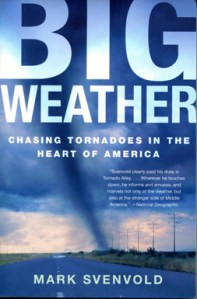
(If you want to understand more about the violent weather the rips across the south, read Big Weather. Written by Mark Svenvold, poet, nonfiction writer, my husband.)

Let’s Live, you and I, …

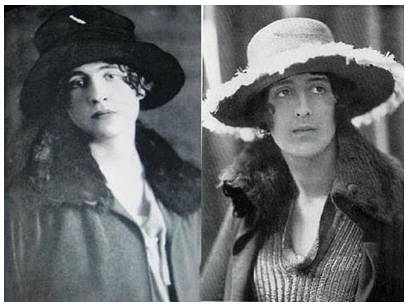
Heaven preserve me from littleness and pleasantness and smoothness. Give me great glaring vices, and great glaring virtues, but preserve me from the neat little neutral ambiguities. Be wicked, be brave, be drunk, be reckless, be dissolute, be despotic, be an anarchist, be a suffragette, be anything you like, but for pity’s sake be it to the top of your bent. Live fully, live passionately, live disastrously. Let’s live, you and I, as none have ever lived before.’

Violet Trefusis to Vita Sackville-West, October 1918

Yucatecan Cuisine: Making Panuchos In New York City

I have always found my portal into another culture to be through its food.  In March I went to the jungle outside of Merida and stayed in a colonial hacienda that had been transformed into a private home, soaring ceilings and rioting vegetation just outside the screened doors, the constant song of doves.  At this extraordinary place, where every desire was anticipated before we had a chance to think of it ourselves, all meals were prepared for us — a showcase of Yucatecan cuisine: caldillo poblano con ensalada de camerone; sopa de tortilla y poc-chuc; frijol de puerco; arroz a la Mexicana y frjitas; and on and on.  Our favorite, caldo Tlapeno y panuchos, was described to us as Yucatecan “fast-food” because the panuchos are eaten fast since they are so good.  They are also considered a form of street food.  But actually, they take quite a long time to make.  We loved them so much that when we returned home we had a little dinner party to remember the trip and spent the afternoon making the panuchos.  Panuchos are homemade tortillas stuffed with refried beans, topped with lime-rinsed shredded cabbage, achiote-rubbed grilled and shredded chicken, pickled red onion, a slice of avocado.  They are simply delicious, all the flavors coming together in a burst of texture and spice and lime.

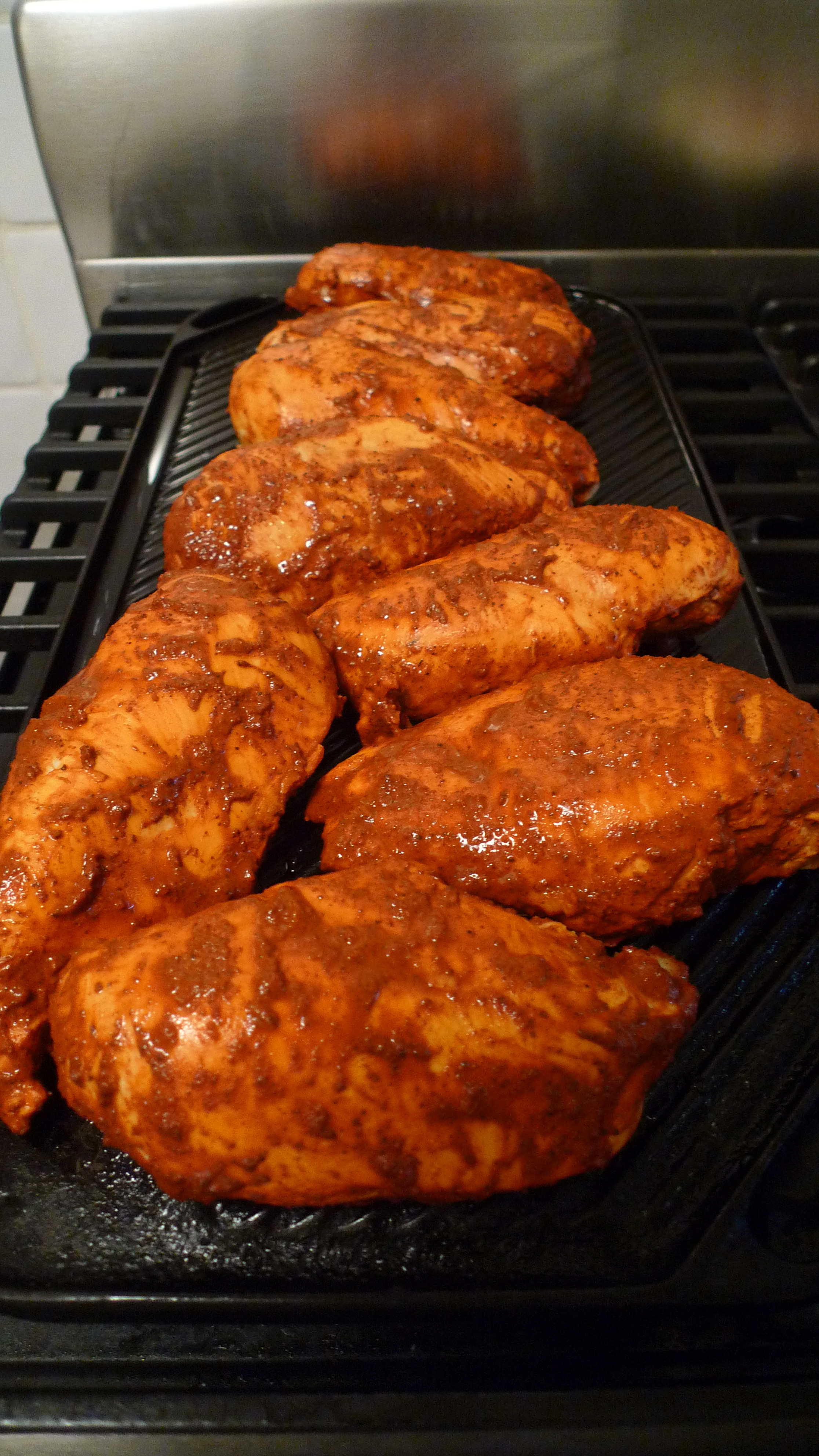
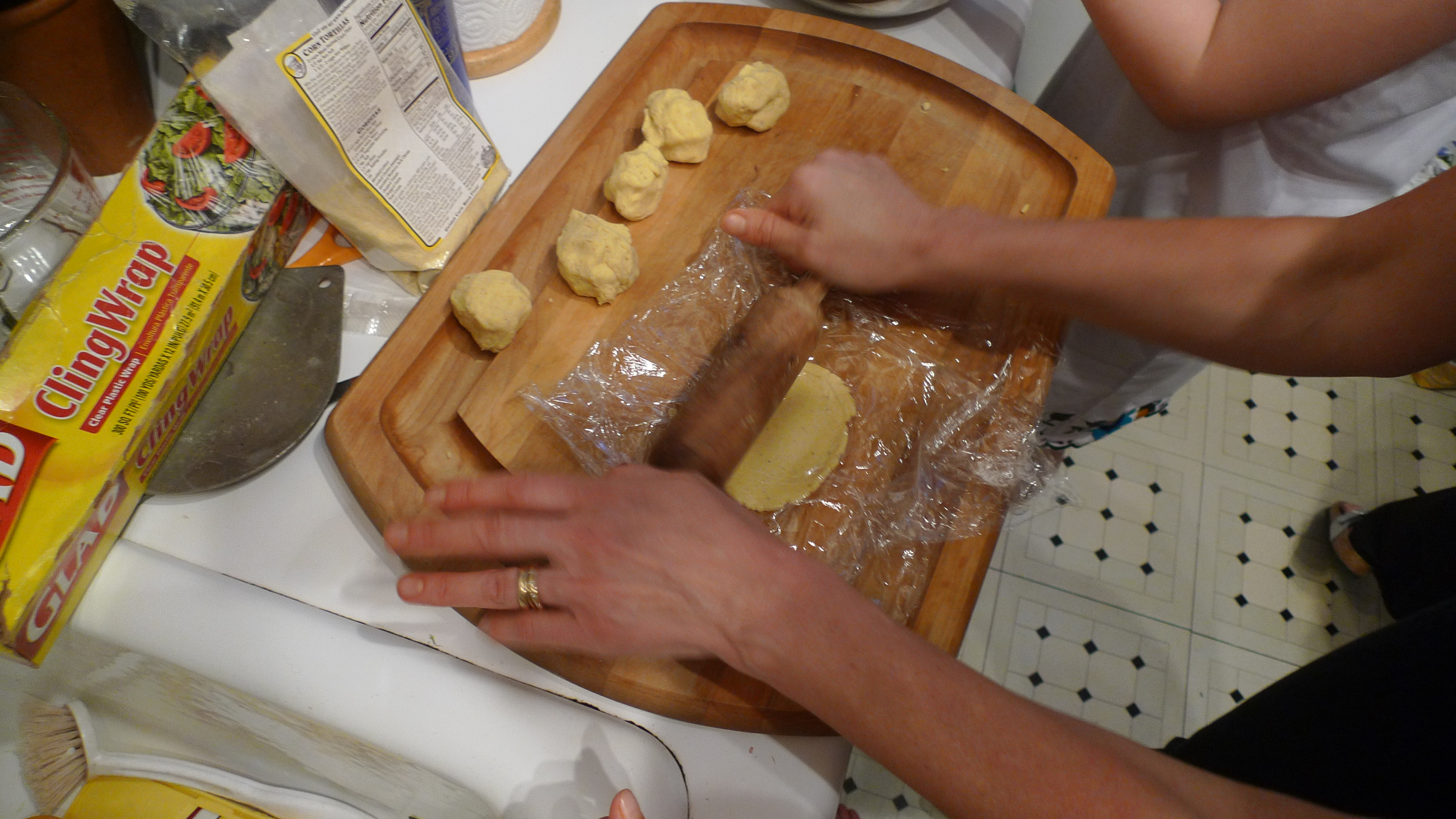
Ingredients and directions: achiote paste thinned with lime juice; pickled red onions (pickle them yourself by thinly slicing the red onion and soaking them in one part lime juice, one part orange — enough juice to submerge them, and, the longer they sit in the juice the better, at least a few hours; chicken breasts first poached and then rubbed with the achiote, then grilled, then shredded.  I did this with my fingers.  It was laborious, but I didn’t mind it as it brought me to contemplate the beauty of preparing delicious food, that it should take some time.  It also allowed me to appreciate the effort that went into preparing the Yucatecan food for us when we were at the hacienda.  There is something meditative about pulling chicken breasts apart — sort of like ironing.  Prepare the shredded the cabbage.  (I used a food processor, having had enough meditation.)  Once shredded, squeeze lime juice abundantly on the cabbage.  Cut avocado in thin wedges.  Have all the ingredients ready so that you can assemble the panuchos quickly.  Make the tortillas.  We did this by hand.  The flour packaging (masa harina) will have the recipe.  We didn’t have time to buy a tortilla press so we rolled them by hand.  They were not perfectly round, but it didn’t matter.  We rolled the dough between two layers of Saran Wrap and then fried them until they puffed.  Take them out of the oil with a slotted spoon and rest them on paper towel.  As soon as you can, slice into the tortilla to make a pocket, fill it with black refried beans (ours were from a can, make sure they are black).  Start assembling the panuchos: cabbage; chicken, onions, avocados.  Make a gorgeous platter of them and then serve immediately.  I promise you that this is worth all the effort.  Making them and eating made us feel we were back in the hot, fragrant jungle even though we heard sirens racing up Broadway.

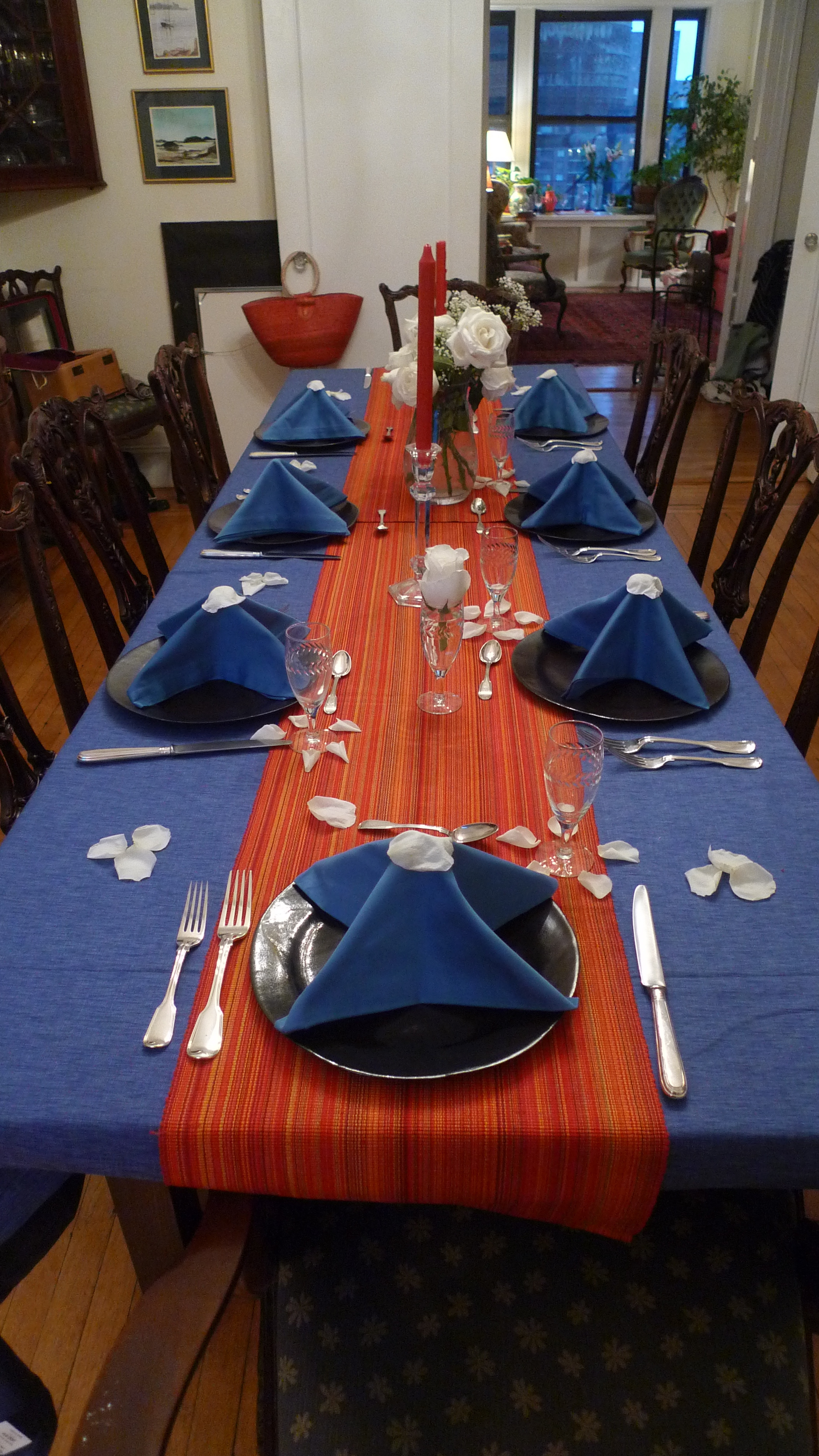
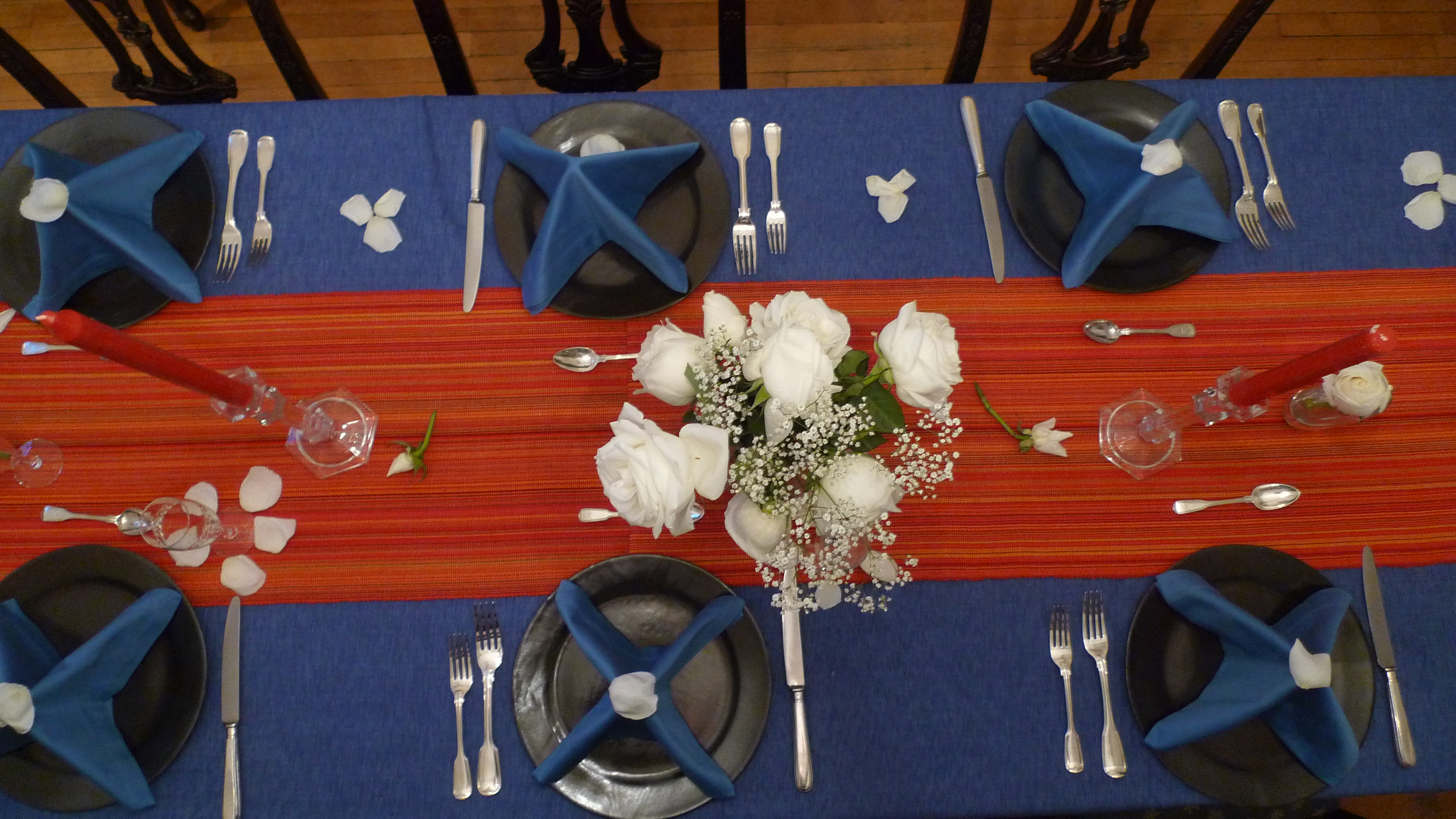
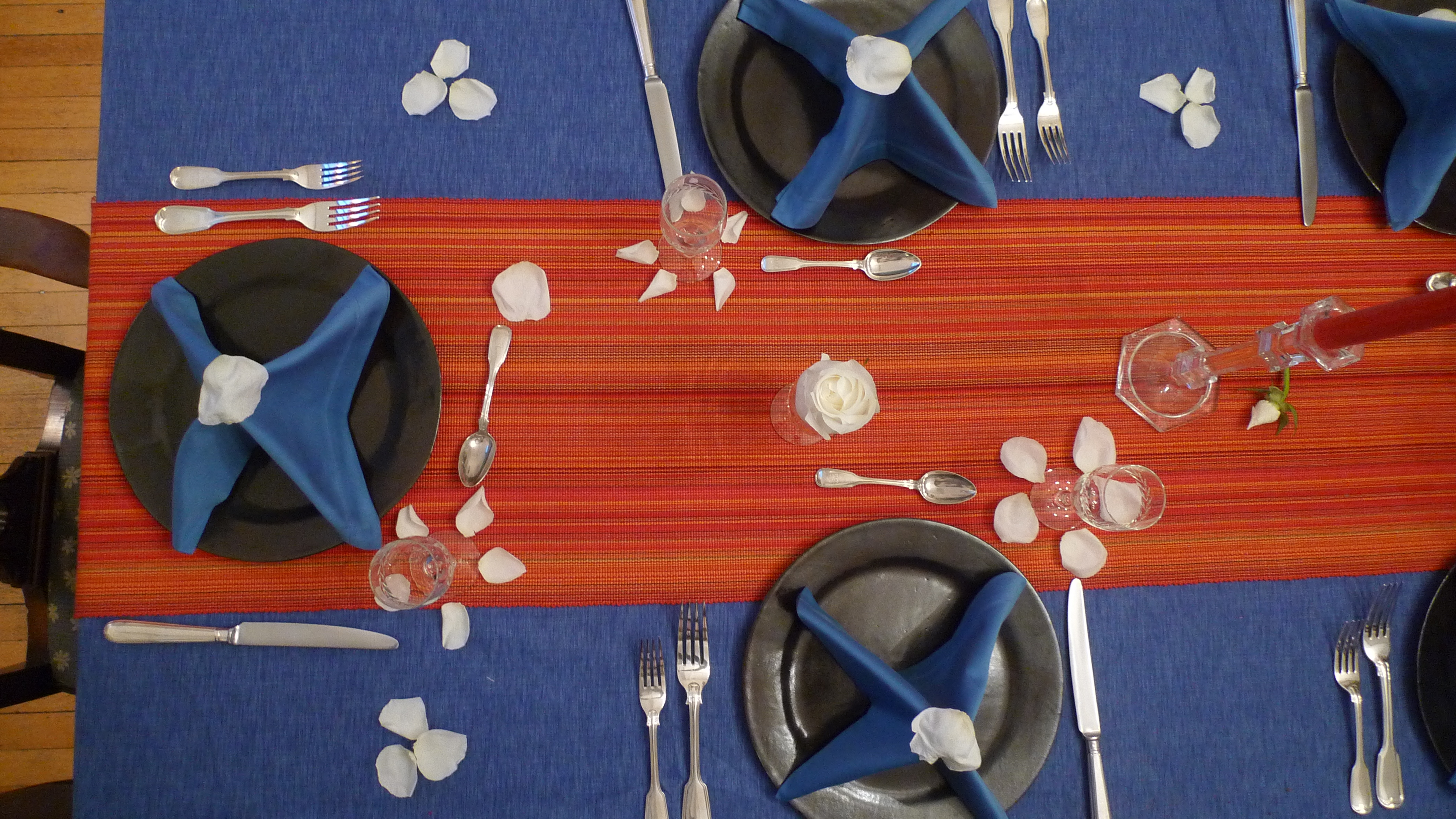
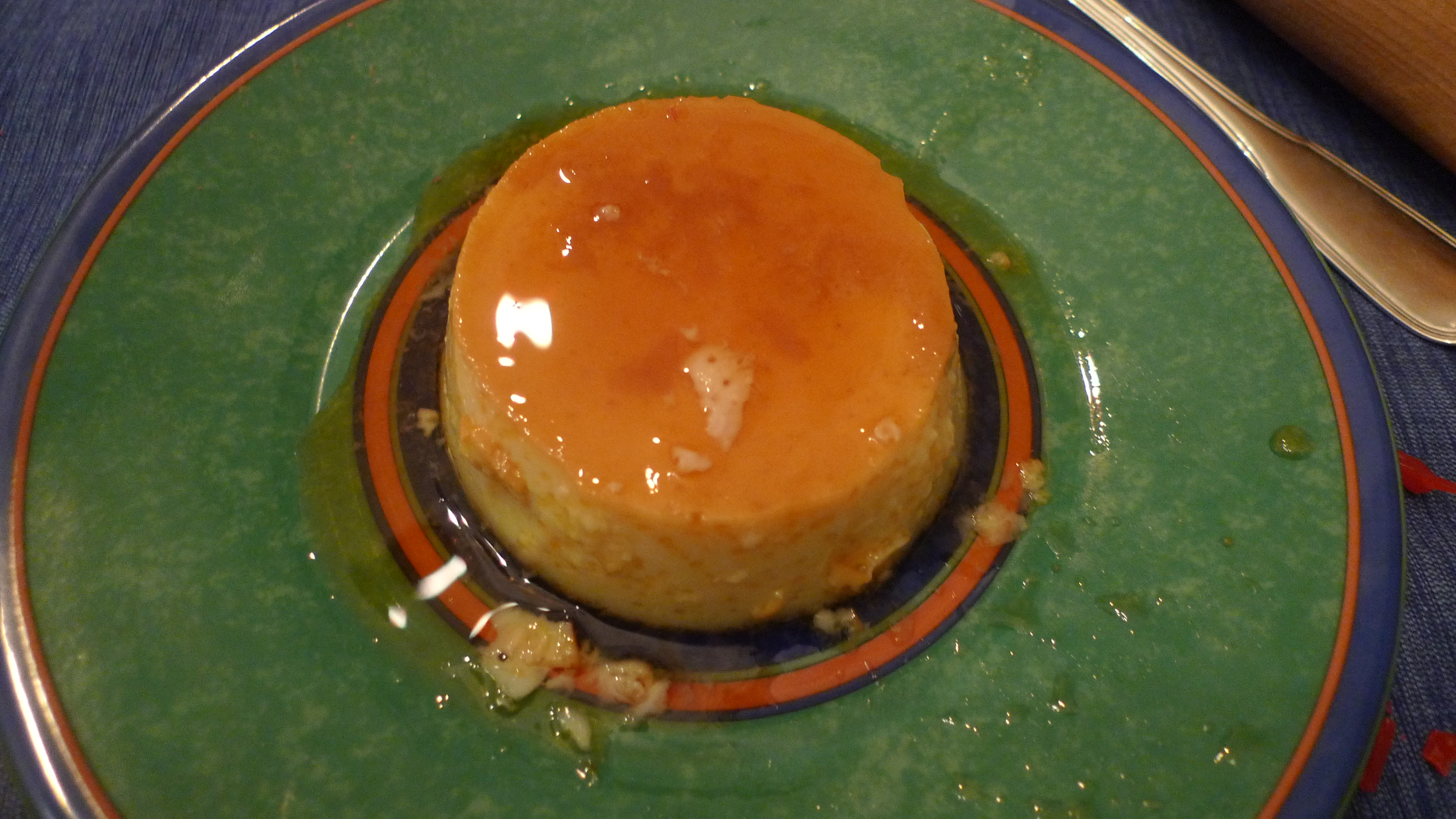
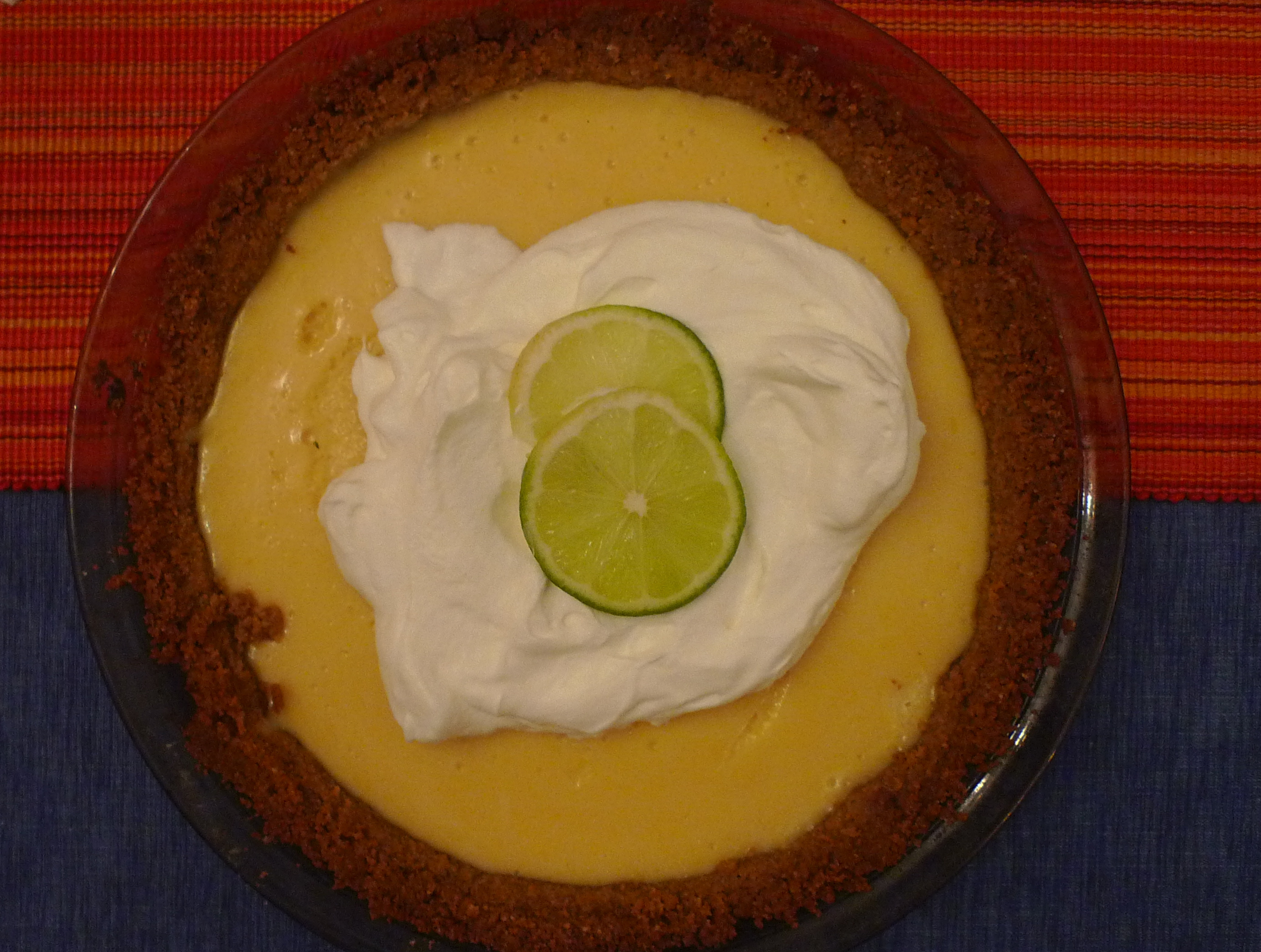
We were so enthusiastic about recreating the experience of eating at Hacienda Petac that we set the table as they did for all meals.  Flower petals and napkins shaped to look like Mayan pyramids.  (At the hacienda at each meal the napkins would be shaped differently: a shirt one day, a flower, a little woman.  I believe there was a different shape for each meal: 3 meals per day times 7 — a lot of shapes.)  We drank margaritas and a cool Chablis and limonadas.  For dessert we made a Key Lime Pie and Flan.  After the meal, the kids whacked a pinata until it burst.  They’d made the pinata at Hacienda Petac during the lazy afternoons.  Here are some fun and essential links:

Achiote Paste

Masa Harina

Hacienda Petac

How To Make Panuchos

Tortilla Press

The Perfect Flan

Some pictures:

The achiote-rubbed chicken on a make-shift cast iron grill that sits on stove top burners.

Making the tortillas

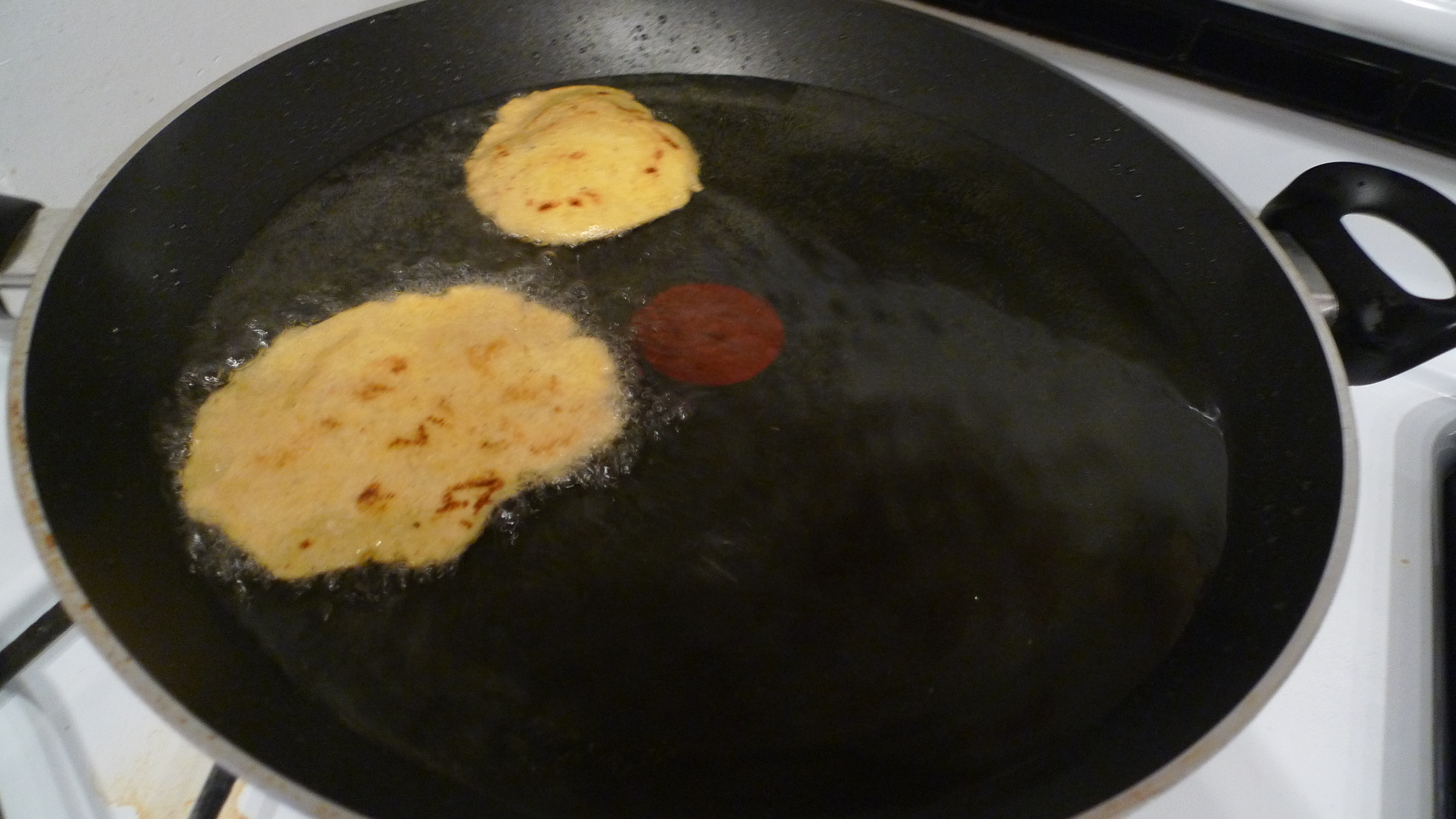
Frying the tortillas

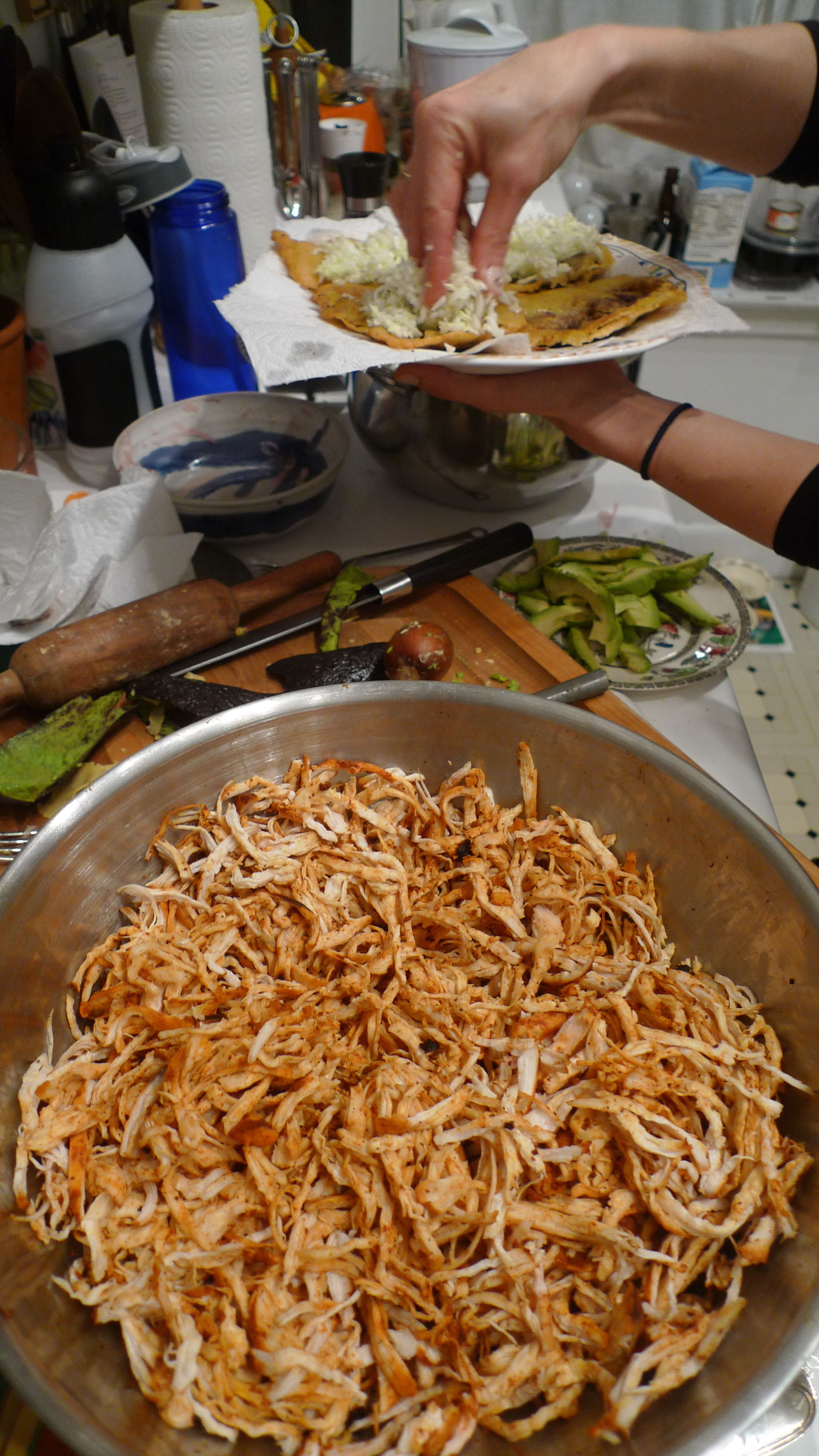
All the shredded chicken.  This was from about 3 full breasts.  Beyond the chicken, the assembling begins.

The panuchos

The glorious table.

The Flan

Followed by …

Recipe for Key Lime Pie:

3 egg yolks

1 can sweetened condensed milk

1/2 cup of key lime juice.  Sercet: DO NOT use bottled key lime juice.  If you can’t find key limes, use regular limes.

Directions:

1) Make a pie crust with 5 tables of melted butter and 1 package of nine graham crackers crushed.  Press it into and up the sides of a 9.5 Pyrex pie pan.

2)Preheat oven to 375

3) Combine egg yolks, milk, lime juice.  Mix well.  Pour into unbaked crust.

4) Bake for 15 minutes.  Allow to cool.  Refrigerate.  Top with thin lime slices and unsweetened whipped cream … if you desire.

Waking Early To Birdsong

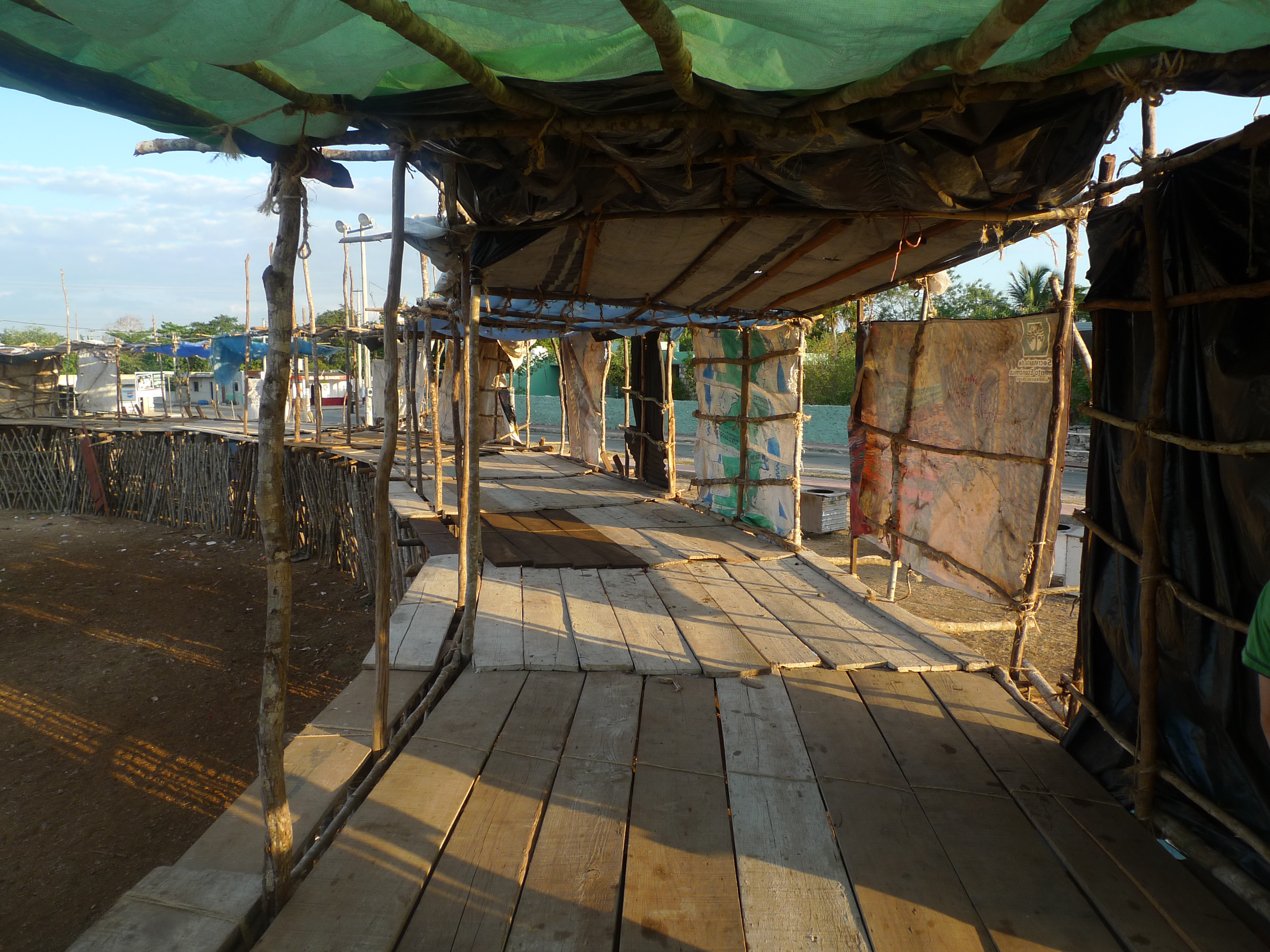
Waking early to birdsong, doves and mot mots, a pair of love birds playing in a branch.  Coffee delivered to my bed.  A sultry air stirred by a kind breeze.  The jungle outside of Merida, Mexico.  Hacienda Petac, former sisal plantation established in the 1700s, celebrated for its rope production, converted now to a private home.  Palm and agave and creeping philodendron and mariposa and quanabana and neem and pich and pomegranate .  The canopy dripping with fruits and pods shaped like beans and boomerangs and ears, filled with a silk as light and fluffy as dandelion seed.  A splash of pink, of red against the riotous green, ixora and cattail and heliconia and birds of paradise, royal poinciana, the magnificent ceiba tree.  Water everywhere, running through and under it all.  Breakfast by the pool: Jugo, Fruita, Omelet de Queso con Salsa de chile poblano.

Hacienda Petac

On The Wing Of An Airplane

MOMENTS OF BEING

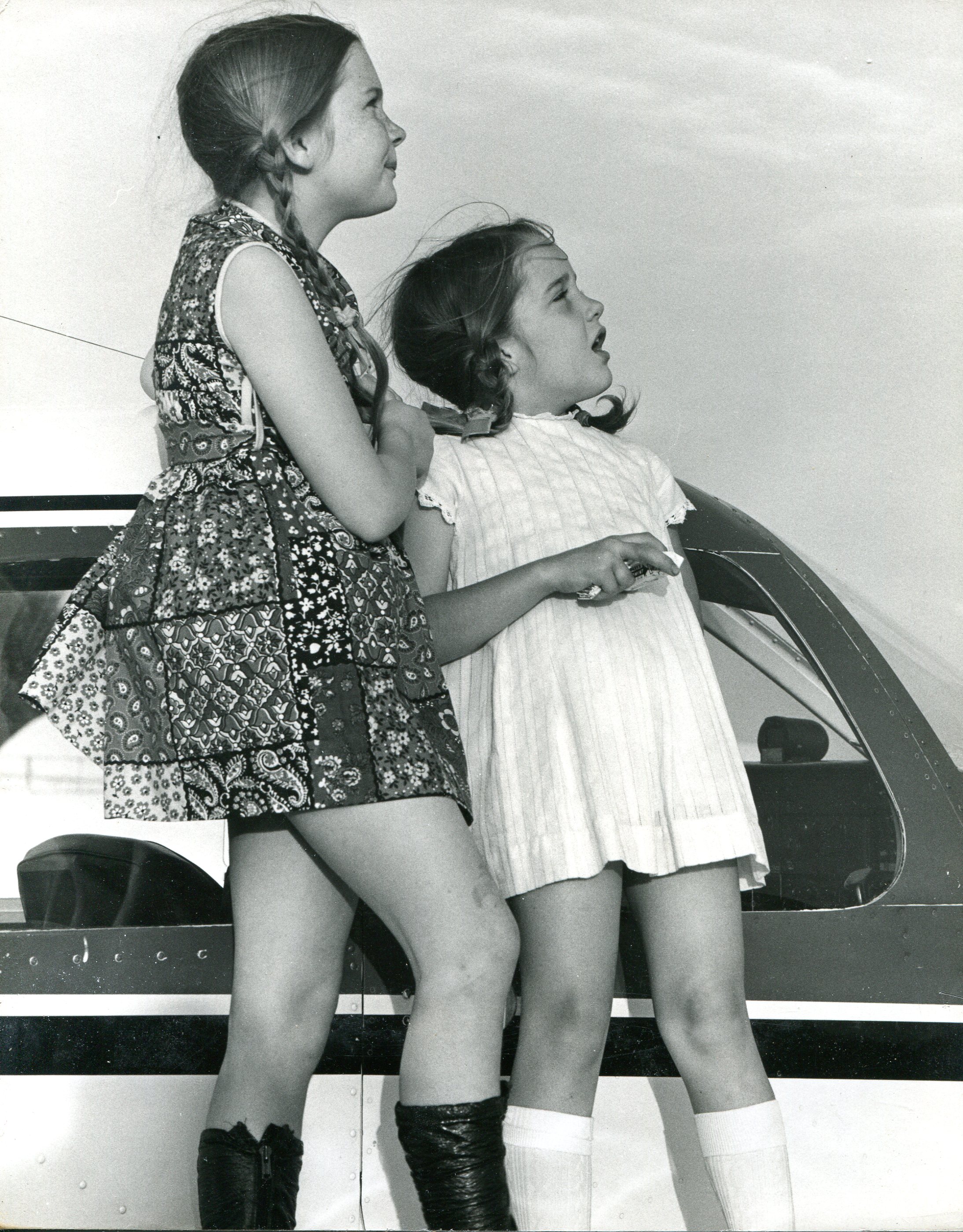
About once a week a stranger visits my site by googling “girls in patent leather boots.”  I don’t want to know what he is hoping to find, but on his quest he stumbles upon my sister and me.  As far as as I can remember I have never written a post about or used the term “patent leather boots.” So be it.  Now I am.  As a little girl I wanted white patent leather boots so badly I wrote it on my Christmas list for three years in a row.  (My parents searched and searched, but could not find them in a child’s size.)  Jenny had black patent leather boots, therefore I wanted white — the same but different, maybe even better.  In this picture, I’m wearing white knee socks.  From a distance, I hoped, they looked like leather.  We’re standing on the wing of my mother’s divorce lawyer’s airplane.  His name was Henry Hill and he used to fly over our house upside down just for fun.  “Oh there’s Henry,” Mom would say, rushing out to the deck, looking up at the sky.  And there he was, swooping all around, flirting with my mother even though both were involved with others.  The plane would disappear, but before long he’d show up with a girl on his arm for a dip in the steamy indoor swimming pool, the water so hot it wrinkled your skin, underwater speakers playing Neil Young and Bob Dylan — the little kids (there were ten of us in all) told to stay out because it was “adult time” in the pool.  In the summers, Henry would fly us up to Maine to dig clams for an afternoon. Here, in the picture, we’re near Prout’s Neck.  I have no idea what we’re staring at, but I love our contrasting expressions: Jenny is a little skeptical, mouth pinched closed, hoping, though, to be disproven; I’m a little in awe, a bit afraid.  I can feel the cool salt air, smell it mixed with pine.  We don’t have pierced ears yet and last year’s dresses are more fashionable now because we’ve grown taller.  Our mother has tied bows at the end of our braids.  I’m clutching Juicy Fruit.  Even so, with those boots and the desire for another pair, the adventures having already begun, jetting around with a divorce lawyer, we’re reaching forward toward the adult world.

And here we are.  Almost 40 years have passed.  The divorce lawyer has died.  Jenny has stopped getting older.  (Her birthdays ended when she turned 37.  It’s a neat trick.)  Skeptical, hopeful, in awe, a little bit afraid, many adventures, Jenny still by my side.

Jenny McPhee

Review: Jonathan Coe’s The Terrible Privacy of Maxwell Sim

From The San Francisco Chronicle — Review by Martha McPhee

The Terrible Privacy of Maxwell Sim

By Jonathan Coe

(Alfred A. Knopf; 314 pages; $26.95)

At the beginning of Jonathan Coe’s beguiling new novel, “The Terrible Privacy of Maxwell Sim,” Max, in Australia visiting his estranged father, observes a Chinese woman and her young daughter at a restaurant. They are enjoying a game of cards, “bonded to each other, with a strength and an intensity” while the other diners distract themselves with cell phones and Nintendo DS devices – the protective wall of modern technology that keeps the other out.

Read more.

Women Behaving Badly: Five Novels I Love

The Center For Fiction launches its online magazine, The Literarian.

Gone With the Wind

As young girl watching the Million Dollar Movie with my sisters, I met Scarlett O’Hara and fell in love. Her dark curls and green eyes, her swishing hoop dress–determined and strong and brave, Scarlett did as she pleased, both good and bad. My sisters and I rooted for her as she stole boyfriends, married men she didn’t love, helped Melanie birth her baby, escaped a burning Atlanta, tore curtains from windows to make a gown so she could look like a queen for Rhett, kneeled in Tara’s garden and vowed, “If I have to lie, cheat, or kill, as God is my witness, I’ll never be hungry again.”  She did kill, she did cheat, she did lie, and she was never hungry again.  My sisters and I were good girls who already understood that girls were expected to behave well and be quiet.  Scarlett struck us with awe.  In tough times, my sisters and I would say to each other, “Pretend you’re Scarlett and push through.”  I watched the movie many times until I was old enough to read the book.  I learned through Scarlett that characters could be as real as living people.  She infused me with courage and taught me what a freedom it would be to live life as she did, by her own rules, unburdened by the opinions of others.

Wonder what the other four novels are?  READ MORE