Rocco, Attention-Loving Hamster


Rocco
I got five As in my school report card so
My mom bought me a hamster.
I called him Rocco
Because that is what my mom
Called me before I was born.
Rocco was attention-loving like
My great grand-mother grammy
Who sadly I never knew.
He did acrobatics on the bars of his cage
And ran so fast on his yellow wheel.
But he ate too much and became obese.
He stopped running
Got lazy.
One day he didn’t move anymore.
Sadly, he died.
My mother and I and my brother
Buried him in our back yard
Where sometimes when I am playing
I will stop and think
What a great hamster he was.

By Leandro McPhee, age 9 — my nephew
A real story

Add to FacebookAdd to DiggAdd to Del.icio.usAdd to StumbleuponAdd to RedditAdd to BlinklistAdd to TwitterAdd to TechnoratiAdd to Yahoo BuzzAdd to Newsvine

Home For The Holidays

The Farm, Christmas 1973

I remember coming home for Christmas, from college, from my years in Italy, from my early days in New York City, as a new mother.  I remember on one occasion lying on the couch, reading the essay On Going Home by Joan Didion and feeling just as lethargic as she had, incapable of doing much other than lying on the couch as the chaos of nine siblings and various others swirled around me.  I remember the years and years of going to my father’s on Christmas Eve, returning to my mother’s by midnight — a decree imposed by the  court on my divorced parents.  It became a ritual of sorts that carried on long after my sisters and I became adults.  I remember holidays in Sri Lanka and Nepal and Hawaii, anywhere but home, trying to find my own way.   But they were never as happy as I wanted them to be.

Of the people in the photo above, my stepfather and his mother, Merle, have died, otherwise this year nine of the ten children and my mother were at the Farm with our various children and friends passing through.  For Christmas dinner we were twenty-three.  We ate pork loin stuffed with dried fruits in a Madeira and molasses sauce; mashed potatoes; French beans with pomegranate seeds (made by Jenny who learned the recipe in London, where she lives, “They make it so much over there, at all the dinner parties, that it’s actually now a cliché to serve it.”); a salad of mache with pears and crushed almonds dressed with shalots macerated in equal parts lemon juice and white wine vinegar.  For dessert: bourbon pecan tart; pumpkin tiramisu; bread pudding with whiskey sauce.  We like to eat.  We eat well.  It snowed the day before, a vast blanket covering the fields.  On Christmas Eve we read the children “Yes, Virginia, There Is A Santa Claus” as Santa ran across the rooftop, scaring the littlest one.  No one fought.  In the morning: presents were opened one by one.  A howling wind and bitter cold, a gray sky which seemed to promise more snow.  The big beautiful tree lit with colored bulbs that first glowed in the 1960s, my grandmother’s glass ornaments.  The kids raced down the hill on toboggans, wrapped in scarves and hats and gloves and bulky coats.  They made a snowman, collected chicken eggs, forgot to shut the door to the coop, chased chickens, made a movie on a Flip about bad guys who not only get away with it, but convert the good guys to bad guys.  My father and stepmother, Yolanda, joined us for dinner.

All of us have tried other Christmases, elsewhere.  The chaos, the mountain of presents, the tension created by expectation, the energy of so many personalities can be too much.  But since 1973, our first Christmas at the Farm as a blended family, we have—all of us, my sisters and my step-siblings—kept trying to make it beautiful.  We have kept coming back.  We don’t give up.  Thirty-six Christmases have passed since 1973.  And this year we did get something very right.

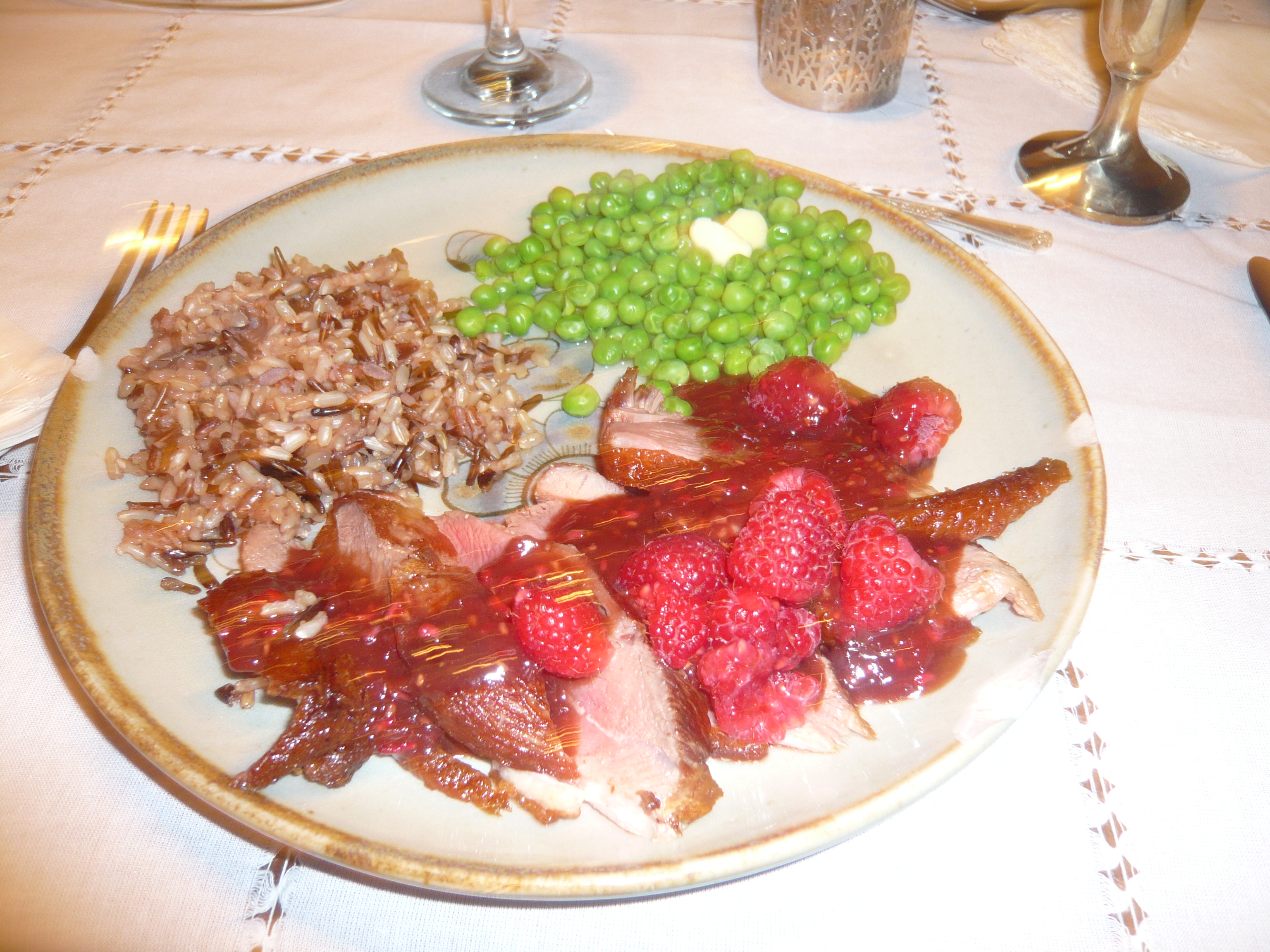
Another holiday feast: Sarah’s Raspberry Duck with wild rice and peas

A few gathered to watch the children’s movie about the bad guys winning

An essay for the NYTimes on the hazards (and blessings) of Christmas: it happens to be, of my essays, my favorite

Add to FacebookAdd to DiggAdd to Del.icio.usAdd to StumbleuponAdd to RedditAdd to BlinklistAdd to TwitterAdd to TechnoratiAdd to Yahoo BuzzAdd to Newsvine

Christmas Cookies

At a very young age, along with my older sisters and cousins, I made Christmas cookies with our grandmother.  She had a special recipe that my entire, extended, enormous family still uses though she died many years ago (1997) at the bright age of 100.   I still see her hands rolling the dough, patiently helping me place the cutters, the kids pouring the sparkles all over everywhere—and can smell that hint of burned sugar.  Making the cookies meant Christmas was here.

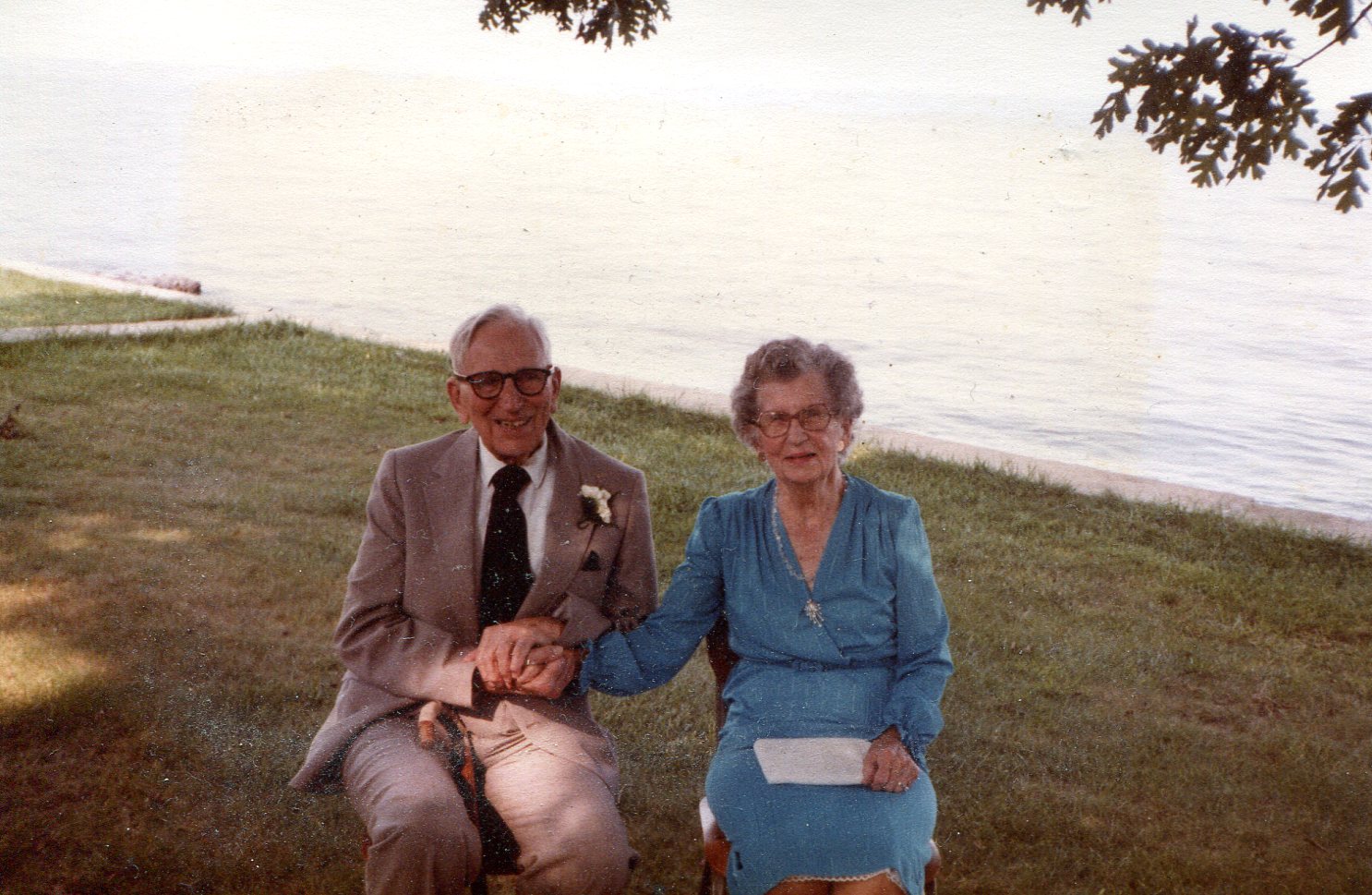
Mamie and Mickey at the edge of Carnegie Lake, Princeton

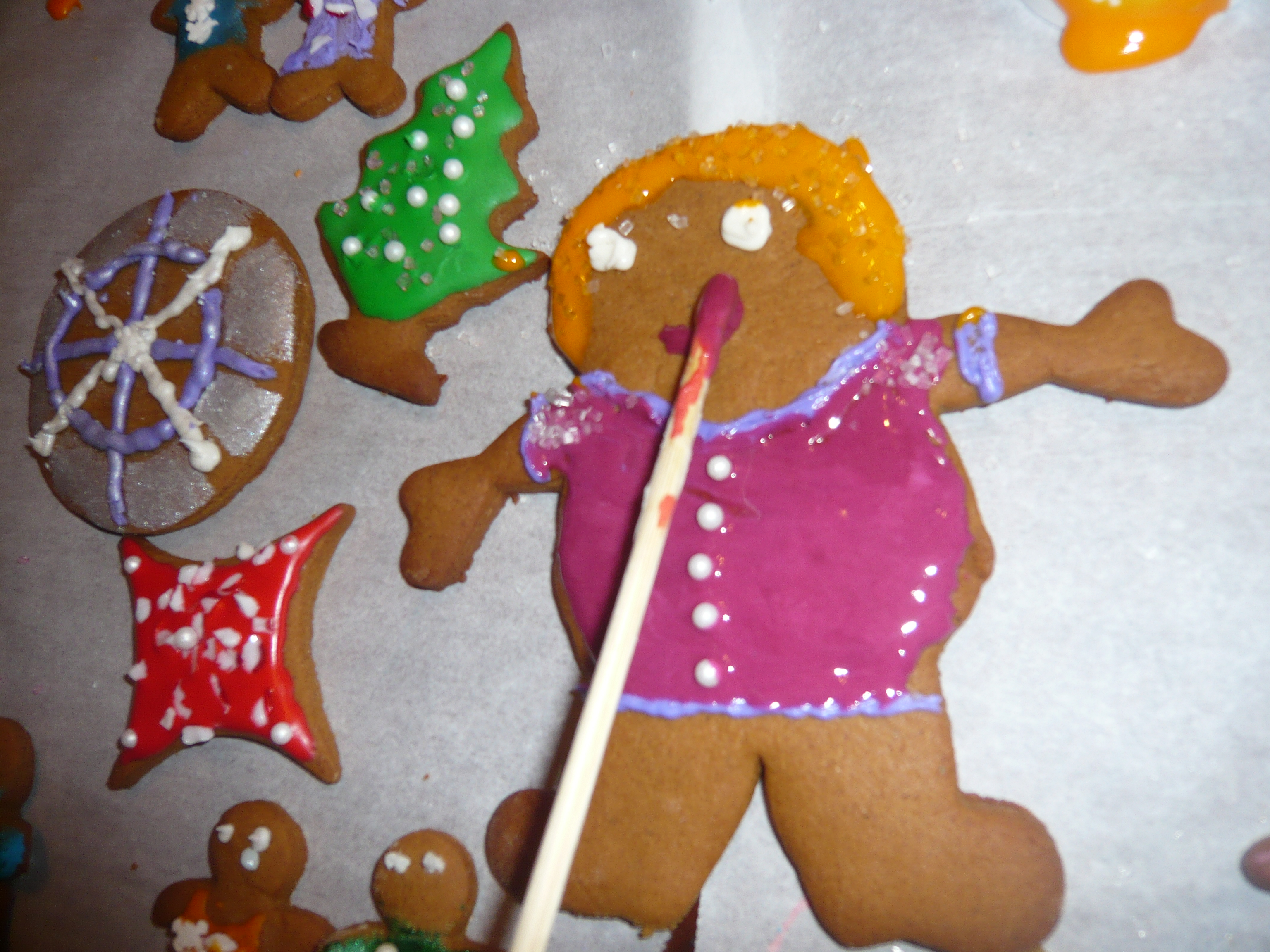
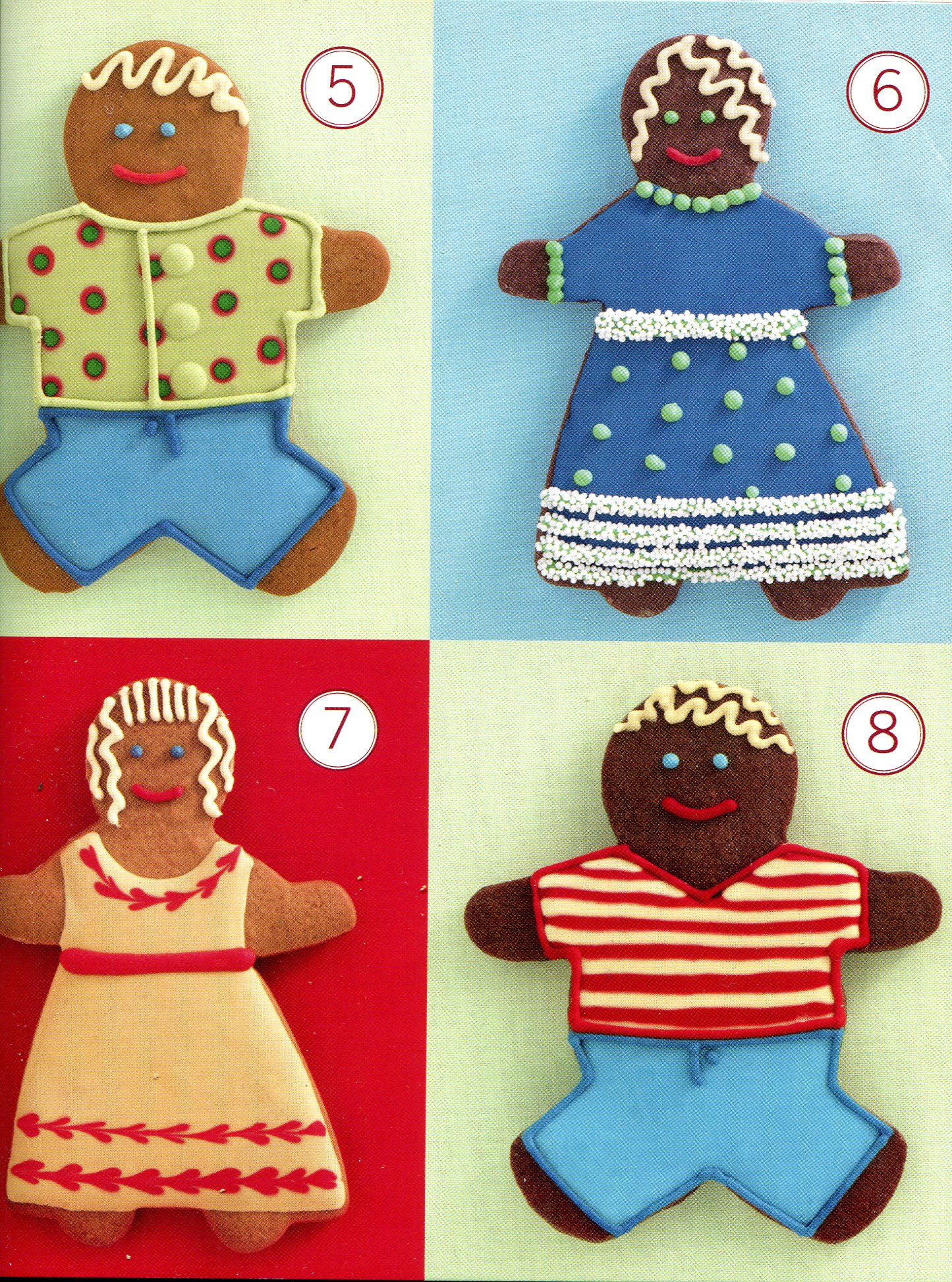
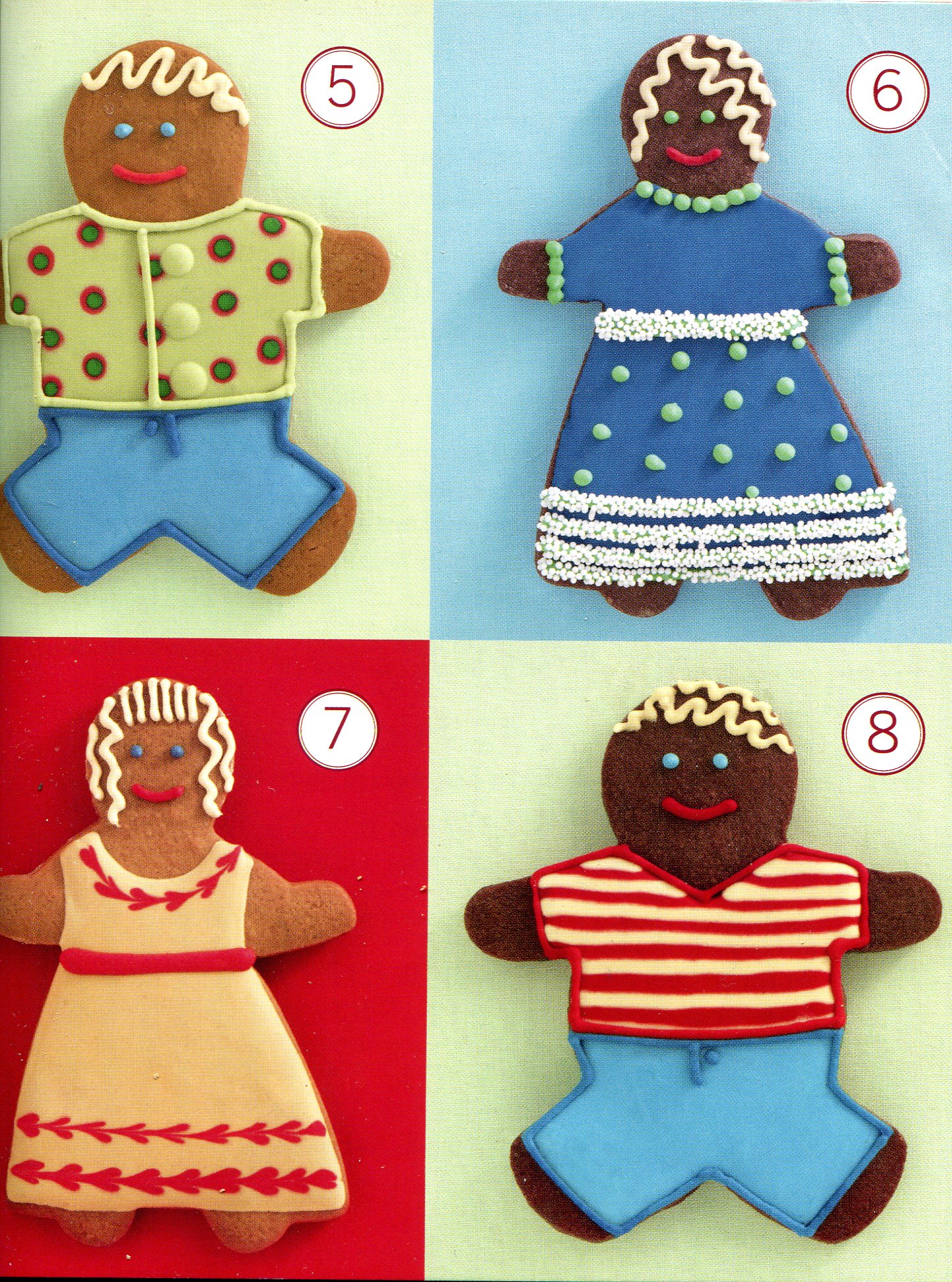
This year, however, I broke the tradition.  Livia decided she wanted to make more elaborate cookies, cookies we would paint and glaze and color and luster dust and pipe and flood and blow with sanding sugar—terms I’d never heard of.  She found this cookbook:

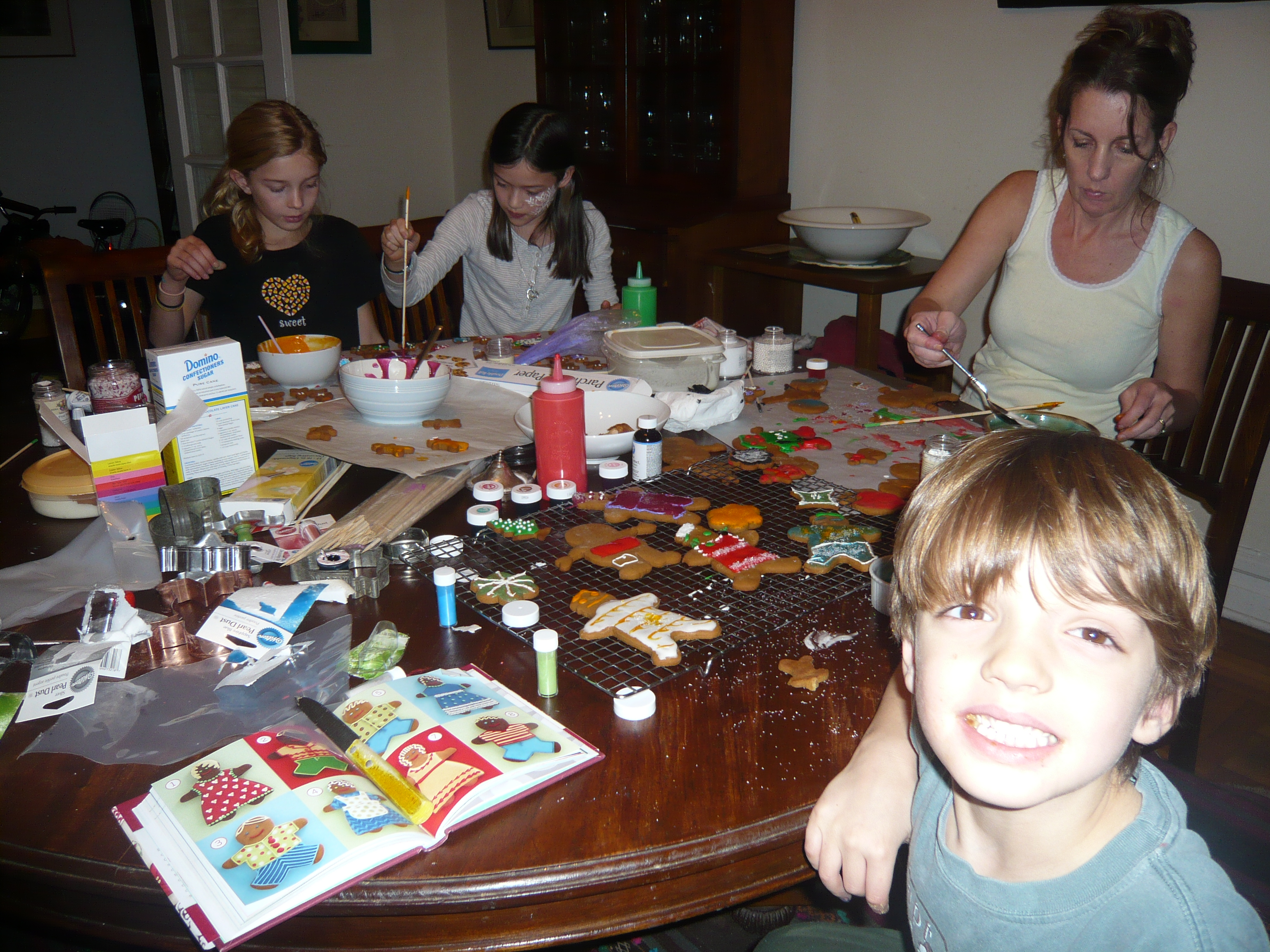
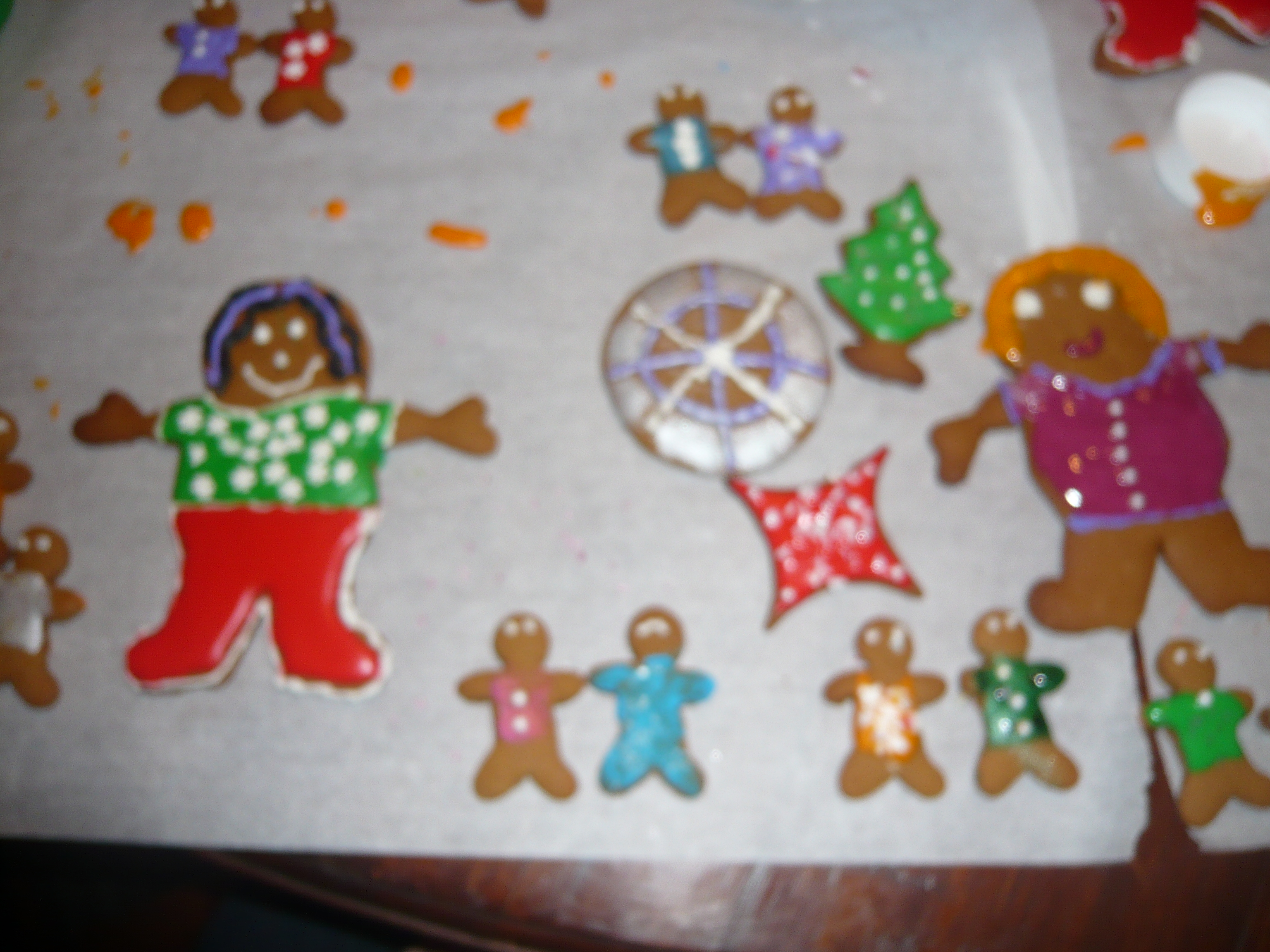
So we got to work Saturday afternoon and worked into the evening,

trying to replicate the pictures in the book.

With all the flooded icing and sugars, I wondered who’d ever want to eat them.

Though this art will take many years to master, I was wrong about who’d want to eat them.  Both the sugar and gingerbread cookies were delicious—just as good, or almost, as Mamie’s.

Add to FacebookAdd to DiggAdd to Del.icio.usAdd to StumbleuponAdd to RedditAdd to BlinklistAdd to TwitterAdd to TechnoratiAdd to Yahoo BuzzAdd to Newsvine

Would I Yell? And, Yes, You Must Set The Scene

Livia and Una, 2004.  Taken by my mother Pryde Brown

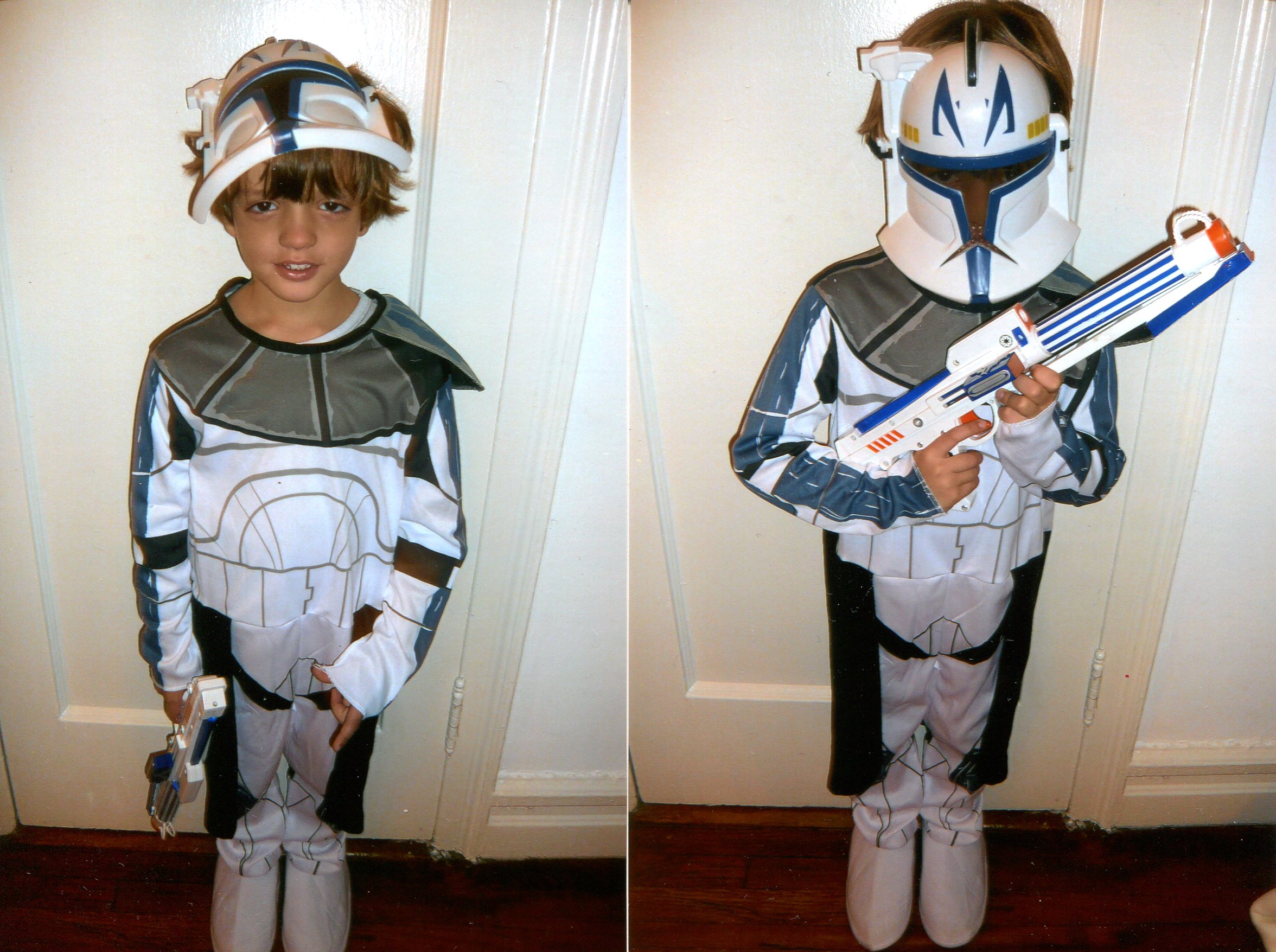
Jasper ran through the apartment in his Clone Trooper costume and caused the picture to fall off the wall.  The glass shattered, shards everywhere.  I was annoyed, of course.  It was  9PM.  He and Livia should have been asleep, but I’d gotten home late, was exhausted, had been running since 7AM when my husband left for work, when I began getting the kids ready for school: out the door, up the street, drop off at school, race home, prepare dinner (for much later), straighten up, in the car, drive to the university, read a few student stories, faculty meeting, lunch with a former student, office hours (“Do I really need to set the scene?  It’s just a NY City apartment?” student asks.   I give her a curious, I-Can’t-Believe-What-You’re-Asking look and say, “Yes.  Yes.  You need to set the scene.  Watch, smell, taste, touch.”), teach two classes, home again in the car (45 minutes on the LIE), my son’s person-of-the-week project (glue and photos and crayons and glitter) all over the place, cat unfed, apartment a mess, my husband just home too, baby sitter leaves, dinner, baths, (how many months has it been since I’ve written a word of fiction?), Clone Trooper storms the hall, I warn him to be careful, picture falls, glass shards everywhere, I want to scream, think instead of Hilary Stout’s piece in the NYTimes on yelling being the new spanking.

Stop.

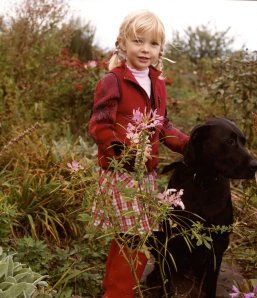
I pick up the picture of my baby girl, five years old, with her Nonna’s dog in her Nonna’s garden in red and pink, hair in braids with tiny bows, standing before the foxglove, her little haunting wisdom—like those newborn eyes of hers that held mine, latched onto mine as if to say: I am yours; you will take care me, you will love me: commanding, determined eyes.  On the wall, I hadn’t looked at the picture in a long time.  Now nine, Livia holds onto Jasper; they watch me crouching by all the glass, waiting for my reaction, suspended in…is it fear?  “I’m sorry, Mommy,” Jasper says.  I’ve gone back: he is a newborn again and Livia is four—a fall afternoon in my mother’s garden.  It is all there—the smell of wood smoke, the chill, the crisp sky and lazy clouds—and everything in between.  A marvelous compression of time which then, less marvelously, leaps forward five years—Jasper ten, Livia fourteen, almost grown.  “We can fix this,” I said, as my husband vacuumed up the glass and I took the children to their beds and read to them from The Magician’s Elephant, Kate Di Camillo’s wonderful new book.  And on the street, sixteen stories below, the man who roams our neighborhood most nights chanting HALLELUJAH began his evening song.

Add to FacebookAdd to DiggAdd to Del.icio.usAdd to StumbleuponAdd to RedditAdd to BlinklistAdd to TwitterAdd to TechnoratiAdd to Yahoo BuzzAdd to Newsvine

Surprise Sisters

img088

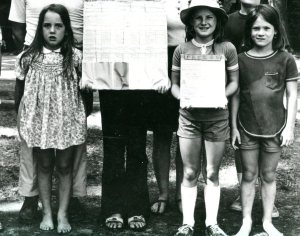
Martha, Katherine, Vanessa

Vanessa was 4, Katherine was 6 and I was 5 when our parents fell in love and we became sudden, surprise sisters.  It’s not that I needed any more sisters.  I had 3 older sisters and 2 other (also older) new sisters belonging to my stepfather.  But Katherine and Vanessa were different.  They were so close to me in age—little girls with cool clothes and toys and who loved the same music (Diana Ross and Elton John).  They moved into my life, my house, my school.  On weekends with my father I was now put to bed with little, adorable Nessy. My father would tell stories, created just for the two of us: The Adventures of Farta and Vanasty.  We were a pair of traveling girls, flying across the world in our own small airplane with piles of cash that would get us into and out of trouble.  We didn’t want to fall asleep, though inevitably we did, longing for the next installment so we could see what became of us—how we paid off the crook just in time, fleeing into the bright blue sky.  But somehow he was on our tail, in his own small aircraft, gaining ground, with a scheme to entrap us.  Goodnight!  In the summer, Dad took us on our own special canoe trip, down the Connecticut River for an overnight camping, more Farta and Vanasty escapades.  I, being the youngest of the McPhee girls, now had Vanessa whom, I thought, I might be able to boss around.  My own little sister.  Not  a chance.
img089

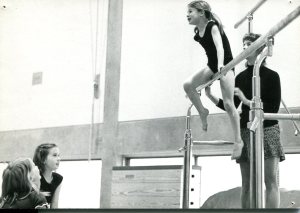
Vanessa on the uneven bars.  I, on the lower left, look up at her with admiration.

Rather I regarded Vanessa.  She seemed to know much more, as did Katherine.  They became closer to me than my own sisters at that time (just enough older, my sisters had moved beyond make-believe). It was with Vanessa and Katherine that I did many things for the first time.  We ran away together, sleeping in the back yard until it became too dark and scary and filled with strange, haunting noises.  We smoked our first cigarettes together.  We were 8, 9 and 10.  (Don’t tell my children.)  My father smelled the smoke in the garage and came out there and said to us, “If you’re going to smoke then smoke in the living room in front of us.”  We never smoked again—well sort of.  We played a game called “Normal Day” in which we tried to sort out the adult world.  It was a game like house.  We were married to Paul Newman, Steve McQueen and OJ Simpson.  (OJ was everywhere—towels, sheets, commercials, dogs even were named OJ.)  Our homes were in the woods behind our house, forts made from branches and twigs, boulders for chairs.  We could stay in there forever.  We had loads of credit cards and long lunches and we exchanged husbands with astonishing ease, using sophisticated words like affair, adultery, tryst.   Normal Day.

Childhood passed and we started to move apart.  Vanessa began doing things before me.  she had her first serious boyfriend long before I had mine.  When high school finished, she moved far away to college.  She married.  She had babies.  She bought a house.  Katherine followed her.  I watched them from afar, always with the same admiration, as they negotiated the real adult world.  Now I only see them, at best, once a year.  But they are vivid and dear nonetheless, little girls the three of us in rhinestone t-shirts dancing across the living room to Goodbye Yellow Brick Road, which my own children listen to now, laughing, as we did, at the horny black toad.  Katherine and Vanessa, opening my heart, teaching me how much room is in there, how it is bottomless and boundless like that glove in the children’s story that all those animals can fit inside.
img090

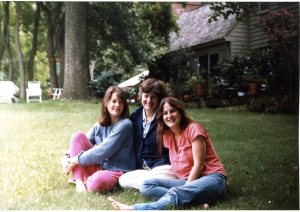
Katherine and Vanessa as adults, flanking Yolanda, my stepmother

Add to FacebookAdd to DiggAdd to Del.icio.usAdd to StumbleuponAdd to RedditAdd to BlinklistAdd to TwitterAdd to TechnoratiAdd to Yahoo BuzzAdd to Newsvine

Africa (for Barack Obama), A New Song From Charles

dayal

Image by Antar Dayal, a good friend of Charles’s


Africa (for Barack Obama)

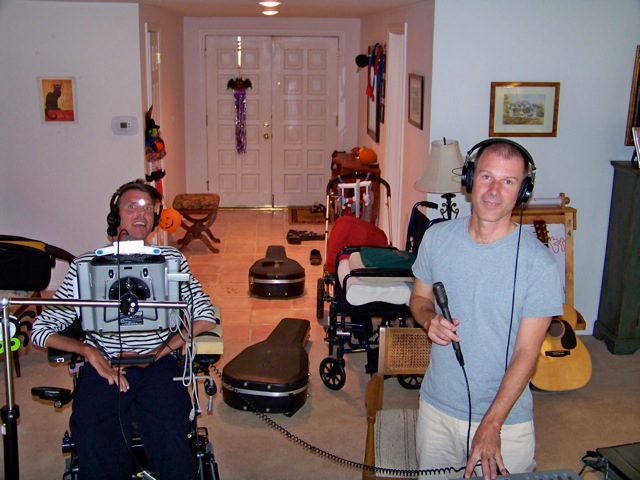
Charles, my cousin, writes:

“Rod and I finished Africa on Saturday and he will mix it down this week

Our most ambitious song yet with drums and Martin acoustic guitar , clavinet and piano , three vocal tracks and electric guitar
I like it so far and look forward to hearing the mix myself
Too much fun. Choosing next song.”

Wheelchairs and Guitars

Wheel Chairs and Guitars

See earlier post, What Makes Me Smile, to learn how Charles and Rod collaborate and to hear more songs.

Add to FacebookAdd to DiggAdd to Del.icio.usAdd to StumbleuponAdd to RedditAdd to BlinklistAdd to TwitterAdd to TechnoratiAdd to Yahoo BuzzAdd to Newsvine

Montana Cowgirl Becomes A Lady Of Quality

img031

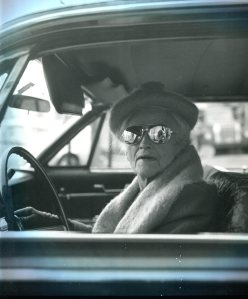
Speaking about fiction….  My grandmother comes to mind this morning.  She used to say, “If I don’t like something the way it happened, I just tell it as I would have preferred it to have happened.”  An impoverished cowgirl in Montana, she worked so that her little sister Kathryn could go to school.  Their mother left their father when they were six and four years old in 1910, heading from Ohio to Montana so that she could be an itinerant school teacher.  When my great grandmother, Glenna, went off to teach in remote corners of the state, she left Thelma (my grandmother) to take care of Kathryn.  When Thelma was eighteen without a highschool degree but eager to go to nursing school in the east, she rewrote the narrative as she would have preferred it to have been.  She changed her name to Kathryn and used her little sister’s degree and records for her application to the nursing school at Brooklyn Hospital.  She was accepted.  In New York, she transformed herself into “a lady of quality.”  In the picture here she’s about 85, driving still her Lincoln Continental with a gold nameplate on the dashboard that read: Mrs. Charles Mitchell Brown III.

(If you look closely at Grammy’s glasses, you can see my sister Laura McPhee with her camera taking the picture.)

Add to FacebookAdd to DiggAdd to Del.icio.usAdd to StumbleuponAdd to RedditAdd to BlinklistAdd to TwitterAdd to TechnoratiAdd to Yahoo BuzzAdd to Newsvine

Filmfatale–my sister’s new site for writing about movies

img054

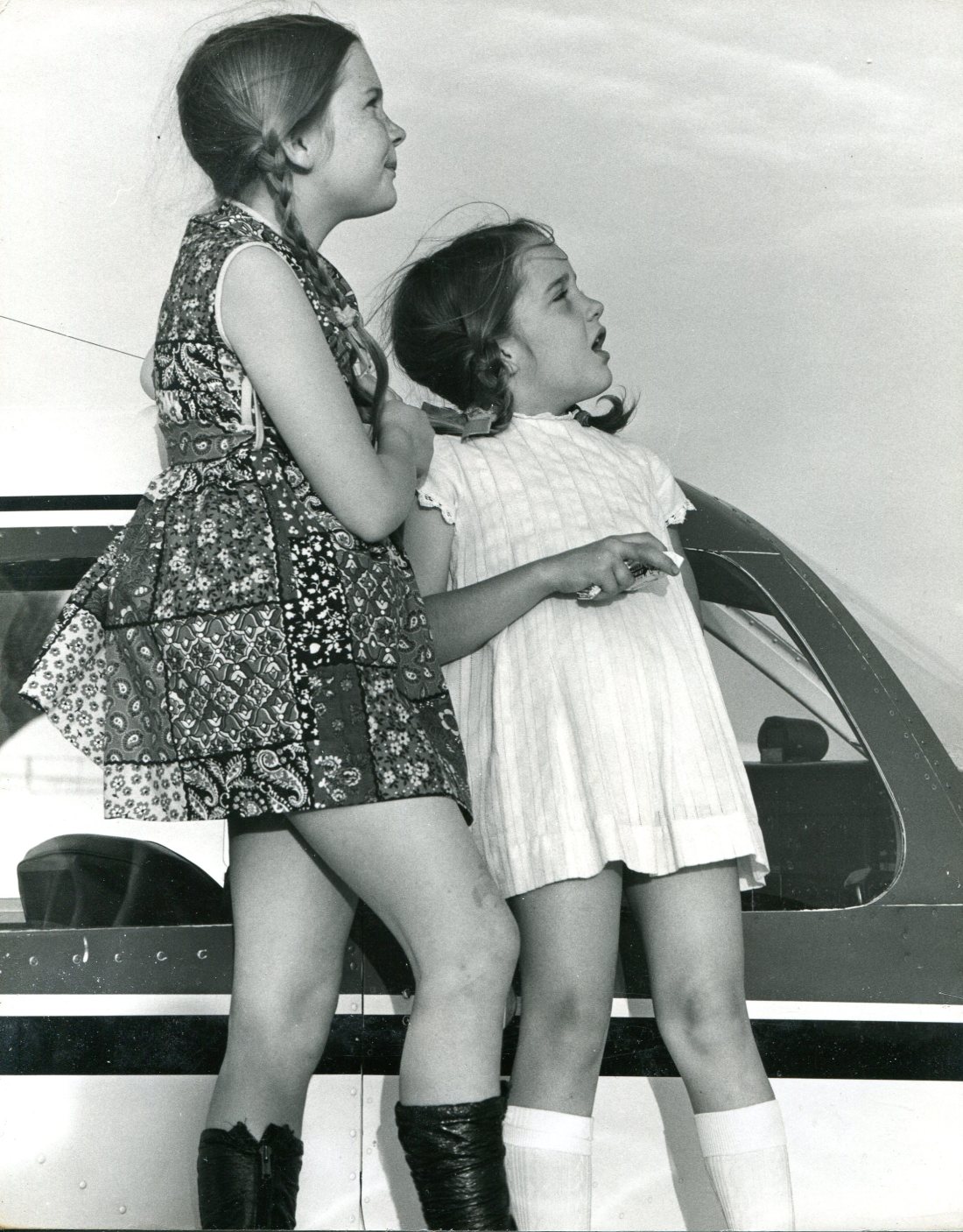
Here, on the wing of my mother’s divorce lawyer’s airplane, Jenny, in patent leather shoe boots (I’m wearing white knee socks, not sexy white patent-leather boots–at six years old, I hadn’t yet learned to compete) already looks like a femme fatale.  Jenny has always loved movies.  Throughout our childhood she’d stay up late watching the Million Dollar Movies, then the late late movies–illuminated in the blue glow of the television screen, our mother telling her repeatedly that it was time for bed.  But Jenny could outlast our mother–tired, she’d give up, falling asleep while Jenny finished watching All About Eve or The Best Years of Our Lives or whatever happened to be playing The Searchers, Stagecoach.  Jenny has written three novels and all of them, to some degree, have a noir element.  Movies, she knows, she loves.

Click here to visit her site

And check my “family” page for her books.

Add to FacebookAdd to DiggAdd to Del.icio.usAdd to StumbleuponAdd to RedditAdd to BlinklistAdd to TwitterAdd to TechnoratiAdd to Yahoo BuzzAdd to Newsvine