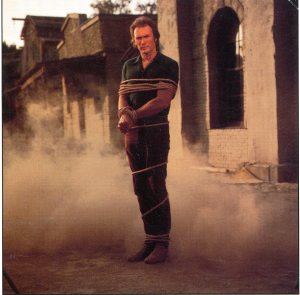
Africa (for Barack Obama), A New Song From Charles

dayal

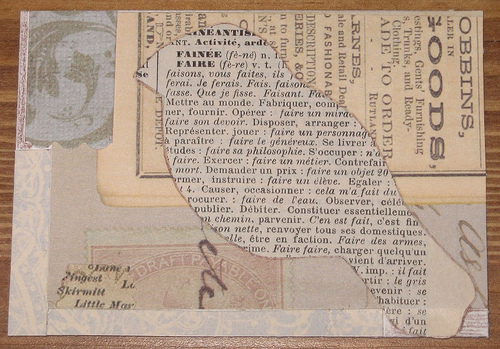
Image by Antar Dayal, a good friend of Charles’s


Africa (for Barack Obama)

Charles, my cousin, writes:

“Rod and I finished Africa on Saturday and he will mix it down this week

Our most ambitious song yet with drums and Martin acoustic guitar , clavinet and piano , three vocal tracks and electric guitar
I like it so far and look forward to hearing the mix myself
Too much fun. Choosing next song.”

Wheelchairs and Guitars

Wheel Chairs and Guitars

See earlier post, What Makes Me Smile, to learn how Charles and Rod collaborate and to hear more songs.

Add to FacebookAdd to DiggAdd to Del.icio.usAdd to StumbleuponAdd to RedditAdd to BlinklistAdd to TwitterAdd to TechnoratiAdd to Yahoo BuzzAdd to Newsvine

A Little Bit Of John Ruskin

img076

The Elements of Drawing by John Ruskin

My sister, Jenny, says a little bit of Ruskin goes a long way.  Here are two little bits:

“Now a stupid painter would represent, for instance, a drinking-glass beside the hand of one of his figures, and because he had been taught by rule that ‘shadow was darker than the dark side,’ he would never think of the reflection from the glass, but paint a dark grey under the hand, just as if no glass were there.  But a great painter would be sure to think of the true effect, and paint it; and then comes the stupid critic, and wonders why the hand is so light on its dark side.

“Thus it is dangerous to assert anything as a rule in matters of art…”

O.K. that’s enough Ruskin for now.  I’ll save the second bit for another day.

Add to FacebookAdd to DiggAdd to Del.icio.usAdd to StumbleuponAdd to RedditAdd to BlinklistAdd to TwitterAdd to TechnoratiAdd to Yahoo BuzzAdd to Newsvine

Birds, Savages, & Children

French words

From A Dictionary of Modern English Usage by H.W. Fowler, 1926

FRENCH WORDS. Display of superior knowledge is as great a vulgarity as display of superior wealth—greater, indeed, inasmuch as knowledge should tend more definitely than wealth towards discretion & good manners. That is the guiding principle alike in the using & in the pronouncing of French words in English writing & talk. To use French words that your reader or hearer does not know or does not fully understand, to pronounce them as if you were one of the select few to whom French is second nature when he is not of those few (& it is ten thousand to one that neither you nor he will be so), is inconsiderate & rude…. Every writer who suspects himself of the instinct should remember that acquisitiveness & indiscriminate display are pleasing to contemplate only in birds & savages & children.

Add to FacebookAdd to DiggAdd to Del.icio.usAdd to StumbleuponAdd to RedditAdd to BlinklistAdd to TwitterAdd to TechnoratiAdd to Yahoo BuzzAdd to Newsvine

Fiction’s Pull To The Blank Page

3530415915_98802751ea[1]

A beautiful little sister and a homely older one — Kathryn, Thelma.  1910.   An intrepid mother who wants freedom from a husband and the confining life of a wife.  They run away to Montana — beneficiaries of the homestead act of 1909 — leaving Vernon behind in Ohio to find a letter saying they are gone.  The girls are afraid, wonder what will become of them.   It’s winter and cold and they ride in the 3rd class car of the train, a coal fire in the center, around which passengers hover, trying to stay warm.  The mother, Glenna, though she doesn’t have money (only what she’s been able to steal from Vernon’s pockets), has a sense of class and finery.  She carries with her a harp (yes a big, beautiful harp that she can play like an angel).  She carries a trunk of summer dresses and an iron and ribbons for her daughters’ hair and they look impeccable, if cold, in white linen.  She carries too her own great grandmother’s China wedding bowl and Temple Notes to Shakespeare.  She’s a reader, a dreamer, ambitious and will not be trapped.  In Montana there are jobs for women and she wants to work, wants to earn money, wants to feel the power of providing for herself and her girls.  She loves men and loves to flirt and when the train gets stuck in a snow drift it is not long before she’s playing her harp for the gentlemen in first class, warm in a Pullman Sleeping Car with fine Scotch.
img071

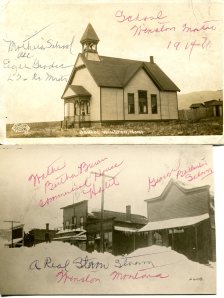
Glenna’s school house in Winston, Montana.  And the town covered in snow.

My grandmother, my great grandmother — snippets of story.  The frontier at a moment that welcomed women, offering opportunity.  (Montana would elect the first woman to the House of Representatives in 1914.)  Who were these women?  Of course, I knew my grandmother well.  I adored her, adored listening to her elaborate stories of our lineage.  I could imagine her as a little girl, learning the tales of where we came from, from the refined Glenna who refused to accept that her circumstances were what they were, that she wasn’t a queen or a duchess.  But it didn’t matter now because she had been and would be again.  Her life didn’t begin when she was born; it would not end when she died.  Rather, she was just one link in a miraculous continuum, that reached back to Germany and Scotland, that included men like Helmut von Keller, advisor to Bismark from Mechlenburg-Schwerin along the Baltic Sea and women like Mary Queen of Scots and the Royal Stewarts of Nairn — princes and duchesses and queens and the War of 1812 that brought some of her people to America where their children and children’s children became novelists (James Fenimore Cooper among them) and the first woman to go to college and fine painters of the human anatomy who stole cadavers from graves.  One started the Dole pineapple empire and another became the milliner for Granny Taft, William Howard Taft’s aunt.  They survived the Civil War.  They were fabulously wealthy and then lost it all in the various 19th century runs on banks.  From my grandmother’s telling, the lineage made perfect sense — her mother’s line (German), her father’s line (Scottish).  They were nobles both, cast on the shores of America by war and the great hope of something more.  Her details were precise, born it seemed to me, of a fierce imagination.  James von Slagle, her great great grandfather, came to America during the War of 1812 as a military advisor to Major General Andrew Jackson and saw to the training of rough, unschooled farmers, preparing them for battle against the Indians.  He led his troop in the battle of Horseshoe Bend on the shores of the Tallapoosa River in Alabama in 1814, a success that would make him a national hero.  In a picture of James von Slagle that my grandmother described, he had the finest mustache and the broad strength of an aristocrat, “Von,” she told me, “indicates noble birth.”

The stories were Glenna’s who died long before I was born, but who has lived in my imagination ever since I was a girl through the stories retold to me by my grandmother.  And now, finished with a fourth novel, there are days such as this, in which I begin to dream about writing a fifth novel.  1910 — the 20th century spreading out before Thelma and Kathryn and Glenna — the long road their lives will follow.

She wondered what would become of them — the novel could begin as the three head west on the train in winter, pioneers.  Who would these women be (alive in the continuum of their descendents) at the end of the 20th century, a century in which so much changed for women?  Here is where fiction starts for me: at the intersection of memory and imagination.
img070

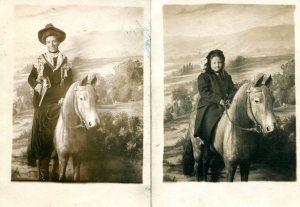
Glenna and Thelma posing on wooden horses during a long stopover in Saint Louis, on their way home to Ohio in 1914 for Christmas
img069

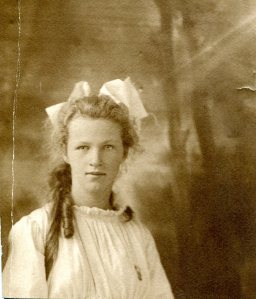
Kathryn, the beautiful younger sister.

Add to FacebookAdd to DiggAdd to Del.icio.usAdd to StumbleuponAdd to RedditAdd to BlinklistAdd to TwitterAdd to TechnoratiAdd to Yahoo BuzzAdd to Newsvine

Montana Cowgirl Becomes A Lady Of Quality

img031

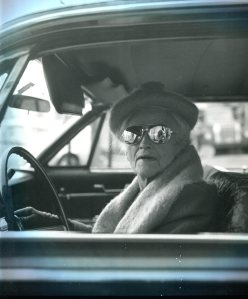
Speaking about fiction….  My grandmother comes to mind this morning.  She used to say, “If I don’t like something the way it happened, I just tell it as I would have preferred it to have happened.”  An impoverished cowgirl in Montana, she worked so that her little sister Kathryn could go to school.  Their mother left their father when they were six and four years old in 1910, heading from Ohio to Montana so that she could be an itinerant school teacher.  When my great grandmother, Glenna, went off to teach in remote corners of the state, she left Thelma (my grandmother) to take care of Kathryn.  When Thelma was eighteen without a highschool degree but eager to go to nursing school in the east, she rewrote the narrative as she would have preferred it to have been.  She changed her name to Kathryn and used her little sister’s degree and records for her application to the nursing school at Brooklyn Hospital.  She was accepted.  In New York, she transformed herself into “a lady of quality.”  In the picture here she’s about 85, driving still her Lincoln Continental with a gold nameplate on the dashboard that read: Mrs. Charles Mitchell Brown III.

(If you look closely at Grammy’s glasses, you can see my sister Laura McPhee with her camera taking the picture.)

Add to FacebookAdd to DiggAdd to Del.icio.usAdd to StumbleuponAdd to RedditAdd to BlinklistAdd to TwitterAdd to TechnoratiAdd to Yahoo BuzzAdd to Newsvine

Tips For Applying To MFA Programs In Fiction

A student came to see me today to ask for advice on applying to MFA programs.  The season is approaching.  Applications are due starting in December.  Here is what I told my student:

404298099_c60259d30a[1]

1) Do your research.  Learn which program will suit you best.  Find out where the writers you admire teach.  (Most writers teach.)  But remember, a good writer does not necessarily make a great teacher.  So, be sure the program has other attractive attributes.   (A full scholarship is a good place to start.)  Also, just because a writer is listed on the faculty doesn’t mean he is.  Check course offerings to be sure.

2) It’s all about the writing sample.  A good program will care most about the work you submit—not about the GREs or grades from college or recommendations or fancy resumes.  Knock their socks off.   From the first sentence to the last, this should be the best possible example of your talent.  I also always tell my students, as I did the one who visited me today, that short is better.  An application may ask that you submit “up to 50 pages.”  DON’T!!  Unless they are brilliant, and even then I’d hold back.  Just think of the quantity of work they are receiving, most of it not very good.  A short, sharp, glittering story or two can easily  be enough to showcase your style and make them want you.

3) Recommendations: the application readers are curious just as we all are.  If you have the support of someone well-known it can make the reader perk up a bit, take a second look at the writing sample.  But also, a beautiful letter from your English professor or from an unknown writer you took a workshop with at some local venue can do the same.  In the end, it all goes back to the writing sample.

4) In your letter of application, be sure to say why you want to go to that program.  Let them know you’ve done your research.  Everyone likes to be flattered, genuinely.  If there is a particular writer you’re eager to study with, let the school know it with a thoughtful explanation.  But, again, be genuine.

5) And just to reiterate: spend 98% of your time on the work—draw us in swiftly and carry us along on the crest of your stunning prose.

Add to FacebookAdd to DiggAdd to Del.icio.usAdd to StumbleuponAdd to RedditAdd to BlinklistAdd to TwitterAdd to TechnoratiAdd to Yahoo BuzzAdd to Newsvine