Rocco, Attention-Loving Hamster


Rocco
I got five As in my school report card so
My mom bought me a hamster.
I called him Rocco
Because that is what my mom
Called me before I was born.
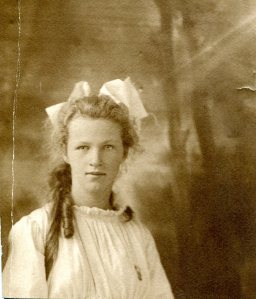
Rocco was attention-loving like
My great grand-mother grammy
Who sadly I never knew.
He did acrobatics on the bars of his cage
And ran so fast on his yellow wheel.
But he ate too much and became obese.
He stopped running
Got lazy.
One day he didn’t move anymore.
Sadly, he died.
My mother and I and my brother
Buried him in our back yard
Where sometimes when I am playing
I will stop and think
What a great hamster he was.

By Leandro McPhee, age 9 — my nephew
A real story

Add to FacebookAdd to DiggAdd to Del.icio.usAdd to StumbleuponAdd to RedditAdd to BlinklistAdd to TwitterAdd to TechnoratiAdd to Yahoo BuzzAdd to Newsvine

Where Do Titles Come From?

Bright Angel Time, my first novel had so many terrible working titles, but I wrote the book so long ago I can’t remember what they were.  I do remember that my editor wanted to change the title from Bright Angel Time to Falling Backwards. I refused because a Michael Douglas film was recently out called Falling Down and I didn’t like the association.  And, also, I loved my title.  I found it while hiking in the Grand Canyon with my husband a few months before finishing the book.  He had taken me there for inspiration. We were camped beneath the stars near the Bright Angel Trail and I can remember still the cool, desert air, being tucked in my bed roll, dreaming quite literally that I was the daughter of Clint Eastwood—the Eastwood of the spaghetti westerns that I love so much.  I remember waking up disappointed that the dream wasn’t true.  (Forgive me, Dad.)  Hiking out of the Grand Canyon, I knew even then, long before giving birth, that it would be the hardest thing I would ever ask my body to do—harder than childbirth.  (I thought of that when my first child was born.   And, by the way, I was right.)  As I hiked out, like a flash it came to me: Bright Angel Time would be the title of my novel.  Bright Angel is the name of a shale in the canyon that represents a period of time some 500 million years old from the Cambrian period in the Paleozoic.  Bright Angel shale, as a layer of the canyon’s strata, lies between Muav limestone and Tapeats sandstone.  Metaphors about time started bombarding me.  And I loved all the names.
Gorgeous Lies, my second novel.  I had many bad working titles.  To name two: Quo Vadis (I cringe to write that) and Farther India (which comes from an old map of Hindoostan.)  My editor thought that Farther India sounded either like Father India or a travel guide.  I agreed.  I despaired as I had no other ideas.  My mother suggested that I read some of my husband’s poems, promised me I’d find a title there.

From the last stanza of “Memo: From The Course of Empire By Bernard DeVoto”

How do I love thee, and why? O, congeries
of gorgeous lies, I’ve lost my way,
and rivers flow into other rivers, and they
flow into rivers that flow into the sea

From Empire Burlesque by Mark Svenvold
L’America, my third novel.  I was also asked by my publisher to consider something else but couldn’t think of anything I liked as well.  I was in love with an Italian man once and he used to say “l’America” quite a lot, with a sense of humor and impossibility—as though only in America.  A beautiful admiration and absurdity.

And finally, Dear Money, my fourth novel.  At first, and for most of the writing of the book, it was called I Can’t Keep Up: The Truth About The Joneses. I jettisoned The Truth About The Joneses, and then toward the end jettisoned I Can’t Keep Up-–because, I discovered, the main character keeps up and boy does she.  She transforms herself from struggling novelist to MBS trader. I thought very briefly about using Our Times, a shortened version of “a sign of our times” or “our foolish times.”  But it seemed t0o much like Hard Times or In Our Time. Then I read the brilliant biography of Maxwell Perkins: Editor of Genius by Scott Berg and found in there a letter to Perkins from Fitzgerald. Here, the last paragraph of that letter:

“I think Tom Boyd’s book is excellent—the preface is faintly pretentious but the stories themselves are great. By the way I think my new collection will be called Dear Money. It ought to be awfully good and there will be no junk in it.

Yours in a Tremble,
Scott”

Fitzgerald jettisoned Dear Money for his collection of stories, calling it instead All The Sad Young Men. In my family, filled with writers, when we hear something we like we jut our hand into the air and say, “That’s mine.”  It means no one else can use it.  That’s mine, I said to myself.  That’s it.  That’s the title of my fourth novel.  As a book that is quite interested in the subject of money, who better to offer me its title than Fitzgerald?

A tip: working titles, as bad as they may be, help you in ways you might not understand through the first drafts.  Don’t be embarrassed by them, but know they are rarely, in my experience, the final title.   Use them for what they offer and then laugh about them later.

Another tip: If in your heart you love your title and your publisher asks you to change it, DON’T—unless, of course, a convincing argument is made that you believe in, in your most artistic heart.  My husband let go of the title he desired most for his first book on nonfiction.  His title was A Century’s Corpse.  A great title.  It comes from a Thomas Hardy poem.  Mark’s book was about a corpse that traveled from freak show to freak show across the 20th Century.  His title was perfect but the publisher thought people would be turned off by the word corpse so used the corpse’s name instead: Elmer McCurdy. Mark regrets giving in to this day.

Special thanks to F. Scott Fitzgerald for discarding his working title.

Where do your titles come from?  Please let me know.

Add to FacebookAdd to DiggAdd to Del.icio.usAdd to StumbleuponAdd to RedditAdd to BlinklistAdd to TwitterAdd to TechnoratiAdd to Yahoo BuzzAdd to Newsvine

Stunning Student Prose

Irrigation Ditch by Laura McPhee from River of No Return

I have many stunning students, but every once in a while I read something so terrific it makes me shiver.  Adam Bedell’s writing glitters with passion.  I love my job at Hofstra University.  I adore my students.  Working with this quality of prose, I believe there can’t be a better job out there.

From Bedell’s “The Graveyard Lies Like an Inuit”

We had been walking over an eroded bridge in the woods by Shu Swamp.  A stream trickled underneath us, a canopy formed above—branches in the night hung like lanky piano fingers.  The sky was deep dark blue with white mountain clouds puffing past the moon, sending eclipses of light between the branches of the canopy.  I swear I could hear flutes singing in the wind and crickets, crickets, crickets.  She nudged her shirt up, enticing me to finish.  Her body peered out like moonlight and I shadowed it with lunatic kisses.

After, we floated on our backs in the stream with the bottom of our feet each touching, one pointing to the left, the other to the right.  Our knees bended, making an oval between us — a giant womb; I saw Triton rising upward, blowing his wreathed horn, our precious…Lily said something real strange.  “If we have enough love, we could raise a god,” then she pushed up out of the stream bed, water dripping down her legs.  She pulled a leech off, and I jumped out of the water, panicked—she laughed as we hugged…dripping wet, drops sliding off our bodies and pelting the stream.

Add to FacebookAdd to DiggAdd to Del.icio.usAdd to StumbleuponAdd to RedditAdd to BlinklistAdd to TwitterAdd to TechnoratiAdd to Yahoo BuzzAdd to Newsvine

Confession: I Can’t Spell

By the artist Janie Geiser, given to Mark and me as a wedding present

I have never been able to spell.  This is a humiliating fact for me.  I write fast and with a studied sloppiness so that the reader will think I have bad penmanship rather than bad spelling.  I can remember wincing many times, a burning humiliation.  Once even on top of Mauna Kea in Hawaii at the observatory with twelve members of my family, including my father, an impeccable speller.  Up there, on top of the world, I left behind an incorrectly spelled word.  In the guest book we all noticed that a few days before us the news anchor, Tom Brokaw, had been to the observatory with his family.  Elegantly, they’d signed in and saluted fellow visitors.  Trying to be funny, I wrote something about us being up there too, but we, in our caravan, many children, one in diapers, were like the Joads.  I spelled it Jodes.  It’s up there with my signature, on top of one of the tallest mountains in the world,  if you measure the height from its base on the ocean floor to its summit.  It’s there in the guest book for everyone to see.  When I gave my father the manuscript of my first novel, Bright Angel Time, this was long before spell check, he said to me, “There are so many egregious spelling errors in here I don’t know where to begin.”  (He did enjoy the book.)  Meanwhile the manuscript was being shopped around to publishers, filled with pimples and blemishes and scars.  I can’t spell.  When I became upset in front of my father, frustrated with my spelling incompetence he comforted me, “Many writers can’t spell.  You don’t need to be able to spell to write.  Flannery O’Connor famously couldn’t spell.  Read her letters.  In fact, so many fine writers can’t spell. I always wondered if something were wrong with me since I can spell.”    It made me feel better for a bit, and I try to recall it when suffering a bout of spelling inadequacy.

The other day in one such bout, my father’s insight from years before not helping me out of it, I googled I CAN’T SPELL and found an article by Steve Hendrix, “Why Stevie Can’t Spell,”  from 2005 in the Washington Post. It was wonderful and funny and insightful and above all I am not nearly as bad a speller as he is!

Add to FacebookAdd to DiggAdd to Del.icio.usAdd to StumbleuponAdd to RedditAdd to BlinklistAdd to TwitterAdd to TechnoratiAdd to Yahoo BuzzAdd to Newsvine

All I Want From Fiction Is A Trip — Edna O’Brien

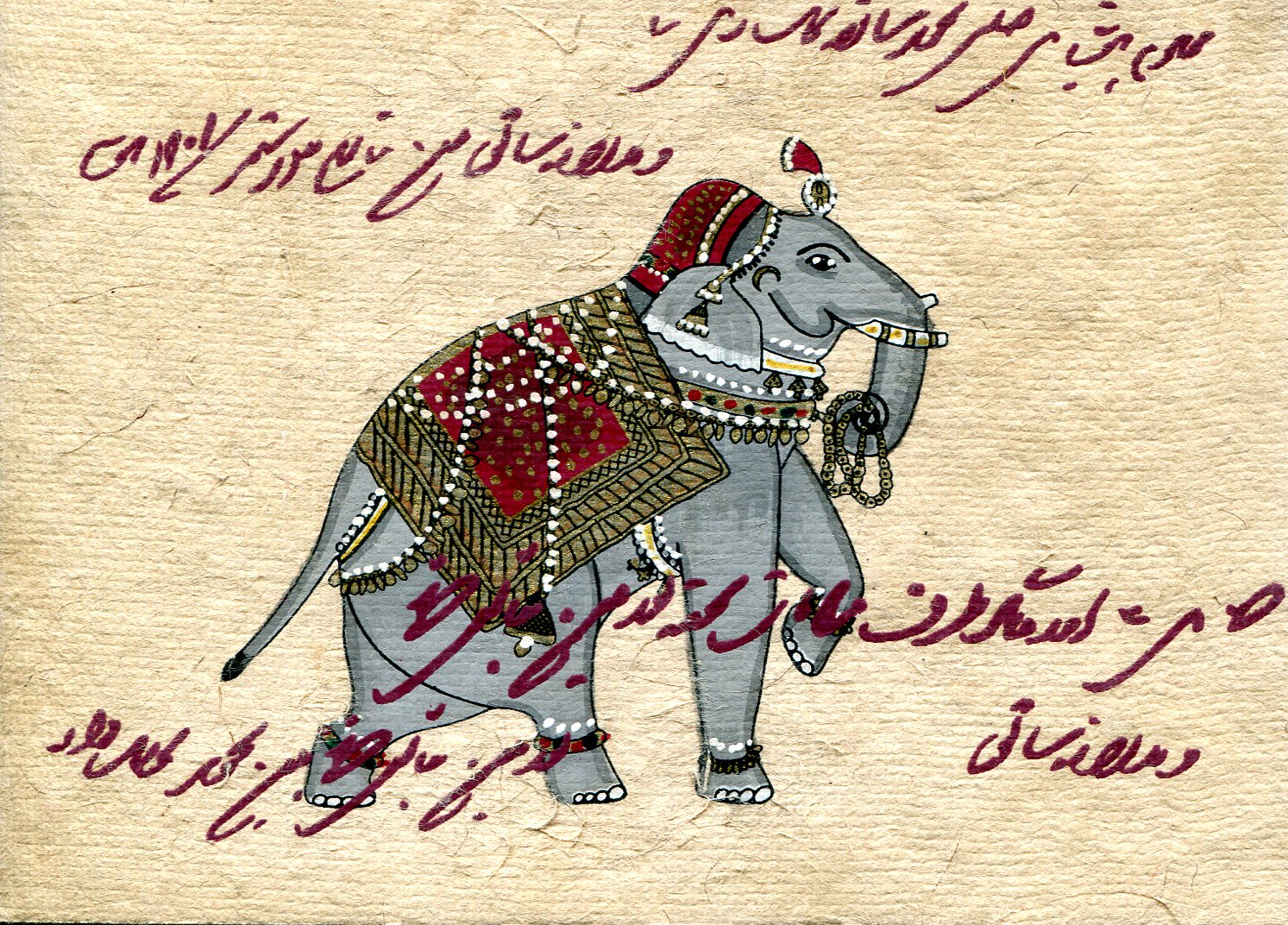
I adore elephants.  This one reminds me of the sort of trip I’d like to be on.

“All I want from fiction is a trip. And if I don’t get that trip, I don’t care whether it’s [from] a man or a woman, I have no time for it. I don’t want to read a work that tells me a little about the world around me today. I know about the world around me. The standard of newspapers and journalism is far higher than the standard of most published fiction. So, what’s left to write about? I think feeling and emotion and all those things which are put very high on a back shelf are essential for mankind.”

Edna O’Brien

I started writing fiction after reading Edna O’Brien’s The Country Girls Trilogy.  The novels made me realize I had stories of my own to tell and that one could write from the point of view of a child for an adult audience.  By studying her I learned about descriptive writing and I learned how to walk the line between the perceptions of a child narrator and those of the adult reader.  After devouring O’Brien’s novels, I searched for other books from the point of view of children: Anywhere But Here by Mona Simpson; What Maisie Knew by Henry James; Stop Time by Frank Conroy; This Boy’s Life by Tobias Wolff; Housekeeping by Marilynne Robinson.  All were journeys through childhoods.  I wanted to take my characters on their own journey and so wrote my first novel, Bright Angel Time, using my own crazy childhood as the jumping off point for my imagination and my story, studying the techniques and styles of these authors I had come to love.  The trip always begins and ends with reading.

Add to FacebookAdd to DiggAdd to Del.icio.usAdd to StumbleuponAdd to RedditAdd to BlinklistAdd to TwitterAdd to TechnoratiAdd to Yahoo BuzzAdd to Newsvine

A Little Bit Of John Ruskin

img076

The Elements of Drawing by John Ruskin

My sister, Jenny, says a little bit of Ruskin goes a long way.  Here are two little bits:

“Now a stupid painter would represent, for instance, a drinking-glass beside the hand of one of his figures, and because he had been taught by rule that ‘shadow was darker than the dark side,’ he would never think of the reflection from the glass, but paint a dark grey under the hand, just as if no glass were there.  But a great painter would be sure to think of the true effect, and paint it; and then comes the stupid critic, and wonders why the hand is so light on its dark side.

“Thus it is dangerous to assert anything as a rule in matters of art…”

O.K. that’s enough Ruskin for now.  I’ll save the second bit for another day.

Add to FacebookAdd to DiggAdd to Del.icio.usAdd to StumbleuponAdd to RedditAdd to BlinklistAdd to TwitterAdd to TechnoratiAdd to Yahoo BuzzAdd to Newsvine

Birds, Savages, & Children

French words

From A Dictionary of Modern English Usage by H.W. Fowler, 1926

FRENCH WORDS. Display of superior knowledge is as great a vulgarity as display of superior wealth—greater, indeed, inasmuch as knowledge should tend more definitely than wealth towards discretion & good manners. That is the guiding principle alike in the using & in the pronouncing of French words in English writing & talk. To use French words that your reader or hearer does not know or does not fully understand, to pronounce them as if you were one of the select few to whom French is second nature when he is not of those few (& it is ten thousand to one that neither you nor he will be so), is inconsiderate & rude…. Every writer who suspects himself of the instinct should remember that acquisitiveness & indiscriminate display are pleasing to contemplate only in birds & savages & children.

Add to FacebookAdd to DiggAdd to Del.icio.usAdd to StumbleuponAdd to RedditAdd to BlinklistAdd to TwitterAdd to TechnoratiAdd to Yahoo BuzzAdd to Newsvine

Fiction’s Pull To The Blank Page

3530415915_98802751ea[1]

A beautiful little sister and a homely older one — Kathryn, Thelma.  1910.   An intrepid mother who wants freedom from a husband and the confining life of a wife.  They run away to Montana — beneficiaries of the homestead act of 1909 — leaving Vernon behind in Ohio to find a letter saying they are gone.  The girls are afraid, wonder what will become of them.   It’s winter and cold and they ride in the 3rd class car of the train, a coal fire in the center, around which passengers hover, trying to stay warm.  The mother, Glenna, though she doesn’t have money (only what she’s been able to steal from Vernon’s pockets), has a sense of class and finery.  She carries with her a harp (yes a big, beautiful harp that she can play like an angel).  She carries a trunk of summer dresses and an iron and ribbons for her daughters’ hair and they look impeccable, if cold, in white linen.  She carries too her own great grandmother’s China wedding bowl and Temple Notes to Shakespeare.  She’s a reader, a dreamer, ambitious and will not be trapped.  In Montana there are jobs for women and she wants to work, wants to earn money, wants to feel the power of providing for herself and her girls.  She loves men and loves to flirt and when the train gets stuck in a snow drift it is not long before she’s playing her harp for the gentlemen in first class, warm in a Pullman Sleeping Car with fine Scotch.

img071

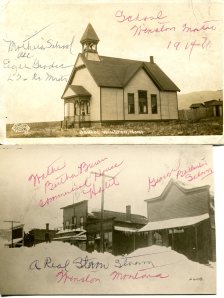
Glenna’s school house in Winston, Montana.  And the town covered in snow.

My grandmother, my great grandmother — snippets of story.  The frontier at a moment that welcomed women, offering opportunity.  (Montana would elect the first woman to the House of Representatives in 1914.)  Who were these women?  Of course, I knew my grandmother well.  I adored her, adored listening to her elaborate stories of our lineage.  I could imagine her as a little girl, learning the tales of where we came from, from the refined Glenna who refused to accept that her circumstances were what they were, that she wasn’t a queen or a duchess.  But it didn’t matter now because she had been and would be again.  Her life didn’t begin when she was born; it would not end when she died.  Rather, she was just one link in a miraculous continuum, that reached back to Germany and Scotland, that included men like Helmut von Keller, advisor to Bismark from Mechlenburg-Schwerin along the Baltic Sea and women like Mary Queen of Scots and the Royal Stewarts of Nairn — princes and duchesses and queens and the War of 1812 that brought some of her people to America where their children and children’s children became novelists (James Fenimore Cooper among them) and the first woman to go to college and fine painters of the human anatomy who stole cadavers from graves.  One started the Dole pineapple empire and another became the milliner for Granny Taft, William Howard Taft’s aunt.  They survived the Civil War.  They were fabulously wealthy and then lost it all in the various 19th century runs on banks.  From my grandmother’s telling, the lineage made perfect sense — her mother’s line (German), her father’s line (Scottish).  They were nobles both, cast on the shores of America by war and the great hope of something more.  Her details were precise, born it seemed to me, of a fierce imagination.  James von Slagle, her great great grandfather, came to America during the War of 1812 as a military advisor to Major General Andrew Jackson and saw to the training of rough, unschooled farmers, preparing them for battle against the Indians.  He led his troop in the battle of Horseshoe Bend on the shores of the Tallapoosa River in Alabama in 1814, a success that would make him a national hero.  In a picture of James von Slagle that my grandmother described, he had the finest mustache and the broad strength of an aristocrat, “Von,” she told me, “indicates noble birth.”

The stories were Glenna’s who died long before I was born, but who has lived in my imagination ever since I was a girl through the stories retold to me by my grandmother.  And now, finished with a fourth novel, there are days such as this, in which I begin to dream about writing a fifth novel.  1910 — the 20th century spreading out before Thelma and Kathryn and Glenna — the long road their lives will follow.

She wondered what would become of them — the novel could begin as the three head west on the train in winter, pioneers.  Who would these women be (alive in the continuum of their descendents) at the end of the 20th century, a century in which so much changed for women?  Here is where fiction starts for me: at the intersection of memory and imagination.

img070

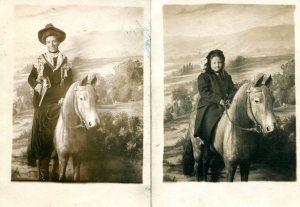
Glenna and Thelma posing on wooden horses during a long stopover in Saint Louis, on their way home to Ohio in 1914 for Christmas

img069

Kathryn, the beautiful younger sister.

Add to FacebookAdd to DiggAdd to Del.icio.usAdd to StumbleuponAdd to RedditAdd to BlinklistAdd to TwitterAdd to TechnoratiAdd to Yahoo BuzzAdd to Newsvine