Empress Livia In Her Backyard

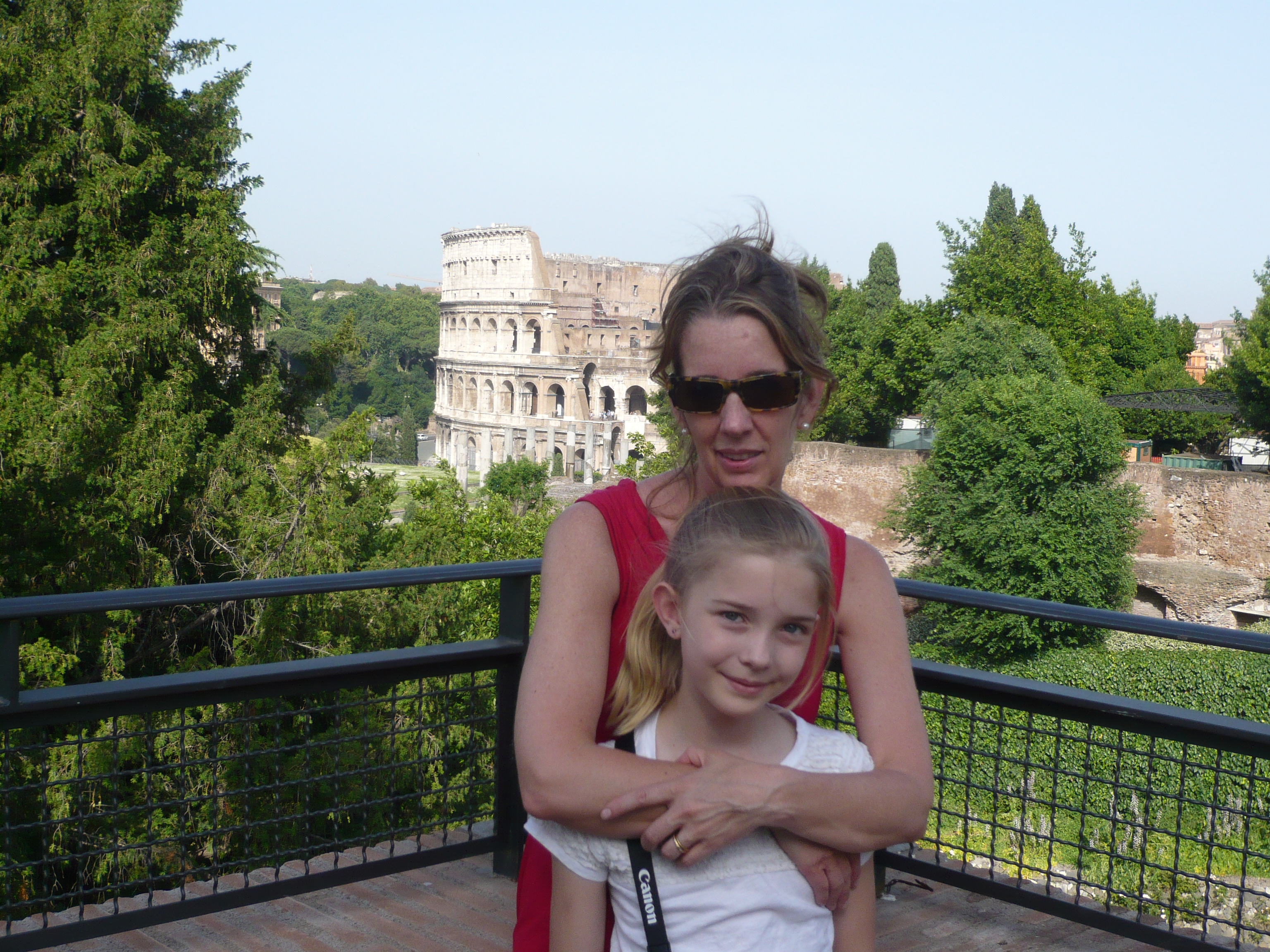
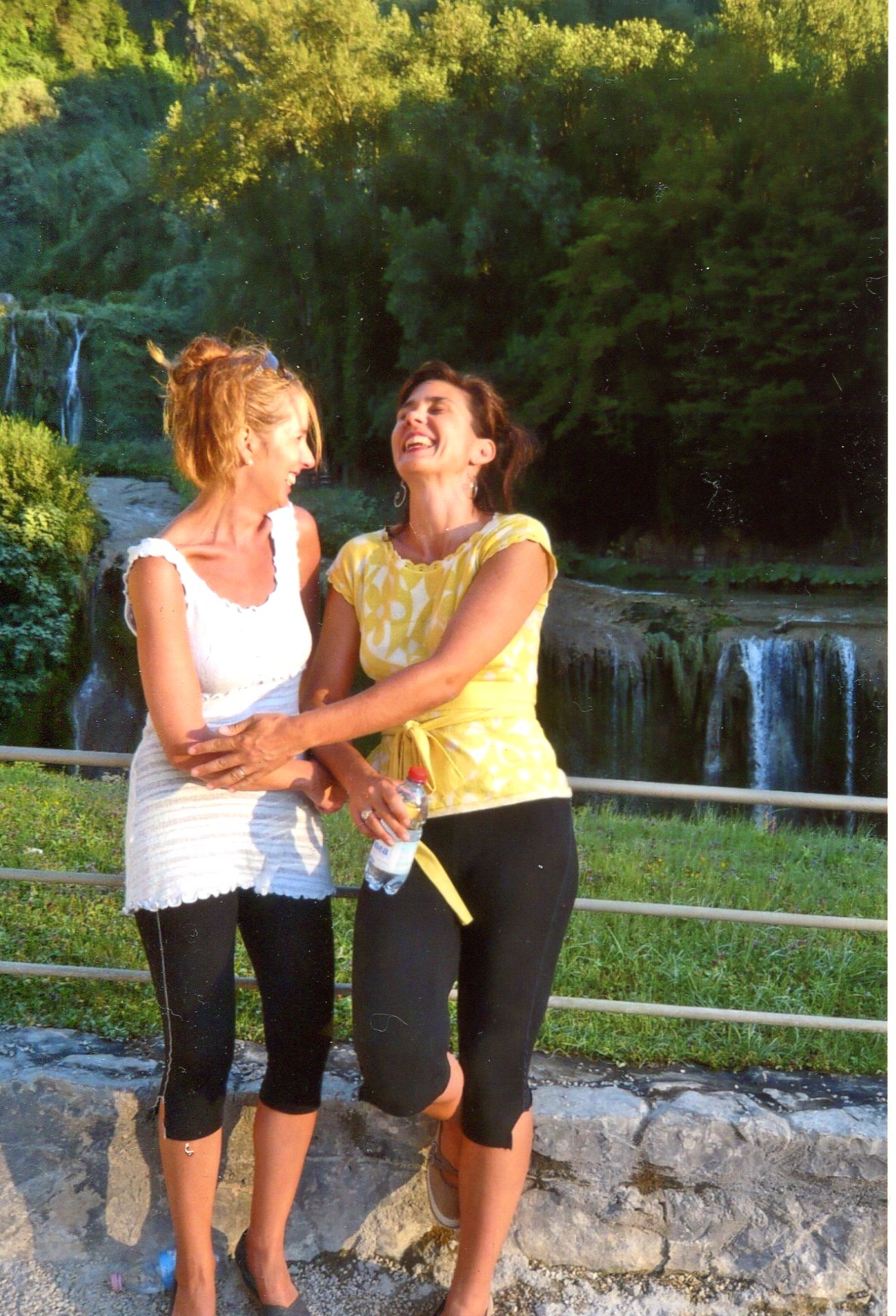
In the backyard of Augustus’s house in the Foro Romano.  Yes, that’s the Coliseum in the background.  She really does believe she was Livia, Augustus’s wife, in a previous life.  This trip to Rome has been a pilgrimage to sites from that world of hers.

Photo credit: Cullen Stanley, godmother of the empress.

With Livia In Rome

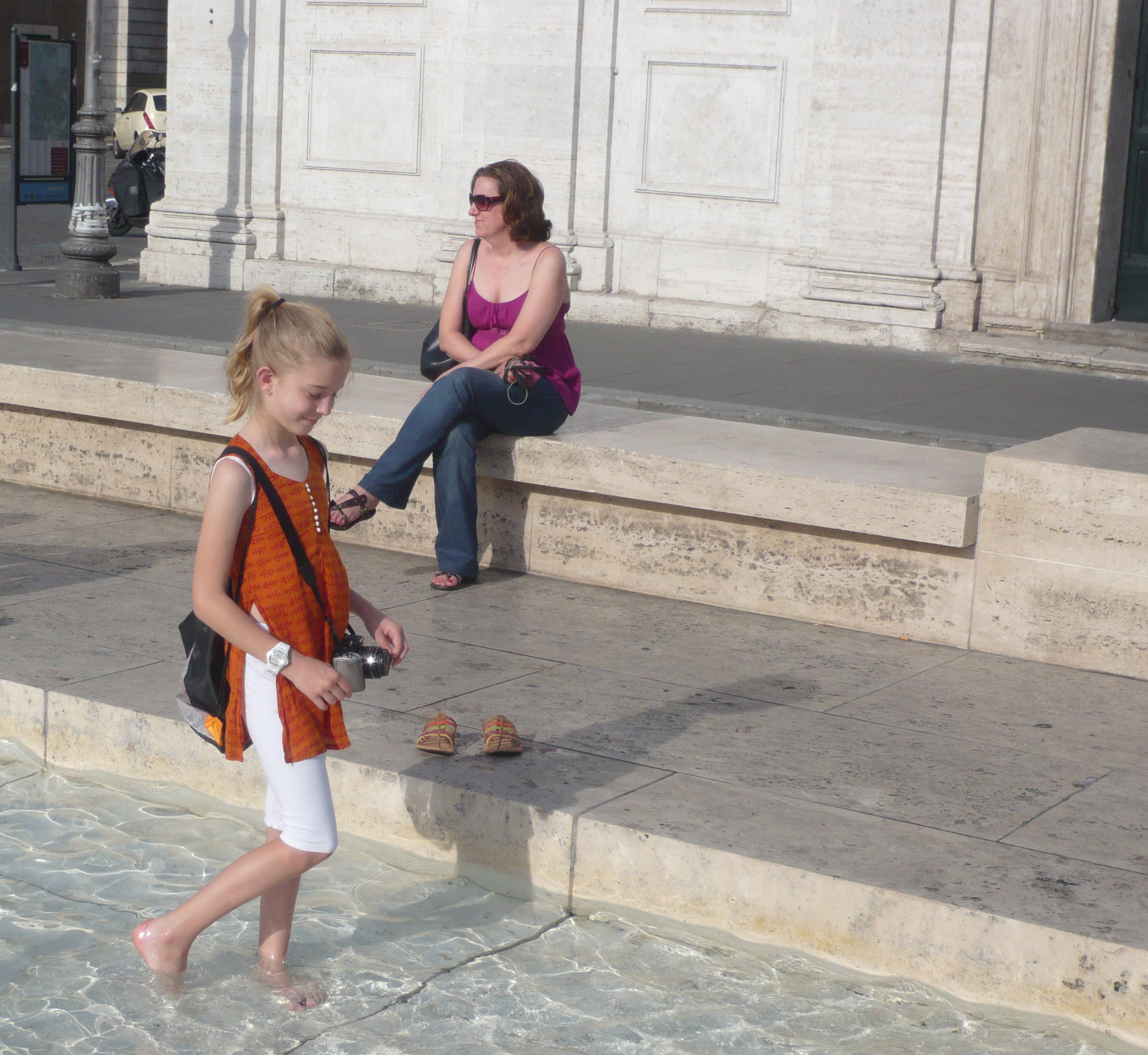
Livia in the fountains outside of Augustus’ tomb.  Augustus ruled the world and Livia ruled Augustus.

Still in the fountain with her godmother, Cullen, behind.

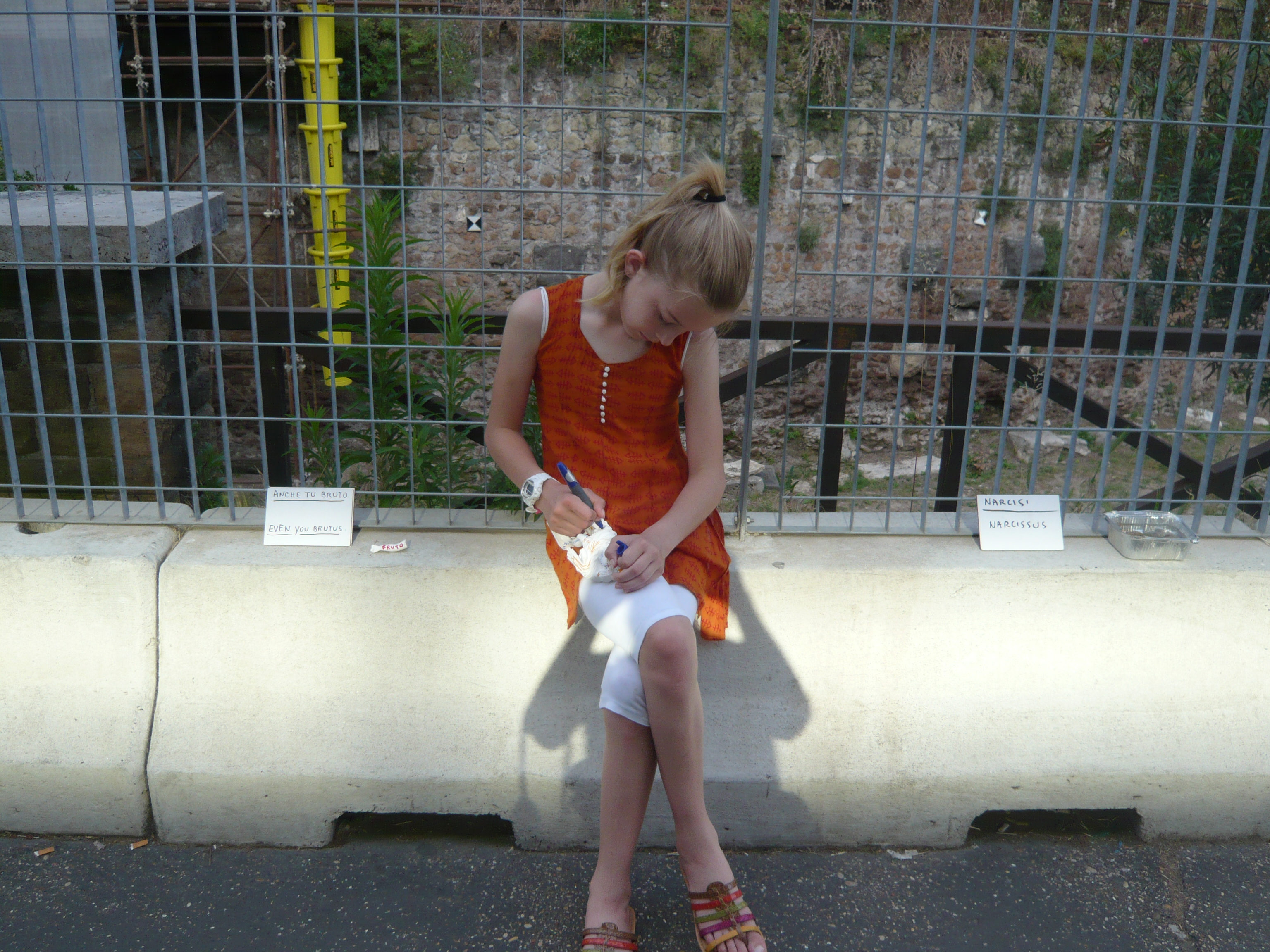
Livia signing a statue of Augustus left as an offering, along with others, on the wall in front of the excavation site.  Livia looked up and said, “I once poisoned many men.”

Charlottesville, The Results Are In: Book Tour (1)

Christina and Martha at Speak!

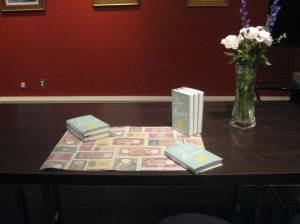
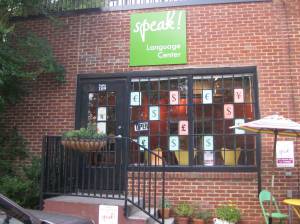
My best friend, Christina Ball, hosted the first event for Dear Money at her Speak Language Center in Charlottesville, Virginia.  It was a delightful, intimate evening at her lovely school.  Out of the woodwork came Avery Chenoweth, the older brother of a good friend, Matthew, from pre-school.  Avery is a writer and a swing dancer with a beautiful sense of humor.  Mary Alice, the best friend of my mother’s in the third grade, came with her sister — a complete surprise.  I felt celebrated and thoroughly loved.

Another wonderful surprise was a stranger, a flight attendant for American.  Her name is Claudia and she had the most gorgeous free, spirit.  I would LOVE to write a magazine piece about her, following her as she hopscotches across the globe — a fly on the wall of the planes she works.  And yet another surprise was a woman named Kristin who has written a nonfiction book on the Bible.  She found out about the discussion from my website. That’s a first.  So in the end, we didn’t have to drink all the wine alone.

I will always be grateful to Christina for supporting me and my work.  Her school is a magnificent place that brings language and travel experience to the people of Charlottesville and beyond.  I wrote about her for More Magazine two years ago.  On Friday, Christina arranged with the Charlottesville Writer House for me to discuss the research I did for Dear Money.  That was filled with interesting people who asked terrific questions about how I learned all about the mortgage-backed securities market.  The group included one economist who had worked for the FEC in NYC at the height of the bubble.  It also included Kristin from the night before.  Bless her.  I wish New York City had a Writer House like the one run by Rachel Unkefer. The group is a nonprofit that creates a space for writers to work and take classes, and also to hear other writers speak and read.

When all the work was done, Christina and I had a delicious lunch at Orzo Kitchen and Wine Bar (yes, we indulged in a mid-day glass of Gavi) and then went shopping at our favorite store, Marshall’s, but didn’t find anything.  It was a gorgeous trip.  I took the train: $58!  You can’t beat that for a journey that’s over 6 hours, to a spot that is stunning and filled with charm and great food and wonderful people who love to read.


Add to FacebookAdd to DiggAdd to Del.icio.usAdd to StumbleuponAdd to RedditAdd to BlinklistAdd to TwitterAdd to TechnoratiAdd to Yahoo BuzzAdd to Newsvine

Publication Day, Gratitude: The New Book Tour (3)

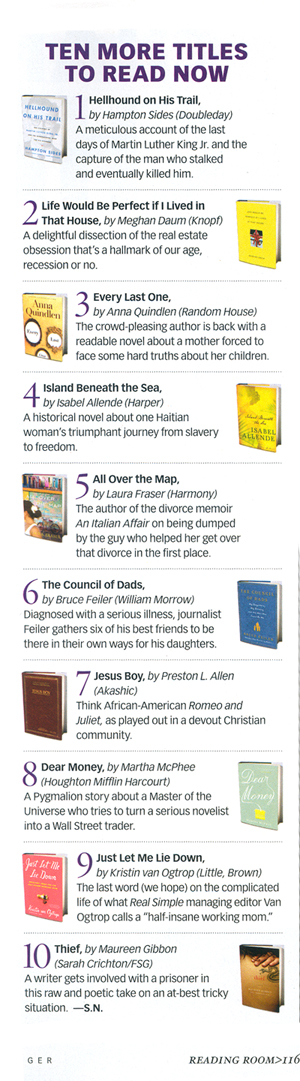
I am so grateful to Summer Smith, the HMH publicist.  Next week, June 3rd, is the publication date of Dear Money.  She’s booked me on the Leonard Lopate Show at noon (please listen) and that night I’ll be reading at Barnes & Nobel on Broadway at 82nd Street (please come).   Because of her hard work the book was mentioned as one of ten books to read in O Magazine; it was one of the five top summer beach reads in Coastal Living; it was reviewed in Martha Stewart’s Whole Living; it’s scheduled to appear in Elle and More; and reviews have been assigned at the Boston Globe, The New York Times, The San Francisco Chronicle; The Washington Post — these are the ones I know about.  Thank you, Summer Smith.

DEAR MONEY

Add to FacebookAdd to DiggAdd to Del.icio.usAdd to StumbleuponAdd to RedditAdd to BlinklistAdd to TwitterAdd to TechnoratiAdd to Yahoo BuzzAdd to Newsvine

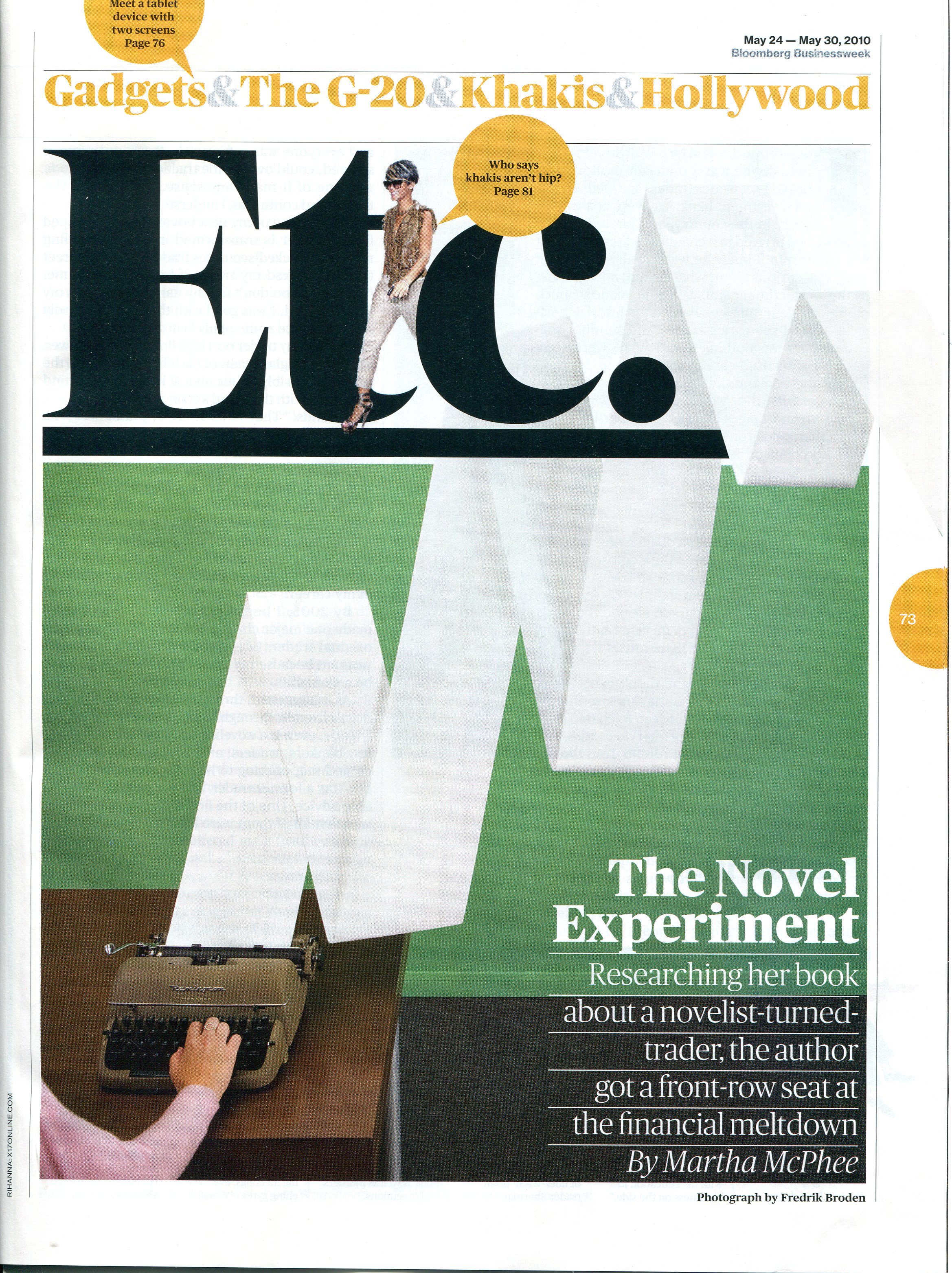
The Novel Experiment, For Business Week

The Novel Experiment

Researching her book about a novelist-turned-trader, the author got a front-row seat at the financial meltdown

May 20, 2010

By Martha McPhee

I was propositioned by a Wall Street trader. Actually he was a manager of mortgage-backed-securities traders at a well-regarded investment bank. We were at a garden party in the country, and I noted that he had arrived in a chauffeured town car that waited for him. I knew he was a Wall Street type, and I was curious about what he did, and how he, by the look of the car sitting outside, made so much money. He generously explained the job of a mortgage-backed-securities trader and humbly suggested there was nothing to it. Traders were nothing more than used-car salesmen who understood supply and demand, he said. Anyone could do it. Instead of cars, they were selling mortgages, people’s puny mortgages bundled together into giant pools, then sold around the globe to insurance empires and pension funds, even foreign countries. This process, he said, had allowed interest rates to drop, making mortgages easier to get and providing a lot more people with the great American dream of homeownership.

I was fascinated. The idea of amassing the small debts of so many dreamers on a colossal scale—a scale bigger than the entire combined value of the U.S. stock markets, as it happened—and chopping them up and sending them around the world seemed like quite a plot. Swept up in my enthusiasm, he told me: “If you give me 18 months, I’ll turn you into a trader.” This was 2004.

Click here to read the rest of the Business Week piece.

Add to FacebookAdd to DiggAdd to Del.icio.usAdd to StumbleuponAdd to RedditAdd to BlinklistAdd to TwitterAdd to TechnoratiAdd to Yahoo BuzzAdd to Newsvine

The Sisters Discuss: “Women Authors”

Are women authors held to different standards than men?

 http://1.bp.blogspot.com/_zkhErR_Xp1A/S-m20BGpLLI/AAAAAAAAARo/zSW2Dmh-PPw/s1600/images.nypl.org.jpg

In 1849, to her critics, Charlotte Bronte wrote, “To you I am neither man nor woman—I come before you as an author only. It is the sole standard by which you have a right to judge me—the sole ground on which I accept your judgment.’

THE SISTERS RESPOND:
 
Martha: I woke up this morning thinking about a post I found on twitter @AdviceToWriters.  I thought, That’s right.  I want to be thought of as an author only.  But it occurred to me that it really isn’t up to me, is it?  
 
Jenny: Well, the fact is you—and Charlotte Bronte—are women writers and that’s a very good thing as far as I’m concerned. The problem is that because of historical devaluing of all things associated with the female, including writing, some do not take women who write as seriously as men who write. This prejudice was easily identifiable in Charlotte Bronte’s time. A woman’s writing was not only automatically considered of a lesser order by the status quo, legally she was not even allowed to keep any of her own earnings from her work. For us the question is more subtle, but one look at any table of contents in any issue of, say, The New Yorker, The New York Review of Books, The Atlantic, and you will see that though women write more than men, and read much more than men, they are still grossly underrepresented in print.     
I certainly don’t want to be a man, nor do I want to be just an “author” because that automatically implies in our world “male.” I want to be a woman who writes and is given equal opportunity to publish my work and have it fairly critically appraised.
 
Martha: Are both notions too ideal?  To be considered simply “an author,” or to be considered a woman who writes and who is given equal opportunity?  How do you suggest arriving at that standard and possibility?  And what do we do in the meantime — when, as you say, the question is more subtle today.  I also know that there are many people out there — men and women alike — who would say the opportunities are equal, flat out disagree, and believe that you’re whining while also undermining women.  What do you say to them?  And as the title question asks: Are women writers held to a different standard?  If so, what is it?

Jenny: We’re all heroes and we’re all whiners. I just want to be an equal opportunity hero or whiner. Yes, the notion that we be held to some sort of “equal” standard is ideal, but we’re fiction writers who trade in the ideal dressed up as the real. As for the title question, we’re all held most rigorously by ourselves to our own standards. I’m just asking the editors at magazines, the jury at Cannes (not one woman was selected this year to compete for the Palme D’Or), the board members of Fortune 500 companies (only 3% of CEOs of F500 companies are women) to think about their preconceptions of what a standard is before excluding from their pages, their competitions, their boardrooms, the female voice. Exclusivity is easy and natural. Inclusivity takes intelligence and courage.

Martha: And I certainly don’t want to be a man, but in hearing what you’re saying I’m reminded of the Old Boys’ Club.  We should be looking out for one another in our own way.  An old girls’ network.  Of course, this has been brought up many times by many women.  But has it truly taken hold?  How?  Where?
Jenny: The Bronte sisters might just have the solution. Watch This: Brontesaurus, Bronte Sisters Power Dolls 
We’d love to hear your thoughts.  Comment below. 
Up next week: Do women writers have to create characters who “behave?”
 

Add to FacebookAdd to DiggAdd to Del.icio.usAdd to StumbleuponAdd to RedditAdd to BlinklistAdd to TwitterAdd to TechnoratiAdd to Yahoo BuzzAdd to Newsvine

Do You Want To Be Inspired? Read This:

The other night my younger sister, Joan Sullivan, was honored by the Bronx Academy of Letters for being its founding principal.  She is now Deputy Mayor of Education for the City of Los Angeles.  This is the speech she delivered:

I want to get one thing straight. This school was not founded by me.

The school, itself a political act, was founded by a long series of political movements that erupted in the 1960s. It was founded by The Young Lords, who took over hospitals and churches to demand that they operate programs for the poor and who led campaigns to force the City of New York to increase garbage pick-up in neighborhoods like ours, ones that suffered from chronic institutional neglect.

This school was founded by Piri Thomas, a Puerto Rica-Cuban born poet and freedom fighter, who was raised in the barrios of New York and whose name is emblazoned on our school’s walls.

I’m on stage, honored of course by this award, but this school does not belong to me.

The Bronx Academy of Letters is based on the word and sits in the community that gave birth to Hip Hop. The school belongs to KRS-1, a man who continues to use music to fight for social change. This school belongs to the Bronx.

I can’t take credit for this school. This school belongs to its stakeholders.

–       It belongs to Richard Kahan, the Urban Assembly, and our Board, who understand that school reform is about building partnerships and who understand that the era of public schools being the exclusive domain of government is over.

–       It belongs to immigrants from the Dominican Republic, China and Ghana who saw school as the avenue to success and brought us their brilliant children.

–       It belongs to students who, out of boredom and frustration, spent decades protesting poorly run and resourced classrooms.

–       It belongs to Qian, Stacey, Jeffrey, and Lucelys who graduated first from the Bronx Academy of Letters and who are now preparing to graduate from Skidmore, Wesleyan, Ithaca, and Columbia.

–       It belongs to our teachers, who are scientists, writers, dancers, athletes, and scholars and who have put every drop of their art and genius into their teaching.

This school belongs to all of you, our supporters, who saw that the young people living across the Madison Avenue Bridge in the South Bronx were not only part of your community, but also a part of your future.

If this school belongs to me at all, it belongs to my mother who with her indomitable will, bribed me to read books as a child until I found Roald Dahl and became a willing reader and a capable writer. And to my father, who believed in fairytales and who, when I was five and asked to go on a picnic in a blizzard, took me down to the banks of the Delaware River and set up a picnic in the snow. And to my 9 sisters and brothers, who played so beautifully with ideas and whose books and politics imbued me with a determination to fight and the courage to hope. And to my wife, Ama, who has revealed with her intellect and spirit such a joyful world to me.

All of this is to say that the idea of a founder is a farce. We have all founded this school that continues to be found every day by students, teachers, parents and you. This school belongs to you—which is a gift, a promise, a responsibility.

Because anything that is found can be lost, lost to financial and budget crises, lost to layoffs that disproportionately affect our poorest neighborhoods, lost to those who forget that the Bronx Academy of Letters and its children areour legacy.

And there are more things yet to be found. We need more than a good school. We need lots of good schools. We need them here and in Los Angeles. We need affordable college access and to begin talking not about K through 12 but about Pre K through college. Just as we, together, found each other and this school. We can find strong school systems and turn these into strong communities, knowing that we will never have strong communities without strong schools.

This sounds impractical, untenable. So was the Bronx Academy of Letters. So was the idea of opening a school in America’s poorest congressional district with an open admissions policy and with the goal of sending its graduates to our nation’s best colleges. So is my request of you tonight. I ask that you take joy in and responsibility for founding this school. I ask that you continue finding this school and that you remember that its students will find the things we lost and the things we never even believed to be possible.

____________________________

There is one other thing. You should know that this school also belongs to our new leader. A woman I interviewed right here in the Italian Academy before hiring her as our school’s first teacher. A woman who started building and leading with humility, integrity, and passion before our doors even opened. A woman who proposed and then assembled our middle school. An inspired English teacher, a devoted advisor, an award-winning poet, a friend and mentor. Please join me in welcoming the person who has now worked for this school longer than any other, Principal Anna Hall.

CLICK HERE TO DONATE

Add to FacebookAdd to DiggAdd to Del.icio.usAdd to StumbleuponAdd to RedditAdd to BlinklistAdd to TwitterAdd to TechnoratiAdd to Yahoo BuzzAdd to Newsvine